
Patient Stories: How Correcting Double Vision Improved My Quality of Life
Why Choose Private Squint Surgery?
In the UK, squint surgery may be performed via the NHS, through insurance, or as self-pay. NHS treatment is free, but waiting times can be long and surgery is often performed by trainees under supervision. Many operations are carried out by surgeons who mainly specialise in children’s squint rather than adult complex cases.
With insurance, fees are standardised — meaning some leading specialists choose not to participate. Self-pay allows you to choose your surgeon directly and prioritise experience, specialisation, and access.
Many centres quote only a surgical fee. Hospital costs, anaesthetic fees and follow-ups are frequently additional. At London Squint Clinic, everything is included in one transparent package.
Our Complete Package – £10,000
- ✔ Advanced surgery by Mr Ali (one or both eyes)
- ✔ Adjustable sutures where clinically indicated
- ✔ Detailed orthoptic planning
- ✔ All hospital & anaesthetic fees included
- ✔ Post-operative medication
- ✔ Two video follow-ups
- ✔ Face-to-face review appointment
What Makes Us Different
- ✔ 100% focused on adult squint & double vision surgery
- ✔ >95% audited success rate
- ✔ Free re-treatment at 3 months if worse (extremely rare)
- ✔ 24/7 direct WhatsApp access to your surgeon during recovery
- ✔ Optional well-being session & pre-op reassurance call
Initial consultation: from £150
Surgery typically within 4 weeks. No referral required. Self-pay only.
Double Vision Patient Stories: Restoring Quality of Life
These double vision patient stories detail the functional and emotional impact of diplopia and the path to recovery. This article shares real-world accounts of how specialist adult strabismus surgery restores single vision, enabling individuals to regain independence in activities like driving and work. The included diplopia surgery testimonials highlight the significant improvement in quality of life following successful treatment, offering insight into the journey from visual disruption to clarity.
London Squint Clinic focuses exclusively on adult squint and double vision surgery. Led by Mr Nadeem Ali, a former Moorfields Eye Hospital consultant from 2010 to 2023, the clinic provides specialist care for complex cases, including revision surgery and diplopia resulting from neurological conditions.
To explore your options, contact us to schedule your consultation. You can also reach us via: Book your assessment
These double vision patient stories illustrate the journey from overlapping images to single vision. Diplopia can be isolating, affecting personal confidence and professional capabilities. This article shares real-world experiences with the condition and the impact of surgical correction, showing how individuals can restore their quality of life and independence.
Understanding the Daily Struggle: How Double Vision Impacts Life
Double vision, or diplopia, is seeing two images of a single object. This visual disturbance disrupts daily function, affecting balance, spatial judgment, and tasks like reading or pouring a drink. The effort to resolve conflicting visual information often leads to headaches, nausea, and mental fatigue, impacting an individual’s independence and well-being.
Beyond Blurry Vision: The Hidden Burdens of Diplopia
Diplopia’s impact extends beyond visual symptoms. It can make navigating stairs, crossing a street, or judging distances nearly impossible, creating a sense of vulnerability. This loss of spatial awareness often forces individuals to give up driving, a significant blow to personal freedom. The emotional impact of squint and double vision includes heightened anxiety in public spaces, leading to social withdrawal and isolation. The inability to perform at work or enjoy hobbies can erode self-confidence and lead to frustration and helplessness.
Real Stories: Overcoming Diplopia’s Grip on Daily Life
Patient accounts illustrate the recovery from diplopia. These narratives reflect common adult strabismus experiences, highlighting the transition from daily struggle to renewed clarity. They serve as diplopia surgery testimonials, showing how targeted intervention can restore vision and quality of life.
From Driving Anxiety to Road Freedom: A Patient’s Journey
A 45-year-old marketing executive developed sudden-onset double vision. His commute became anxious as road signs and traffic lights appeared as overlapping, confusing images. He had to rely on public transport, adding hours to his day and limiting his ability to visit clients. After being told little could be done, he sought a specialist opinion. Following eye muscle surgery, his single vision was restored. Within weeks, he was driving again, regaining his professional autonomy and personal freedom. For more information, read our guide on driving with double vision and the path to getting your licence back.
Reclaiming Professional Life: How Surgery Helped Return to Work
A graphic designer in her late 30s, whose career depended on precise visual work, developed diplopia. Her computer screen became a dizzying blur, making her unable to align text or edit images accurately. The eye strain caused debilitating headaches, forcing her to take medical leave. Prisms offered only partial, cumbersome relief. After adjustable suture surgery to realign her eyes, her symptoms resolved completely. She returned to her career with renewed precision, no longer hindered by the visual chaos that had threatened her livelihood. Her experience shows how correcting double vision can be essential for professional life.
The Path to Single Vision: Understanding Double Vision Surgery
Surgery for double vision, a form of strabismus surgery, corrects eye misalignment that causes the brain to receive two different images. The procedure adjusts the tension of the extraocular muscles, which control eyeball movement. By strengthening, weakening, or repositioning these muscles, a surgeon aligns the eyes to work together.
How Eye Muscle Surgery Restores Alignment and Clarity
The goal is functional vision restoration. The outpatient procedure is performed under general anaesthesia. The surgeon makes a small incision in the conjunctiva (the eye’s clear surface covering) to access the eye muscles. For precision in adults, an adjustable suture technique is often used. This allows for fine-tuning the eye’s alignment hours after surgery, while the patient is awake and can provide feedback. This approach helps achieve optimal alignment, enabling the brain to fuse the images from both eyes into a single, clear picture.
Why Specialist Expertise Matters for Life-Changing Outcomes
Adult double vision is often complex, caused by cranial nerve palsies, previous trauma, or age-related changes. A successful outcome requires knowledge beyond general ophthalmology. A surgeon specializing in adult strabismus and diplopia can accurately diagnose the cause and execute a precise surgical plan. This specialization is critical for revision cases or for patients previously told their condition was untreatable.
Mr Nadeem Ali: A World Expert in Adult Diplopia Correction
With 24 years of surgical experience, including 13 as a Consultant at Moorfields Eye Hospital, Mr Nadeem Ali dedicates 100% of his practice to adult squint and double vision. This focus has allowed him to develop advanced techniques for complex cases. His audited success rate is 95% alignment from a single operation. Patients receive care directly from Mr Ali, from consultation through post-operative support.
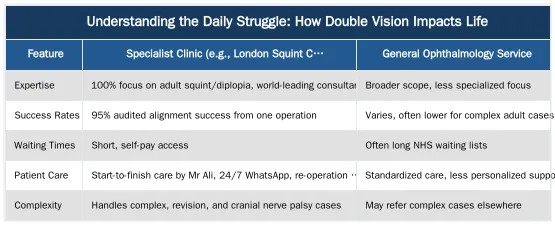
Specialist vs. General Approach to Double Vision Surgery
The clinical setting influences the outcome of diplopia surgery. The table below contrasts a specialist clinic’s focused care model with a general service.
The Emotional and Functional Rewards of Correcting Double Vision
Patients often describe the transformation after successful surgery as life-changing. Beyond the relief of seeing a single, stable world, improvements affect every aspect of their lives. Restoring functional vision means regaining normalcy, safety, and participation in the world, a common theme in double vision patient stories.
Restored Independence and Renewed Confidence
Patients report a sense of liberation. The ability to drive, read without strain, navigate a supermarket, or make eye contact is restored. This return to everyday activities rebuilds self-esteem eroded by the condition. The anxiety and mental effort of coping with diplopia disappear, replaced by confidence and a positive outlook. The emotional weight is lifted, allowing individuals to re-engage socially and professionally. Learn more about the successful outcomes of double vision correction and what they mean for patients.
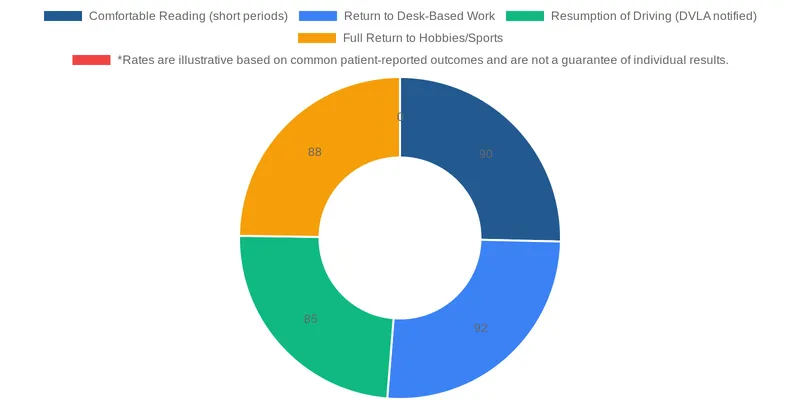
The following table outlines typical recovery milestones, though individual experiences can vary.
Conclusion
As these patient experiences demonstrate, the journey from double vision to clarity is profound. Correcting diplopia restores independence, confidence, and well-being. With specialist expertise, even complex and long-standing cases of adult double vision can be successfully treated, leading to life-changing improvements. If these stories resonate with your experience, expert help is available.
To explore how specialist surgery could help you, contact us or Book your assessment.
Frequently Asked Questions
How do these double vision patient stories reflect the daily impact of the condition?
These double vision patient stories highlight how the condition can be profoundly disabling. Patients often struggle with balance, reading, and driving, leading to a loss of independence, confidence, and professional capability. The constant effort to manage two images can also cause severe headaches and fatigue.
Are the double vision patient stories featured on this site from real people?
Yes, all testimonials are based on the real experiences of adults treated for diplopia by Mr Nadeem Ali at the London Squint Clinic. These double vision patient stories are shared to offer genuine insight into the journey from debilitating symptoms to a restored quality of life after specialist surgery.
What are the most common improvements described in double vision patient stories after surgery?
The most significant improvement is the return of single, clear vision, which patients often describe as life-changing. Beyond this, individuals report regaining the ability to drive, work comfortably, and navigate daily life without disorientation or nausea. These functional and emotional benefits are a common theme in successful double vision patient stories.
Why is specialist care important for achieving a successful outcome like those in these testimonials?
Correcting adult diplopia, especially in complex or revision cases, requires highly specialised expertise in eye muscle surgery. A dedicated specialist like Mr Nadeem Ali uses advanced techniques to achieve the precise alignment needed for a successful outcome. This level of focus is crucial for patients who may have been told elsewhere that nothing more could be done.
How does resolving diplopia affect a person’s confidence?
Eliminating double vision has a significant psychological impact beyond the functional improvements. Patients often feel more confident in social and professional situations, no longer needing to adopt head tilts or cover an eye to see clearly. This restoration of normal visual function allows them to engage with the world more freely and confidently.
I relate to these patient experiences. How can I find out if surgery could help me?
The first step is a comprehensive assessment with a specialist to determine the cause of your double vision and discuss treatment options. Mr Nadeem Ali offers both in-person and video consultations to evaluate your unique situation. You can book your assessment to begin your journey toward clearer vision.
Related Posts
Find out if you are suitable for Double Vision Treatment
Find out if you could benefit from this life changing surgery by contacting us today
Our most popular procedures


Hello, I’m Nadeem Ali
I’m one of the few eye surgeons in the world with 100% focus on Squint and Double Vision Surgery.
I have 24 years of eye surgery experience, and worked for 13 years as a Consultant at London’s renowned Moorfields Eye Hospital.
In 2023, I left the NHS to focus fully on treating patients from across the world at the London Squint Clinic. You can read more about me here.
There’s lots of information on the website about: squint surgery, double vision surgery and our pricing.
The most rewarding part of my job is hearing patients tell me how squint or double vision surgery has changed their lives. You can hear these stories here.
Mr Nadeem Ali
MA MB BChir MRCOphth FRCSEd(Ophth)