
What Success Looks Like After Private Double Vision Correction
Why Choose Private Squint Surgery?
In the UK, squint surgery may be performed via the NHS, through insurance, or as self-pay. NHS treatment is free, but waiting times can be long and surgery is often performed by trainees under supervision. Many operations are carried out by surgeons who mainly specialise in children’s squint rather than adult complex cases.
With insurance, fees are standardised — meaning some leading specialists choose not to participate. Self-pay allows you to choose your surgeon directly and prioritise experience, specialisation, and access.
Many centres quote only a surgical fee. Hospital costs, anaesthetic fees and follow-ups are frequently additional. At London Squint Clinic, everything is included in one transparent package.
Our Complete Package – £10,000
- ✔ Advanced surgery by Mr Ali (one or both eyes)
- ✔ Adjustable sutures where clinically indicated
- ✔ Detailed orthoptic planning
- ✔ All hospital & anaesthetic fees included
- ✔ Post-operative medication
- ✔ Two video follow-ups
- ✔ Face-to-face review appointment
What Makes Us Different
- ✔ 100% focused on adult squint & double vision surgery
- ✔ >95% audited success rate
- ✔ Free re-treatment at 3 months if worse (extremely rare)
- ✔ 24/7 direct WhatsApp access to your surgeon during recovery
- ✔ Optional well-being session & pre-op reassurance call
Initial consultation: from £150
Surgery typically within 4 weeks. No referral required. Self-pay only.
Double Vision Correction Success: Restoring Functional Vision
True double vision correction success is defined by the restoration of comfortable, single binocular vision that enhances daily function and quality of life. This guide explains how outcomes are measured beyond simple eye alignment, focusing on functional improvements like stereopsis and the ability to drive or read without strain. A successful procedure eliminates diplopia across a wide field of gaze, allowing the brain to fuse images seamlessly. Understanding these clinical and patient-reported metrics provides a clear picture of what double vision correction success truly entails.
At London Squint Clinic, Mr Nadeem Ali focuses exclusively on adult squint and double vision surgery. His approach combines extensive experience from Moorfields Eye Hospital with precise surgical techniques to achieve optimal eye alignment and functional visual outcomes for patients.
To explore your options, contact us to schedule your consultation. You can also reach us via: Book your assessment
Double vision correction success extends beyond eye alignment, improving daily function and quality of life. Success is measured clinically and by patient experience, with the goal of restoring comfortable, single binocular vision that allows you to re-engage with the world.
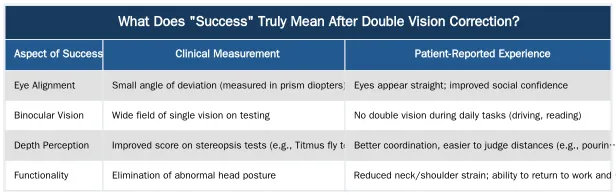
What Does “Success” Truly Mean After Double Vision Correction?
Successful diplopia surgery restores comfortable single vision across the most useful fields of gaze. While eye alignment is a critical component, the true measure of success is functional. The brain must fuse the images from both eyes into a single, clear picture without strain, headaches, or compensatory head postures.
The primary objective is to eliminate double vision, allowing you to interact with your environment naturally and safely. Success is the practical ability to read a book, drive a car, or make eye contact in conversation without visual disturbance.
Beyond Alignment: The Goal of Single Binocular Vision
The goal is to achieve single binocular vision, where both eyes work together as a coordinated team. A successful procedure ensures this single vision is maintained not just when looking straight ahead but also when looking up, down, and to the sides. This wide field of single vision is essential for navigating daily life, from crossing the street to participating in sports, and represents the most meaningful benchmark of a positive surgical result.
How is Double Vision Correction Success Clinically Measured?
Post-operative assessments use objective measurements and patient feedback to evaluate the surgical outcome. Clinically, success is quantified through tests that evaluate eye alignment and how effectively the eyes work together as a team, confirming the procedure’s functional benefits.
Key Metrics: Eye Alignment and Stereopsis Improvement
Eye alignment is measured in prism diopters, quantifying any residual deviation. The goal is to reduce the misalignment to a level the brain can overcome, resulting in single vision. Another key metric is the range of single vision; assessments map the field of view in which the patient can see singly and comfortably. Tests for depth perception, or stereopsis improvement, are also conducted. For many patients with adult-onset diplopia, restoring the ability to see in three dimensions is a significant and achievable outcome.
Clinical vs. Patient-Reported Outcomes: A Holistic View
Clinical data tells only part of the story. True success is achieved when objective improvements translate into a meaningful enhancement of a patient’s daily life. The combination of precise clinical results and high patient satisfaction is the hallmark of a successful procedure.
Transforming Daily Life: Quality of Life After Diplopia Surgery
Correcting double vision restores normalcy and independence. Diplopia can disrupt mobility, employment, and mental well-being. A successful surgical outcome reverses these effects, enabling a return to activities that were once difficult or impossible.
Regaining Independence: Driving and Work After Surgery
For many adults, driving is synonymous with independence. Double vision makes driving unsafe and is a notifiable condition to the DVLA in the UK. Correcting diplopia allows patients to meet the visual standards for driving, enabling them to return to work, manage family responsibilities, and regain autonomy. Many professions, from office work to skilled manual labour, become challenging with double vision. Eliminating this symptom allows individuals to perform their jobs effectively and without the strain and fatigue that diplopia causes.
Beyond Vision: Emotional and Social Well-being
Living with double vision often causes anxiety and social isolation. The effort to manage the symptom can be exhausting, leading to a withdrawal from hobbies and social gatherings. Patients may avoid eye contact due to a visible misalignment or feel self-conscious about compensatory head tilts. Successful surgery alleviates this burden. It restores confidence in social situations, reduces anxiety related to navigation and balance, and allows people to re-engage with their passions and relationships, improving overall mental health and well-being.
Mr Nadeem Ali’s Expertise: Achieving Audited Diplopia Surgery Outcomes
Achieving consistent results in diplopia surgery requires specialization, experience, and a meticulous surgical approach. Mr Nadeem Ali’s practice has a 100% focus on adult squint and double vision correction, allowing for a refined understanding of eye muscle surgery’s complexities.
Precision and Experience: The Foundation of High Success Rates
With 24 years of surgical experience, including 13 years as a Consultant at Moorfields Eye Hospital, Mr Ali has managed cases ranging from straightforward misalignments to complex neurological and post-traumatic diplopia. His surgical planning is personalized, using advanced diagnostic techniques for a tailored approach. The use of adjustable suture techniques is key to his practice, allowing for fine-tuning of eye alignment shortly after the operation to optimize the outcome. This precision is fundamental to achieving a successful result from the first operation.
Audited Results and Patient Satisfaction
Mr Ali maintains a 95% audited alignment success rate from a single operation. This clinical excellence is mirrored in patient satisfaction, demonstrated by a 5.0 Google rating from over 100 reviews. According to guidelines from the Royal College of Ophthalmologists, patient-reported outcomes are an essential measure of surgical quality. This combination of audited clinical data and positive patient feedback underscores a commitment to achieving the best possible outcome for every individual.
What to Expect Long-Term After Double Vision Correction: Stability and Support
Understanding the recovery process and having access to long-term support are crucial for patient confidence and ensuring the stability of the results. The goal is a lasting resolution to double vision, supported by a comprehensive care pathway.
Post-Operative Journey: Final Results and Recovery Timeline
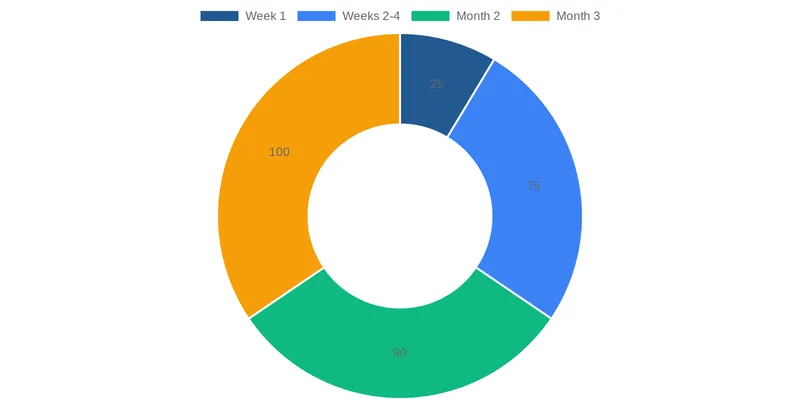
While many patients notice immediate vision improvement, the final outcome settles over weeks to months. The initial healing phase involves redness and discomfort, which typically subsides within the first few weeks. The brain then neuro-adapts to the eyes’ new, aligned position. Final, stable results are generally assessed at the three-month post-operative mark. A detailed recovery timeline sets clear expectations.
Peace of Mind: Re-operation Policy and Ongoing Care
Confidence in the long-term outcome is supported by the London Squint Clinic’s re-operation policy. If the surgical outcome is not satisfactory at the three-month review, any necessary further surgery is provided without an additional surgical fee. Patient support is continuous, with 24/7 WhatsApp access to the clinical team during recovery and life-long eye advice.
Ready to Achieve Your Double Vision Correction Success?
Success combines precise clinical alignment, restored single binocular vision, and a profound improvement in your daily function and confidence. With a specialist approach focused exclusively on adult double vision, exceptional results are achievable.
Contact us to begin your journey. Book your assessment today.
Frequently Asked Questions
What is the primary goal of diplopia surgery?
The main goal is to eliminate double vision when looking straight ahead and in key positions of gaze, restoring a comfortable field of single vision. This functional restoration allows patients to resume daily activities like driving, reading, and working without debilitating symptoms. A successful outcome is measured by this return to normal life.
How does London Squint Clinic measure double vision correction success?
We measure double vision correction success using both clinical and patient-reported outcomes. Clinically, we aim for precise eye alignment, which Mr Ali achieves in 95% of cases with a single operation. For the patient, success means the complete resolution of double vision and a profound improvement in quality of life.
What does a successful recovery feel like after achieving double vision correction success?
A successful recovery allows you to interact with the world confidently, free from the confusion, imbalance, or nausea caused by double vision. Patients often report feeling safer, more stable, and able to enjoy work and hobbies that were previously impossible. Achieving double vision correction success is a truly life-changing experience.
Will my eyes appear perfectly straight after a successful operation?
Yes, in the vast majority of cases, a successful functional outcome is accompanied by a significant cosmetic improvement, with the eyes appearing perfectly straight. However, the primary clinical goal is always the restoration of comfortable single vision, which is the most important indicator of a successful procedure.
How long does double vision correction success typically last?
For most patients, the results are stable and long-lasting. Mr Ali uses advanced surgical techniques, such as adjustable sutures, to maximise precision and ensure the alignment remains stable over the long term. The aim is to provide a permanent solution, and achieving lasting double vision correction success is the standard we strive for.
How can I start my journey toward double vision correction success?
Your journey begins with a comprehensive assessment with our specialist consultant, Mr Nadeem Ali, to diagnose your condition and discuss the best treatment plan. He will explain the potential for achieving double vision correction success in your specific case. To take the first step, you can book your initial consultation online.
Related Posts
Find out if you are suitable for Double Vision Treatment
Find out if you could benefit from this life changing surgery by contacting us today
Our most popular procedures


Hello, I’m Nadeem Ali
I’m one of the few eye surgeons in the world with 100% focus on Squint and Double Vision Surgery.
I have 24 years of eye surgery experience, and worked for 13 years as a Consultant at London’s renowned Moorfields Eye Hospital.
In 2023, I left the NHS to focus fully on treating patients from across the world at the London Squint Clinic. You can read more about me here.
There’s lots of information on the website about: squint surgery, double vision surgery and our pricing.
The most rewarding part of my job is hearing patients tell me how squint or double vision surgery has changed their lives. You can hear these stories here.
Mr Nadeem Ali
MA MB BChir MRCOphth FRCSEd(Ophth)