
Torsional Diplopia Surgery: How Tilted Double Vision Is Corrected
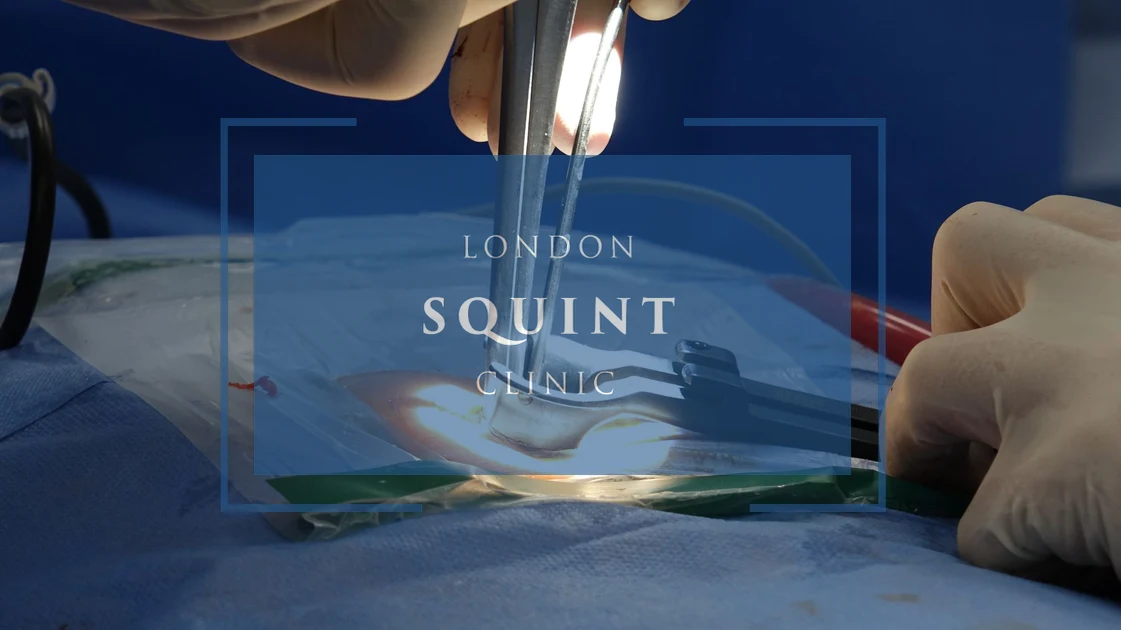
Why Choose Private Squint Surgery?
In the UK, squint surgery may be performed through the NHS, through insurance or as self-pay. NHS treatment is free, but waiting times can be long.
Self-pay allows you to choose your surgeon directly and prioritise experience, specialisation and access.
London Squint Clinic offers two fixed-price surgical packages. Our pricing page lists exactly what each one includes.
Our Packages: Complete Care £9,750 · Signature Care £12,000
- ✔ Surgery by Mr Ali, one or both eyes as clinically required
- ✔ Adjustable sutures when clinically indicated
- ✔ Detailed pre-operative measurements & surgical planning
- ✔ Anaesthetist fees
- ✔ Post-operative eye drops
- ✔ 2 scheduled video follow-ups
- ✔ Face-to-face review if clinically required
Signature Care Also Includes
- ✔ Direct 24/7 WhatsApp access to Mr Ali during recovery
- ✔ Pre-op reassurance call with anaesthetist if desired
- ✔ Additional face-to-face review if desired
- ✔ Ongoing eye advice from Mr Ali after discharge
Initial consultation: £150 (video or in person)
Surgery can usually be offered within 4 weeks. No referral required. Self-pay only.
Torsional Diplopia Surgery: The Short Answer
Torsional diplopia surgery corrects double vision in which one image looks tilted or rotated against the other. The operation is on the oblique or vertical eye muscles, most often the superior oblique tendon, and is planned from careful measurement of the eye’s rotation. A common choice when the cause is a superior oblique (fourth nerve) palsy is the Harada-Ito procedure. In one published series most patients no longer had double vision in the main positions of gaze afterwards, but some needed a further operation. Whether surgery suits you depends on the cause, the amount of tilt and how stable it has been.
Table of Contents
- What Is Torsional Diplopia?
- What Causes Cyclotorsion?
- How Is Cyclotorsion Measured Before Surgery?
- Why Do Prisms Often Not Help?
- Which Operations Correct Torsional Diplopia?
- How Successful Is Surgery for Torsional Diplopia?
- How Long Does Recovery Take?
- How Is Torsional Diplopia Assessed at London Squint Clinic?
- Frequently Asked Questions
What Is Torsional Diplopia?
Torsional diplopia is double vision in which the two images are rotated, or tilted, relative to each other. It happens when one eye is turned around its front-to-back axis, a misalignment called cyclotorsion. Straight lines such as door frames or the edge of a page can look slanted, and the floor may seem to slope. Many people also have a vertical element, with one image sitting slightly higher than the other.
To reduce the tilt, people often hold their head tilted to one side without realising it. Old photographs showing the same head tilt can help a surgeon work out how long the problem has been present.
What Causes Cyclotorsion?
A common cause of acquired cyclotorsion is weakness of the superior oblique muscle, usually from a fourth (trochlear) nerve palsy. The superior oblique turns the top of the eye inwards, so when it is weak the eye rotates outwards (excyclotorsion). Fourth nerve palsy can follow a head injury, can be linked to conditions affecting small blood vessels such as diabetes, or can be long-standing from birth and only cause symptoms later in life. You can read more in our guide to fourth nerve palsy surgery.
Torsion can also develop after operations on other eye muscles, for example in thyroid eye disease, where tilted double vision has been described after orbital decompression and recession of the rectus muscles (American Journal of Ophthalmology, 1992). For background on the condition itself, see cyclotropia: when the eyes rotate.
How Is Cyclotorsion Measured Before Surgery?
Cyclotorsion is measured in two ways: how far the eye is physically rotated (objective) and how much tilt you actually see (subjective). Both matter for planning, because they do not always agree.
| Type of measurement | Examples | What it shows |
|---|---|---|
| Objective | Photographs or scans of the back of the eye, comparing the position of the fovea with the optic nerve | The physical rotation of the eye |
| Subjective | Double Maddox rod test, synoptophore | How much tilt you perceive |
A large physical rotation with little perceived tilt can mean the brain has partly adapted, which is common when the problem has been present since childhood. A recent palsy usually causes a more troublesome tilt. Vertical and horizontal misalignment are measured at the same time, in different directions of gaze, because an operation on one muscle changes all three.
Why Do Prisms Often Not Help?
Prisms in glasses shift an image up, down or sideways, but they cannot rotate it, so they do not correct the tilted part of torsional diplopia. They can still help with an accompanying vertical or horizontal misalignment, and some people use them while a recent palsy is given time to recover. When the tilt itself is the main problem and has been stable, surgery is the treatment that addresses it directly.
Which Operations Correct Torsional Diplopia?
The operation chosen depends on the direction of the rotation, its cause and whether there is also a vertical or horizontal squint. For outward rotation caused by superior oblique weakness, a common choice is the Harada-Ito procedure. The front fibres of the superior oblique tendon, which are responsible for turning the eye inwards, are moved forwards and outwards to strengthen that action. Other options include tightening the whole superior oblique tendon, or weakening the inferior oblique or a vertical rectus muscle when the vertical misalignment also needs correcting.
Adjustable sutures can be used for some of these muscles. The final position of the muscle is set after the operation, once you are awake and can report what you see. You can read how this works in our article on adjustable suture squint surgery.
How Successful Is Surgery for Torsional Diplopia?
Published results show that surgery helps most patients, but not all. A review of 26 patients who had Harada-Ito surgery at two academic centres defined success as no double vision looking straight ahead in the distance and looking down to read, with or without a prism. Success was reported in 73% of patients and partial success in 7%; 19% still had torsional diplopia. Further surgery was needed in 23% (J AAPOS, 2012).
In that study, everyone with 10 degrees of torsion or less before surgery had a successful result, and patients whose surgery did not succeed had more torsion to begin with. The study was small and retrospective, so its figures are a guide rather than a prediction for any one person. Mr Ali will discuss what applies to you at consultation.
How Long Does Recovery Take?
Recovery after torsional diplopia surgery is similar to recovery after other squint operations. Redness and soreness for a few days are common. Double vision after squint surgery often settles within 3 to 4 weeks, although it sometimes lasts a few months, and it usually takes a few weeks before the result can be judged (West Hertfordshire Teaching Hospitals NHS Trust). If you have held your head tilted for a long time, your posture may take a while to change as your vision settles.
Like any operation, squint surgery carries risks. A UK study quoted in the same NHS leaflet reported serious complications in about 3 in 1,000 patients, including loss of vision in about 1 in 2,000.
How Is Torsional Diplopia Assessed at London Squint Clinic?
Mr Nadeem Ali is a consultant ophthalmic surgeon (MA MB BChir MRCOphth FRCSEd(Ophth)) and a former consultant at Moorfields Eye Hospital, specialising in adult squint and double vision surgery. At your consultation he measures the rotational, vertical and horizontal parts of your double vision, looks for the cause, and explains whether surgery is likely to help and which muscles would be involved. See double vision surgery, Mr Ali’s profile and our pricing page, or book a consultation.
Frequently Asked Questions
What is torsional diplopia?
Torsional diplopia is double vision in which one image looks tilted or rotated compared with the other. It is caused by one eye being rotated around its front-to-back axis (cyclotorsion), often because the superior oblique muscle is weak.
Can glasses with prisms correct tilted double vision?
Prisms cannot rotate an image, so they do not correct the tilt itself. They can help with an accompanying vertical or horizontal misalignment. When the tilt is the main problem and has been stable, surgery addresses it directly.
How successful is surgery for torsional diplopia?
In a published series of 26 patients who had Harada-Ito surgery, 73% had a successful result and 23% needed further surgery. Patients with less torsion before surgery did better. Your own likely outcome is discussed at consultation.
How long does recovery take after surgery for torsional diplopia?
Recovery is similar to other squint operations. Redness and soreness are common for a few days, double vision after the operation often settles within 3 to 4 weeks, and it usually takes a few weeks before the result can be judged.
Sources
- Outcomes of Harada-Ito surgery for acquired torsional diplopia. J AAPOS. 2012;16(5):453–7. PMID 23084384
- Torsional diplopia after transantral orbital decompression and extraocular muscle surgery associated with Graves’ orbitopathy. Am J Ophthalmol. 1992;113(4):363–73. PMID 1558109
- West Hertfordshire Teaching Hospitals NHS Trust. Squint surgery (strabismus surgery), patient information leaflet. westhertshospitals.nhs.uk
Related Posts
Find out if you are suitable for Double Vision Treatment
Find out if you could benefit from this life changing surgery by contacting us today
Our most popular procedures


Hello, I’m Nadeem Ali
I’m one of the few eye surgeons in the world with 100% focus on Squint and Double Vision Surgery.
I have 24 years of eye surgery experience, and worked for 13 years as a Consultant at London’s renowned Moorfields Eye Hospital.
In 2023, I left the NHS to focus fully on treating patients from across the world at the London Squint Clinic. You can read more about me here.
There’s lots of information on the website about: squint surgery, double vision surgery and our pricing.
The most rewarding part of my job is hearing patients tell me how squint or double vision surgery has changed their lives. You can hear these stories here.
Mr Nadeem Ali
MA MB BChir MRCOphth FRCSEd(Ophth)