
How Double Vision Surgery Radically Changes Quality of Life
Why Choose Private Squint Surgery?
In the UK, squint surgery may be performed via the NHS, through insurance, or as self-pay. NHS treatment is free, but waiting times can be long and surgery is often performed by trainees under supervision. Many operations are carried out by surgeons who mainly specialise in children’s squint rather than adult complex cases.
With insurance, fees are standardised — meaning some leading specialists choose not to participate. Self-pay allows you to choose your surgeon directly and prioritise experience, specialisation, and access.
Many centres quote only a surgical fee. Hospital costs, anaesthetic fees and follow-ups are frequently additional. At London Squint Clinic, everything is included in one transparent package.
Our Complete Package – £10,000
- ✔ Advanced surgery by Mr Ali (one or both eyes)
- ✔ Adjustable sutures where clinically indicated
- ✔ Detailed orthoptic planning
- ✔ All hospital & anaesthetic fees included
- ✔ Post-operative medication
- ✔ Two video follow-ups
- ✔ Face-to-face review appointment
What Makes Us Different
- ✔ 100% focused on adult squint & double vision surgery
- ✔ >95% audited success rate
- ✔ Free re-treatment at 3 months if worse (extremely rare)
- ✔ 24/7 direct WhatsApp access to your surgeon during recovery
- ✔ Optional well-being session & pre-op reassurance call
Initial consultation: from £150
Surgery typically within 4 weeks. No referral required. Self-pay only.
Quality of Life After Diplopia Surgery: Regaining Independence
The quality of life after diplopia surgery is significantly enhanced by restoring single, functional vision. This surgical correction eliminates the constant mental strain, headaches, and disorientation caused by seeing two images. Patients regain the ability to perform daily tasks like driving and reading, which often leads to a profound boost in confidence and mental health. The procedure addresses not just the physical symptom but also the emotional impact of diplopia, restoring independence and alleviating social anxiety for a transformative outcome.
At London Squint Clinic, Mr Nadeem Ali specialises exclusively in adult diplopia and strabismus surgery. His expertise focuses on correcting complex eye misalignments to restore single vision, drawing on extensive experience as a former consultant at Moorfields Eye Hospital.
To explore your options, contact us to schedule your consultation. You can also reach us via: Enquire about double vision surgery, Time to say goodbye to double vision
How Double Vision Surgery Radically Changes Quality of Life
Surgery for double vision (diplopia) restores a single, clear field of vision. This correction enhances a person’s ability to interact with their environment, regain independence, and alleviate the psychological strain of the condition. Patients often describe the change in quality of life after diplopia surgery as life-changing.
Living with diplopia requires constant mental effort to fuse two images, causing headaches, fatigue, and disorientation. Activities like walking down stairs, pouring a drink, or reading become hazardous. By realigning the eyes, surgery eliminates this problem. The result is the return of functional vision and benefits to a person’s career, hobbies, social confidence, and mental well-being. Patient outcomes often reflect a return to a life previously taken for granted.
Beyond Blurry Vision: How Diplopia Impacts Daily Life and Mental Well-being
Chronic double vision creates a sense of uncertainty that affects daily life. This constant visual confusion can lead to a decline in mental health, as the brain works overtime to interpret a disorienting world. The effort can cause chronic fatigue, eyestrain, and headaches, making it difficult to concentrate on work, studies, or conversations.
The Hidden Burden: Social Anxiety and Reduced Confidence
Individuals with diplopia may develop social anxiety, avoiding eye contact or public gatherings for fear of appearing disoriented or because of a visible eye misalignment (squint). This can lead to social isolation and a loss of self-esteem. The need to tilt one’s head or close one eye to achieve single vision can be draining and draw unwanted attention, eroding confidence. Understanding the emotional impact of double vision is a first step toward seeking effective treatment.
Functional Limitations: Driving, Reading, and Work Challenges
Diplopia imposes severe practical restrictions. Driving becomes unsafe and is often legally prohibited, causing a loss of independence. The UK’s Driver and Vehicle Licensing Agency (DVLA) requires individuals to report diplopia as a medical condition affecting driving. Reading, using a computer, or watching television can become frustrating. This affects job performance, threatening career and financial stability. The challenges of driving with double vision are a primary motivator for patients seeking a surgical solution.
Can Double Vision Surgery Truly Restore Your Independence?
For adults with double vision, surgery offers a path to restored independence. The procedure realigns the eye muscles to restore binocular single vision, eliminating compensatory strategies like patching one eye or adopting awkward head postures. This restoration of functional vision allows a return to normal life.
The benefits of single vision are immediate and practical. Tasks like navigating busy streets, judging distances, or participating in sports become manageable again. This renewed ability to interact confidently with the world restores personal freedom. The procedure removes the barriers of diplopia, allowing individuals to reclaim control over their daily lives.
Regaining Control: Driving, Hobbies, and Navigating Your World
The ability to drive again is a tangible measure of restored independence. With clear, single vision, patients can meet visual standards for driving, enabling them to commute, run errands, and connect with others without reliance. Hobbies requiring depth perception and clear sight, like painting, carpentry, or tennis, can be resumed. The fear of misjudging a step or bumping into objects subsides, making movement feel safe again.
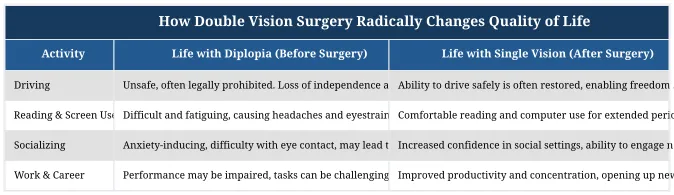
View data as table
| Activity | Life with Diplopia (Before Surgery) | Life with Single Vision (After Surgery) |
|---|---|---|
| Driving | Unsafe, often legally prohibited. Loss of independence and reliance on others. | Ability to drive safely is often restored, enabling freedom and autonomy. |
| Reading & Screen Use | Difficult and fatiguing, causing headaches and eyestrain. May require closing one eye. | Comfortable reading and computer use for extended periods, supporting work and leisure. |
| Socializing | Anxiety-inducing, difficulty with eye contact, may lead to withdrawal and isolation. | Increased confidence in social settings, ability to engage naturally without visual distraction. |
| Work & Career | Performance may be impaired, tasks can be challenging, limiting career options. | Improved productivity and concentration, opening up new career opportunities. |
The London Squint Clinic Difference: Expert-Led Diplopia Correction
The outcome of double vision surgery depends on the surgeon’s expertise, particularly in complex adult cases. The London Squint Clinic is the specialist practice of Mr Nadeem Ali, a consultant ophthalmic surgeon focused on adult squint and diplopia. This specialism ensures the patient’s journey is informed by deep experience in the field.
Mr Ali’s background includes 13 years as a Consultant at Moorfields Eye Hospital, where from 2016 to 2023 he was the Lead for the Adult Squint and Neuro-Ophthalmology services. This experience provides him with an understanding of the conditions that cause double vision in adults, from common eye muscle misalignments to complex neurological causes.
Specialised Expertise for Complex and Revision Cases
Many patients seeking specialist care have complex needs, including diplopia caused by cranial nerve palsies, thyroid eye disease, or head trauma. Many have had unsuccessful previous eye muscle surgery or find prism glasses are no longer effective. Mr Ali’s practice addresses these scenarios, using techniques like adjustable suture surgery to refine eye alignment post-operatively for optimal results. This 100% focus on adult strabismus and diplopia distinguishes the clinic from general ophthalmic practices.
A Patient-Centric Journey: From Consultation to Recovery
The clinic’s model provides direct, continuous care from Mr Ali, from initial consultation through surgery and post-operative follow-up. This continuity ensures the surgeon who understands the case performs the procedure. The process includes transparent, fixed-package pricing and direct communication channels, like WhatsApp access during recovery. This approach provides clarity and support for patients seeking specialist double vision surgery.
What to Expect: Life-Changing Outcomes After Diplopia Surgery
Improvements in the quality of life after diplopia surgery are functional, psychological, and social. The primary goal is clear, comfortable single vision, but the effects of this correction are profound. Patients often describe the outcome as a personal transformation that allows them to re-engage with their lives. These success stories are built on restoring normalcy.
The psychological benefits of correcting a squint or double vision are significant. The mental strain of processing a confusing visual world is lifted, reducing mental fatigue. This visual clarity positively impacts a person’s well-being and outlook.
The Emotional and Psychological Transformation
A consistent patient outcome is a significant boost in confidence. No longer burdened by head tilts, eye patches, or the anxiety of navigating environments, individuals feel more comfortable. Social anxiety often diminishes, allowing for more natural interactions. This self-assurance empowers people to pursue personal and professional opportunities they may have avoided while experiencing diplopia.
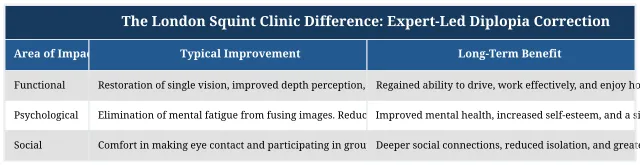
View data as table
| Area of Impact | Typical Improvement | Long-Term Benefit |
|---|---|---|
| Functional | Restoration of single vision, improved depth perception, and coordination. | Regained ability to drive, work effectively, and enjoy hobbies. Reduced risk of falls. |
| Psychological | Elimination of mental fatigue from fusing images. Reduced anxiety and stress. | Improved mental health, increased self-esteem, and a significant confidence boost. |
| Social | Comfort in making eye contact and participating in group activities. | Deeper social connections, reduced isolation, and greater enjoyment of public life. |
A Smoother Recovery and Lasting Single Vision
A well-managed recovery period completes the surgical journey. The goal is a stable, lasting alignment for comfortable, long-term single vision. Modern surgical techniques are designed for a smooth healing process. For detailed information, review your complete guide to recovery and life-changing outcomes after diplopia surgery.
Ready to Say Goodbye to Double Vision?
If you live with the challenges of double vision, surgical correction can help you reclaim your life. Restoring single vision is about regaining independence, confidence, and freedom. The improvement in quality of life after diplopia surgery can be remarkable.
A specialist consultation is the first step to determine if surgery is the right option. An assessment provides a diagnosis and a personalised treatment plan.
Conclusion
The decision for double vision surgery rests on the desire to restore function and eliminate the burden of diplopia. The goal is a stable, single image of the world that allows you to live without compromise. If prism glasses have failed or are no longer tolerated, and the impact on daily life is too great, exploring a surgical solution with a specialist is the recommended next step. This path can correct vision and enhance well-being.
To learn more, contact us. You can Enquire about double vision surgery or decide it’s Time to say goodbye to double vision.
Frequently Asked Questions
How does double vision surgery specifically enhance the quality of life after diplopia surgery?
Double vision surgery profoundly improves the quality of life after diplopia surgery by restoring clear, single vision. This allows patients to confidently resume daily activities such as driving, reading, and navigating stairs, which were previously challenging or unsafe. The elimination of constant mental effort to fuse images also reduces headaches and fatigue, contributing significantly to overall well-being.
How does correcting diplopia impact a person’s career and overall independence?
Correcting diplopia can be transformative for a person’s career, enabling them to return to or excel in professions that require clear vision, such as office work, driving, or precision tasks. Many patients regain their independence, as tasks like pouring a drink or walking safely become manageable again, reducing reliance on others and enhancing personal safety.
What is the emotional transformation experienced by patients improving their quality of life after diplopia surgery?
Patients often describe an overwhelming sense of relief and freedom after correcting diplopia, moving from isolation and frustration to renewed confidence. This emotional shift allows them to re-engage socially and professionally, as the anxiety and mental burden of double vision are lifted. Many report feeling more comfortable making eye contact and participating in social interactions.
Are the improvements in vision and quality of life after diplopia surgery generally long-lasting?
Yes, the goal of double vision surgery is to provide a lasting restoration of single vision, offering sustained improvements to your quality of life. While individual results can vary, many patients experience permanent alignment, freeing them from the limitations imposed by diplopia for years to come. Regular follow-up appointments help monitor progress and maintain optimal alignment.
When is surgery considered for adults whose prism glasses no longer manage their double vision effectively?
Surgery becomes a primary consideration when prism glasses are no longer sufficient or tolerated to manage double vision, or when they cause visual distortions. This often occurs with large-angle deviations or when the need for stronger prisms becomes cumbersome, indicating that a more permanent solution to realign the eyes is necessary. Mr Nadeem Ali specializes in such cases, offering surgical correction for prism failure.
What is the typical investment for adult double vision surgery at a specialist clinic like London Squint Clinic?
At the London Squint Clinic, the complete surgical package for adult double vision is a fixed price of £12,000 as of 2026. This transparent, all-inclusive fee covers the surgeon’s fees, anaesthetist’s services, hospital charges, and all necessary post-operative care for three months, with no hidden costs. An initial consultation with Mr Nadeem Ali is priced separately, starting from £150.
Related Posts
Find out if you are suitable for Double Vision Treatment
Find out if you could benefit from this life changing surgery by contacting us today
Our most popular procedures


Hello, I’m Nadeem Ali
I’m one of the few eye surgeons in the world with 100% focus on Squint and Double Vision Surgery.
I have 24 years of eye surgery experience, and worked for 13 years as a Consultant at London’s renowned Moorfields Eye Hospital.
In 2023, I left the NHS to focus fully on treating patients from across the world at the London Squint Clinic. You can read more about me here.
There’s lots of information on the website about: squint surgery, double vision surgery and our pricing.
The most rewarding part of my job is hearing patients tell me how squint or double vision surgery has changed their lives. You can hear these stories here.
Mr Nadeem Ali
MA MB BChir MRCOphth FRCSEd(Ophth)