
Comparing Botox Injections vs. Eye Muscle Surgery for Double Vision
Why Choose Private Squint Surgery?
In the UK, squint surgery may be performed via the NHS, through insurance, or as self-pay. NHS treatment is free, but waiting times can be long and surgery is often performed by trainees under supervision. Many operations are carried out by surgeons who mainly specialise in children’s squint rather than adult complex cases.
With insurance, fees are standardised — meaning some leading specialists choose not to participate. Self-pay allows you to choose your surgeon directly and prioritise experience, specialisation, and access.
Many centres quote only a surgical fee. Hospital costs, anaesthetic fees and follow-ups are frequently additional. At London Squint Clinic, everything is included in one transparent package.
Our Complete Package – £10,000
- ✔ Advanced surgery by Mr Ali (one or both eyes)
- ✔ Adjustable sutures where clinically indicated
- ✔ Detailed orthoptic planning
- ✔ All hospital & anaesthetic fees included
- ✔ Post-operative medication
- ✔ Two video follow-ups
- ✔ Face-to-face review appointment
What Makes Us Different
- ✔ 100% focused on adult squint & double vision surgery
- ✔ >95% audited success rate
- ✔ Free re-treatment at 3 months if worse (extremely rare)
- ✔ 24/7 direct WhatsApp access to your surgeon during recovery
- ✔ Optional well-being session & pre-op reassurance call
Initial consultation: from £150
Surgery typically within 4 weeks. No referral required. Self-pay only.
Botox Vs Surgery for Double Vision: Choosing a Solution
This article compares botox vs surgery for double vision, detailing how each treatment addresses eye muscle misalignment to restore single vision. Botulinum toxin injections offer a temporary, non-surgical solution through chemodenervation, often used for nerve palsy or as a diagnostic tool. In contrast, eye muscle surgery provides a permanent structural correction for stable, long-standing strabismus. Understanding the differences in duration, recovery, and ideal patient profiles is essential when evaluating botox vs surgery for double vision and selecting the most effective path to clear, comfortable sight.
The information is provided by the London Squint Clinic, a specialist centre focused exclusively on adult strabismus and diplopia correction. Our consultant-led approach is grounded in extensive experience managing complex cases, including cranial nerve palsies and revision surgeries requiring advanced techniques.
To explore your options, contact us to schedule your consultation. You can also reach us via: Book your assessment
This article compares botox vs surgery for double vision. Diplopia (double vision) disrupts daily activities like reading, driving, and walking. It covers how each treatment works, their benefits, limitations, and the factors determining the most suitable approach for restoring single vision.
Understanding Double Vision: Causes and Treatment Goals
Double vision (diplopia) occurs when misaligned eyes cannot focus on the same point, causing the brain to perceive two images. The treatment goal is to realign the eyes to restore single, comfortable binocular vision, improving balance, coordination, and quality of life.
What is Diplopia and How Does it Affect You?
Seeing two images of a single object is disorienting and debilitating. For adults, diplopia can interfere with work, prevent driving, and increase fall risk. The condition can also cause anxiety and social withdrawal.
Common Causes of Eye Misalignment Leading to Double Vision
Diplopia in adults results from conditions affecting the muscles and nerves controlling eye movement. Common causes include:
- Cranial Nerve Palsies: Damage to the third, fourth, or sixth cranial nerves, which control eye muscles, can lead to misalignment. This may be caused by vascular issues, trauma, or tumours.
- Strabismus: This is a general term for any misalignment of the eyes. It can be present from childhood or develop in adulthood due to age-related muscle changes or other health conditions.
- Thyroid Eye Disease: Inflammation and swelling of the eye muscles and fatty tissues behind the eye, associated with Graves’ disease, can restrict eye movement and cause diplopia.
- Head Injury or Trauma: Physical trauma can directly damage the eye muscles or the nerves that control them.
Botox Injections for Double Vision: A Temporary Approach
Botulinum toxin (Botox) is a non-surgical injection for managing certain types of double vision. It temporarily alters muscle function to improve eye alignment. While not a permanent fix, it is a valuable tool in specific clinical situations.
How Botulinum Toxin Temporarily Corrects Eye Misalignment
The mechanism is chemodenervation. A small, controlled dose of botulinum toxin is injected into an overacting eye muscle, blocking nerve signals that cause contraction. This weakness allows the opposing muscle to pull the eye into a straighter position, temporarily reducing double vision. The procedure takes a few minutes in a clinical setting. Explore Botox for squint treatment for more information.
Who is a Candidate and What are the Expected Outcomes?
Botulinum toxin is for patients with small, stable eye misalignments or temporary conditions like a recovering nerve palsy. It can also be a diagnostic tool to predict surgical outcomes. Effects begin within days, with maximum effect after one to two weeks. The results are temporary, lasting two to four months and requiring repeat injections. Potential side effects include temporary eyelid droop (ptosis) or a new vertical misalignment, which resolve as the toxin wears off.
Eye Muscle Surgery for Double Vision: A Permanent Solution
Eye muscle surgery is the definitive, long-term treatment for chronic double vision. The procedure permanently corrects misalignment by physically adjusting the muscles controlling eye movement to restore function and appearance.
The Surgical Approach to Restoring Single Vision
During double vision surgery, the surgeon incises the conjunctiva (the eye’s clear surface layer) to access the eye muscles. Depending on the misalignment, a muscle is weakened by moving its attachment point back (recession) or strengthened by shortening it (resection). The goal is to rebalance forces on the eye so it points straight and coordinates with the other eye. The procedure is performed under anaesthesia for a lasting correction.
Precision and Outcomes: The Role of Adjustable Sutures
Adjustable sutures are a significant advancement in adult strabismus surgery. This technique allows for fine-tuning of the eye’s alignment hours after the operation, while the patient is awake. The surgeon adjusts a temporary knot in the suture to achieve optimal alignment before tying it permanently. This method enhances surgical precision, which is valuable in complex or revision cases. Learn more about the benefits of adjustable suture squint surgery.
Botox vs. Surgery: A Detailed Comparison for Diplopia
The choice between botox and surgery for double vision depends on the diplopia’s cause, duration, the size of the misalignment, and the patient’s goals. One is a temporary, minimally invasive approach; the other is a permanent solution.
Key Differences in Efficacy, Longevity, and Recovery
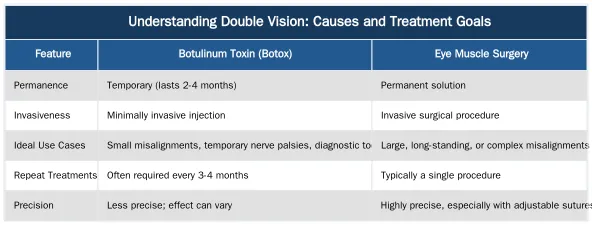
The fundamental difference is permanence. Botulinum toxin injections are temporary, requiring repeated treatments. Surgery is a one-time, permanent correction. Botox recovery is almost immediate, while surgical recovery involves a few weeks of redness and discomfort. The table below outlines these distinctions.
Cost Considerations and Access to Specialist Care
Botox injections have a lower upfront cost per treatment but can become more expensive over time with repeated sessions. Surgery has a higher initial investment but is a one-off cost. Private specialist care can provide faster treatment and transparent package pricing, eliminating long waiting lists.
| Metric | Botox Injection | Eye Muscle Surgery |
|---|---|---|
| Procedure Time (minutes) | 5 – 10 | 45 – 90 |
| Initial Recovery (days) | 0 – 1 | 5 – 10 |
| Full Effect Seen | 7 – 14 days | 4 – 6 weeks |
| Duration of Effect | 2 – 4 months | Permanent |
Choosing Your Path: Expert Guidance for Double Vision Treatment
The decision between a botulinum toxin injection and eye muscle surgery requires a thorough assessment by an ophthalmologist specializing in adult strabismus and neuro-ophthalmology. An expert evaluation is critical to diagnose the cause of your double vision and recommend the most effective treatment plan.
When to Consider Botox or Surgery: A Specialist’s Perspective
A specialist considers several factors. The cause of the diplopia is paramount; a recovering sixth nerve palsy may be managed with temporary Botox, whereas a long-standing misalignment from thyroid eye disease would likely require surgery. The size of the eye turn, patient lifestyle, and occupational needs are also important. A dedicated specialist like Mr. Nadeem Ali, with a 100 percent focus on adult squint and double vision, can provide advice tailored to your situation.
Why Specialist Expertise Matters for Complex Cases and Revision Surgery
For patients with complex double vision from previous trauma, brain tumours, or failed operations, surgeon expertise is the most important factor for a successful outcome. With 24 years of eye surgery experience, including 13 as a Consultant at London’s Moorfields Eye Hospital, Mr. Ali has deep expertise in managing challenging cases. His fellowship training at the National Hospital for Neurology and Neurosurgery, Queen Square, provides an exceptional understanding of the neurological causes of diplopia. This specialization is vital for patients who have been told nothing more can be done. The American Academy of Ophthalmology states that successful treatment requires a deep understanding of the eye muscle system.
Life-Changing Outcomes: What to Expect After Treatment
Successful treatment for double vision is life-changing. Restoring single vision restores confidence, independence, and the ability to engage with the world. Whether through Botox or surgery, the goal is to improve your quality of life.
Restoring Single Vision and Improving Quality of Life
Successful treatment allows patients to read without overlapping text, drive confidently, and walk without hesitation. Eliminating double vision alleviates associated headaches, eye strain, and disorientation, enabling a return to hobbies and work. The emotional relief is profound.
The London Squint Clinic Difference: Precision and Patient Care
These outcomes require technical precision and patient support. The London Squint Clinic has a 95% audited alignment success rate from a single operation. The care model includes 24/7 WhatsApp access during recovery and a re-operation policy, ensuring support throughout your journey.
Take the Next Step Towards Clear Vision
Effective treatments for double vision are available. The first step is an expert assessment to understand the cause of your condition and explore the best path forward. A specialist consultation provides a clear diagnosis and a personalised treatment plan.
Book Your Expert Assessment Today
No referral is needed. In-person and video consultations are available, making access to expertise straightforward. A detailed assessment with Mr. Nadeem Ali will clarify whether botulinum toxin or surgery is the right choice for you. Book your assessment to learn more about your treatment options.
Conclusion
The comparison of botox vs surgery for double vision shows two distinct approaches. Botulinum toxin is a temporary, non-surgical option for specific, transient conditions. Eye muscle surgery is a permanent solution for chronic misalignment. The optimal choice is individual and depends on a specialist’s diagnosis. Seeking expert care clarifies the best treatment to restore vision and enhance your quality of life. To explore your options, contact us or Book your assessment.
Frequently Asked Questions
How does Botox work to treat double vision?
Botulinum toxin (Botox) is injected into an overacting eye muscle, causing it to relax and weaken temporarily. This allows the opposing muscle to pull the eye into a straighter position. This improved alignment can successfully fuse the two images into a single, clear image for a period of time.
What is the main difference in the botox vs surgery for double vision debate regarding permanence?
The primary difference is permanence. Botox offers a temporary solution, with effects typically lasting 2-4 months before repeat injections are needed to manage symptoms. In the comparison of botox vs surgery for double vision, eye muscle surgery is designed to be a permanent, one-time correction for stable eye misalignment.
In the context of botox vs surgery for double vision, when is Botox the preferred option?
Botox may be preferred as a temporary measure for patients whose double vision is still changing, such as during recovery from a nerve palsy. It can also serve as a diagnostic tool to predict surgical outcomes or be an option for individuals not medically fit for surgery. In the discussion of botox vs surgery for double vision, this approach helps manage symptoms while awaiting a more stable condition.
What are the key advantages when considering botox vs surgery for double vision?
The main advantage of surgery is that it provides a permanent and stable correction of eye alignment in a single procedure. This eliminates the need for repeated injections and the fluctuating vision that occurs as Botox wears off. For adults with long-standing diplopia, the debate of botox vs surgery for double vision almost always favours surgery for a definitive, life-changing result.
Can I still have eye muscle surgery if Botox injections were not effective?
Yes, it is very common for patients to proceed with eye muscle surgery after trying Botox. An unsuccessful or temporary response to Botox does not prevent you from having a successful surgical outcome. In fact, how your eyes responded can provide valuable diagnostic information for planning the most precise surgical correction.
How do I find out if Botox or surgery is right for my double vision?
The best way to determine the most effective treatment for your specific condition is through a specialist assessment with an expert like Mr. Nadeem Ali. A comprehensive evaluation of your eye alignment and medical history will clarify whether a temporary or permanent solution is most appropriate. You can book your assessment to receive a personalised treatment plan.
Related Posts

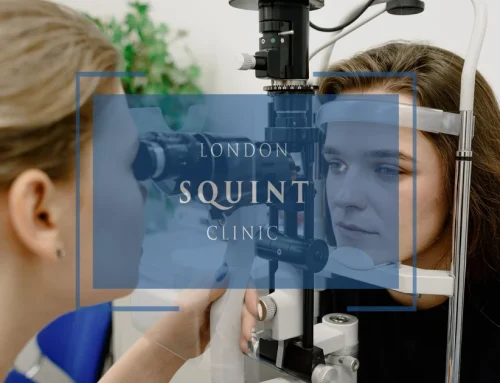
Find out if you are suitable for Double Vision Treatment
Find out if you could benefit from this life changing surgery by contacting us today
Our most popular procedures


Hello, I’m Nadeem Ali
I’m one of the few eye surgeons in the world with 100% focus on Squint and Double Vision Surgery.
I have 24 years of eye surgery experience, and worked for 13 years as a Consultant at London’s renowned Moorfields Eye Hospital.
In 2023, I left the NHS to focus fully on treating patients from across the world at the London Squint Clinic. You can read more about me here.
There’s lots of information on the website about: squint surgery, double vision surgery and our pricing.
The most rewarding part of my job is hearing patients tell me how squint or double vision surgery has changed their lives. You can hear these stories here.
Mr Nadeem Ali
MA MB BChir MRCOphth FRCSEd(Ophth)