
Double Vision After a Head Injury: A Pathway to Surgical Correction
Why Choose Private Squint Surgery?
In the UK, squint surgery may be performed via the NHS, through insurance, or as self-pay. NHS treatment is free, but waiting times can be long and surgery is often performed by trainees under supervision. Many operations are carried out by surgeons who mainly specialise in children’s squint rather than adult complex cases.
With insurance, fees are standardised — meaning some leading specialists choose not to participate. Self-pay allows you to choose your surgeon directly and prioritise experience, specialisation, and access.
Many centres quote only a surgical fee. Hospital costs, anaesthetic fees and follow-ups are frequently additional. At London Squint Clinic, everything is included in one transparent package.
Our Complete Package – £10,000
- ✔ Advanced surgery by Mr Ali (one or both eyes)
- ✔ Adjustable sutures where clinically indicated
- ✔ Detailed orthoptic planning
- ✔ All hospital & anaesthetic fees included
- ✔ Post-operative medication
- ✔ Two video follow-ups
- ✔ Face-to-face review appointment
What Makes Us Different
- ✔ 100% focused on adult squint & double vision surgery
- ✔ >95% audited success rate
- ✔ Free re-treatment at 3 months if worse (extremely rare)
- ✔ 24/7 direct WhatsApp access to your surgeon during recovery
- ✔ Optional well-being session & pre-op reassurance call
Initial consultation: from £150
Surgery typically within 4 weeks. No referral required. Self-pay only.
Double Vision After Head Injury: Restoring Single Vision
Experiencing double vision after head injury (post-traumatic diplopia) results from damage to the nerves, muscles, or bones controlling eye movement. This guide explains the primary causes, including cranial nerve palsy and orbital fractures, and outlines the diagnostic and treatment pathway. It details when non-surgical options like prism therapy are appropriate and clarifies the circumstances under which strabismus surgery becomes the definitive solution for correcting eye misalignment. The objective is to restore clear, single binocular vision, enabling a return to normal daily activities like reading and driving.
The London Squint Clinic focuses exclusively on adult strabismus and diplopia surgery. Consultant Ophthalmic Surgeon Mr Nadeem Ali provides specialist assessment and surgical correction for complex eye alignment conditions, including those resulting from head trauma and nerve damage, to restore single vision.
To explore your options, contact us to schedule your consultation. You can also reach us via: Enquire about double vision surgery, Time to say goodbye to double vision
Double vision after head injury (diplopia) can impact daily life, from reading to driving. It results from damage to the nerves and muscles that control eye movement. This article covers the causes, diagnosis, and surgical correction of diplopia after head trauma to restore single vision and independence.
What Causes Double Vision After a Head Injury?
Double vision (diplopia) after a head injury occurs when misaligned eyes cause the brain to receive two separate images. The misalignment stems from damage to the nerves, muscles, or bones of the eye socket that coordinate eye movement.
Understanding Traumatic Diplopia
A traumatic brain injury (TBI), including a concussion, can disrupt binocular vision. The primary causes of post-traumatic diplopia are:
- Cranial Nerve Palsy: Three cranial nerves (3rd, 4th, and 6th) transmit signals from the brain to the eye muscles. Trauma can stretch, bruise, or sever these nerves, causing paralysis of the muscles they control, resulting in misalignment and double vision.
- Direct Eye Muscle Damage: An injury’s impact can bruise, entrap, or tear the muscles that move the eyeball. This damage restricts movement, preventing the eyes from working together.
- Orbital Fracture: A fracture of the eye socket (orbit) can cause diplopia. Bone fragments can block muscle movement, or the muscle can become trapped in the fracture (entrapment). This is a common cause of double vision after facial trauma.
Initial Steps: Diagnosing and Managing Post-Trauma Diplopia
Correcting post-traumatic double vision begins with a precise diagnosis and management. Accurate assessment determines the injury’s extent and the best treatment plan.
The Diagnostic Journey: From Injury to Assessment
Diagnosis requires a neuro-ophthalmological examination. Tests measure eye misalignment in different gaze positions, assess eye muscle function, and identify nerve damage. CT or MRI scans help visualize orbital bones, eye muscles, and the brain to identify fractures or nerve injuries.
An initial observation period is often recommended. Some traumatic diplopia, especially from nerve bruising, may resolve spontaneously over several months as the body heals.
Non-Surgical Treatments: When Are They Effective?
For mild diplopia or during spontaneous recovery, non-surgical options can manage symptoms. Prisms are the most common treatment. These lenses (temporary Fresnel prisms or permanent glasses) bend light, helping the brain merge two images into one. Patching one eye eliminates double vision but sacrifices depth perception.
These methods are often temporary. Prisms may not correct misalignment in all gaze directions and are ineffective for large or complex deviations. Review the causes of adult double vision that may require surgical intervention.
When Is Surgery the Best Option for Traumatic Double Vision?
When double vision persists despite conservative management, surgery is the most effective way to restore single vision. The decision for surgery depends on clinical indicators and the condition’s impact on quality of life.
Identifying Persistent Diplopia and Prism Failure
Surgery is considered when eye misalignment is stable for 6 to 12 months post-injury. This waiting period allows for natural recovery. Surgical candidacy indicators include:
- Stable Misalignment: The amount of double vision is no longer changing.
- Prism Intolerance or Failure: The deviation is too large for prisms to correct, prisms cause visual distortion, or the misalignment is too complex (e.g., changes in different directions of gaze).
- Significant Functional Impairment: Double vision interferes with daily activities like working, driving, or reading, causing a loss of independence.
- Compensatory Head Postures: Adopting an uncomfortable head tilt or turn to achieve single vision, leading to neck and shoulder pain.
Persistent diplopia affects confidence, mobility, and mental well-being. Surgery offers a definitive solution for double vision after facial trauma.
The Role of Specialist Assessment in Surgical Candidacy
Evaluating a patient for surgery after head trauma requires expertise. A specialist in adult strabismus (eye misalignment) and neuro-ophthalmology is essential, ensuring understanding of brain, nerve, and muscle interaction. The assessment involves precise measurements to quantify the misalignment and create a surgical plan tailored to the muscle weakness or restriction. This evaluation is critical for a successful surgical outcome.
The Surgical Pathway: Correcting Eye Misalignment After Head Injury
The definitive treatment for persistent traumatic diplopia is eye muscle surgery (strabismus surgery). This procedure physically realigns the eyes, allowing the brain to fuse two images into one.
Advanced Strabismus Surgery Techniques for Post-Trauma Diplopia
Strabismus surgery adjusts the position or tension of eye muscles to restore alignment. The procedure is performed on the eye’s surface, not inside the eyeball. Key techniques include:
- Recession: An overly tight muscle is detached and reattached further back on the eye, weakening its pulling force.
- Resection: A portion of a weak muscle is removed to shorten and strengthen it, increasing its pulling force.
- Adjustable Sutures: This technique allows for fine-tuning eye alignment hours after surgery while the patient is awake. It offers high precision, valuable in post-traumatic cases where scarring can make outcomes less predictable.
The surgical plan is customized based on pre-operative measurements. The goal is to restore a large field of single binocular vision for a return to normal activities. Learn more about the surgical procedure for double vision.
Why Specialist Expertise Matters in Complex Cases
Correcting post-traumatic diplopia requires surgical skill and diagnostic acumen. Mr Nadeem Ali brings 24 years of surgical experience, including 13 years as a Consultant at Moorfields Eye Hospital, to each case. His focus on adult strabismus and neuro-ophthalmology provides expertise for complex cases involving cranial nerve palsies, orbital fractures, and revision surgeries. This background, supported by research documented in sources like the National Library of Medicine, is critical for developing a surgical strategy that maximizes success.
Life After Surgery: Restoring Single Vision and Quality of Life
The goal of surgery is to restore the patient’s quality of life. A successful procedure eliminates double vision, restores depth perception, and allows a return to previous activities.
Recovery and Post-Operative Care
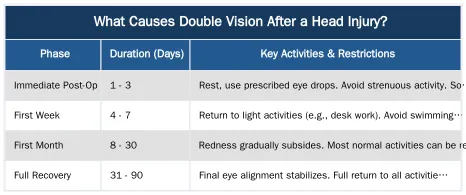
Recovery from strabismus surgery is swift. The eye will be red and gritty for a few weeks, but most patients return to non-strenuous activities within one to two weeks. Post-operative care involves using eye drops to prevent infection and reduce inflammation. At the London Squint Clinic, patients have 24/7 WhatsApp access to Mr Ali during recovery for questions or concerns.
Expected Outcomes and Long-Term Benefits
With an audited 95% alignment success rate from a single operation, most patients achieve functional single vision. The benefits extend beyond seeing clearly. Restoring binocular vision improves balance, coordination, and confidence. Eliminating a compensatory head posture relieves chronic neck pain, and the ability to make direct eye contact enhances social and professional interactions.
| Activity | Life with Persistent Diplopia | Life After Successful Surgery |
|---|---|---|
| Driving | Often impossible or unsafe; requires patching one eye. | Confidence and safety restored; ability to judge distances returns. |
| Reading | Difficult and fatiguing; words may appear to move or overlap. | Comfortable and sustained reading becomes possible again. |
| Social Interaction | Difficulty making eye contact; may appear disengaged. | Natural social engagement and confidence are restored. |
| Work & Productivity | Reduced efficiency, headaches, and eye strain; may require job modification. | Improved focus, comfort, and ability to perform tasks without visual distraction. |
Considering Double Vision Surgery? Your Next Steps
If you have persistent double vision after a head injury and non-surgical methods have failed, a specialist consultation is the next step.
Connect with a Leading UK Specialist
At the London Squint Clinic, Mr Nadeem Ali’s expertise is accessible without a GP referral. We offer in-person and video consultations for UK and international patients. With transparent, fixed-package pricing and patient-centred care, you can explore your options confidently. Schedule an assessment to determine if surgery is right for you.
To begin, Enquire about double vision surgery or learn more about how it’s Time to say goodbye to double vision.
Conclusion
Double vision after a head injury can be life-altering, but it is treatable. Initial management may involve observation and prisms, but strabismus surgery offers a definitive solution for persistent cases. An assessment from an expert in adult strabismus and neuro-ophthalmology is the pathway to restoring single vision, independence, and quality of life. To explore surgical correction, contact us to schedule a consultation.
Enquire about double vision surgery today and find out if it’s your Time to say goodbye to double vision.
Frequently Asked Questions
Why does a head injury cause double vision?
A head injury can cause double vision by directly damaging the eye muscles, fracturing the eye socket, or injuring the specific cranial nerves that control eye movements. This damage disrupts the brain’s ability to align the eyes correctly, causing it to perceive two separate images. The specific cause determines the best course of treatment for double vision after head injury.
Is surgery always necessary for diplopia following head trauma?
Not always. Initially, a period of observation is recommended as some cases of post-traumatic diplopia can resolve on their own over 6-12 months. Non-surgical options like prisms fitted into glasses may be used as a temporary measure to manage symptoms. However, if the misalignment is significant and persistent, surgery is the most effective treatment to restore single vision.
How long should I wait before considering surgery for double vision after a head injury?
It is generally recommended to wait at least six months before considering a surgical correction. This waiting period allows for any potential spontaneous recovery of nerve or muscle function to occur. If the double vision after a head injury remains stable and disabling after this time, a surgical consultation is the appropriate next step.
What does surgery for double vision after a head injury involve?
Surgery for post-traumatic diplopia involves precisely repositioning one or more of the eye muscles to realign the eyes. A specialist surgeon often uses adjustable sutures, which allow for fine-tuning of the eye alignment in the hours immediately following the operation. This advanced technique maximises the chance of achieving clear, single vision.
How successful is surgery for correcting diplopia from a traumatic injury?
In the hands of a specialist surgeon with extensive experience in trauma-related cases, surgery is highly successful. The primary goal is to eliminate double vision in the straight-ahead and reading positions, restoring the ability to perform daily activities like driving and working. Most patients achieve a significant improvement in their quality of life and a return to functional single vision.
How can I get a specialist assessment for my double vision after a head injury?
If you are experiencing persistent double vision after a head injury, the first step is to schedule a consultation with a specialist in adult squint and diplopia surgery. You can enquire about a consultation to discuss your specific case and determine the best pathway to recovery. A specialist assessment is crucial for planning the most effective treatment.
Related Posts
Find out if you are suitable for Double Vision Treatment
Find out if you could benefit from this life changing surgery by contacting us today
Our most popular procedures


Hello, I’m Nadeem Ali
I’m one of the few eye surgeons in the world with 100% focus on Squint and Double Vision Surgery.
I have 24 years of eye surgery experience, and worked for 13 years as a Consultant at London’s renowned Moorfields Eye Hospital.
In 2023, I left the NHS to focus fully on treating patients from across the world at the London Squint Clinic. You can read more about me here.
There’s lots of information on the website about: squint surgery, double vision surgery and our pricing.
The most rewarding part of my job is hearing patients tell me how squint or double vision surgery has changed their lives. You can hear these stories here.
Mr Nadeem Ali
MA MB BChir MRCOphth FRCSEd(Ophth)