
What Causes Adult Diplopia That Needs Surgery?
Why Choose Private Squint Surgery?
In the UK, squint surgery may be performed via the NHS, through insurance, or as self-pay. NHS treatment is free, but waiting times can be long and surgery is often performed by trainees under supervision. Many operations are carried out by surgeons who mainly specialise in children’s squint rather than adult complex cases.
With insurance, fees are standardised — meaning some leading specialists choose not to participate. Self-pay allows you to choose your surgeon directly and prioritise experience, specialisation, and access.
Many centres quote only a surgical fee. Hospital costs, anaesthetic fees and follow-ups are frequently additional. At London Squint Clinic, everything is included in one transparent package.
Our Complete Package – £10,000
- ✔ Advanced surgery by Mr Ali (one or both eyes)
- ✔ Adjustable sutures where clinically indicated
- ✔ Detailed orthoptic planning
- ✔ All hospital & anaesthetic fees included
- ✔ Post-operative medication
- ✔ Two video follow-ups
- ✔ Face-to-face review appointment
What Makes Us Different
- ✔ 100% focused on adult squint & double vision surgery
- ✔ >95% audited success rate
- ✔ Free re-treatment at 3 months if worse (extremely rare)
- ✔ 24/7 direct WhatsApp access to your surgeon during recovery
- ✔ Optional well-being session & pre-op reassurance call
Initial consultation: from £150
Surgery typically within 4 weeks. No referral required. Self-pay only.
Causes of Adult Diplopia: Understanding Surgical Triggers
The primary causes of adult diplopia that require surgery are conditions creating a significant and stable misalignment of the eyes. This article explains why issues like strabismus (squint), cranial nerve palsy, and thyroid eye disease can lead to double vision that is not correctable with prisms alone. We detail how these conditions affect eye muscle control, leading to binocular vision dysfunction. Understanding the specific causes of adult diplopia is the first step in determining if eye muscle surgery is the most effective solution for restoring single, clear vision and improving daily function.
London Squint Clinic, led by consultant surgeon Mr Nadeem Ali, focuses exclusively on adult squint and double vision surgery. The clinic provides specialist assessment for complex cases, including those resulting from head injury, stroke, or previous unsuccessful operations, drawing on extensive neuro-ophthalmology experience.
To explore your options, contact us to schedule your consultation. You can also reach us via: Enquire about double vision surgery, Time to say goodbye to double vision
The primary causes of adult diplopia that necessitate surgery involve complex neurological or muscular conditions that misalign the eyes beyond simple correction. Adult double vision, or diplopia, is a disorienting condition that makes everyday activities like driving, reading, or walking challenging and unsafe.
Understanding Adult Diplopia: When Does Surgery Become Necessary?
Adult diplopia occurs when the eyes are misaligned, causing the brain to receive two separate images instead of one. This binocular vision dysfunction can stem from issues with the eye muscles, the nerves that control them, or the brain. While some cases are temporary, surgery is considered when the double vision is persistent, impacts daily function, and cannot be managed with non-surgical options like prism glasses.
Surgery is indicated when the misalignment is stable and large enough that other treatments are impractical or insufficient. Conditions like a stroke, brain tumour, or other neurological events can cause sudden-onset diplopia requiring urgent medical assessment. For chronic or stable misalignment, surgery offers a definitive solution to realign the eyes. Learn more in our comprehensive guide to diplopia surgery.
Key Causes of Adult Diplopia Requiring Surgical Correction
Surgical intervention for adult double vision is often required for conditions that disrupt the coordination of the six muscles attached to each eye. This disruption results in a misalignment the brain cannot overcome.
Decompensated Childhood Squints and Strabismus
A childhood squint (strabismus) can reappear later in life, even if previously treated or resolved. Over time, the brain’s ability to suppress the image from the misaligned eye can weaken, causing the squint to “decompensate” and result in double vision. This is a frequent reason for adults to seek corrective eye muscle surgery.
Cranial Nerve Palsies: 3rd, 4th, and 6th Nerve Issues
The third, fourth, and sixth cranial nerves transmit signals from the brain to the eye muscles. A palsy (weakness) in any of these nerves can disrupt eye movement and cause misalignment. A sixth nerve palsy affects the muscle that moves the eye outward, causing horizontal double vision. A fourth nerve palsy affects the superior oblique muscle, leading to vertical or tilted double vision. These conditions often require surgical treatment for nerve palsy-related diplopia.
Beyond Nerve Palsies: Other Significant Causes of Surgical Diplopia
Other medical conditions and events can cause double vision best treated with surgery. These often involve physical changes to the eye muscles or surrounding structures, requiring a specialised approach.
Thyroid Eye Disease and Its Impact on Eye Muscles
Thyroid Eye Disease (TED), an autoimmune condition associated with an overactive thyroid, causes inflammation and swelling of tissues and muscles around the eyes. This leads to scarring and stiffening of the eye muscles, restricting movement and pulling the eyes out of alignment. Once the disease enters a stable, inactive phase, surgery for thyroid eye disease-related diplopia is often necessary to release the restricted muscles and restore single vision.
Head Injuries, Trauma, and Post-Surgical Diplopia
A head injury or direct trauma to the eye socket can damage the eye muscles or their controlling nerves, causing immediate or delayed-onset double vision. Diplopia can also occur as a complication of other eye surgeries, like cataract or retinal procedures. In these cases, surgery for post-trauma double vision is performed to realign the eyes. Other conditions, like myasthenia gravis, can cause fluctuating double vision, though surgery is considered less frequently.
Why Prisms Fail: When is Eye Muscle Surgery the Best Solution?
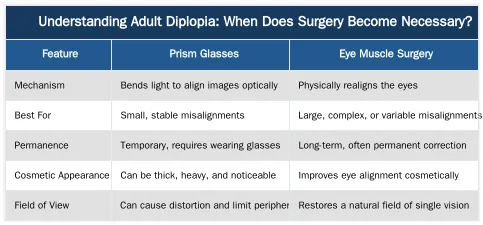
Prism glasses are a common non-surgical treatment for double vision. They bend light before it enters the eye, helping the brain merge the two images. However, prisms have limitations. They are best for small, stable eye misalignments. For larger or complex deviations, the required prisms become thick, heavy, and cosmetically unappealing, and can distort vision and reduce peripheral clarity.
Eye muscle surgery is the best solution when the misalignment is too large for prisms to correct, when the deviation is variable, or when a patient no longer wishes to depend on cumbersome glasses. Surgery addresses the root physical cause by repositioning the eye muscles, offering a more permanent and comprehensive solution.
Prism Glasses vs. Surgical Correction: A Comparison
The London Squint Clinic Advantage: Expertise in Complex Adult Diplopia
Treating the complex causes of adult diplopia requires specialisation. Mr. Nadeem Ali’s practice focuses exclusively on adult squint and double vision surgery. His background includes 13 years as a Consultant at Moorfields Eye Hospital, where he led the Adult Squint and Neuro-Ophthalmology services.
This focus is important for cases involving cranial nerve palsies, thyroid eye disease, and revision surgeries where previous operations were unsuccessful. An understanding of neuro-ophthalmology, the specialty bridging neurology and ophthalmology, is essential for diagnosing and managing these conditions. According to the North American Neuro-Ophthalmology Society (NANOS), this integrated approach is vital for complex vision disorders.
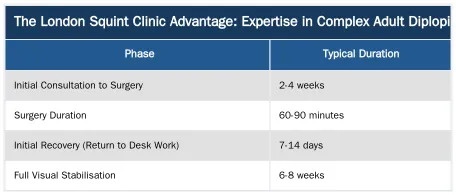
Typical Patient Journey Timeline
Life After Surgery: Restoring Single Vision and Independence
The goal of eye muscle surgery is to restore single binocular vision and improve quality of life. The procedure involves repositioning one or more eye muscles to align the eyes. For many patients, adjustable sutures are used, allowing for fine-tuning of the eye position shortly after the operation.
Eliminating double vision restores confidence and independence. Patients can perform tasks like driving, reading, navigating stairs, and engaging in social situations without the distraction and discomfort of seeing double. The functional and emotional relief is often described as life-changing.
What to Expect from Adult Diplopia Surgery and Recovery
A consultation is required to diagnose the cause of the diplopia and determine the surgical plan. The surgery is a day-case procedure performed under general anaesthetic. Post-operative recovery involves initial redness and discomfort, which subsides over a few weeks. Patients receive aftercare instructions and support, including direct access to their surgeon during recovery. Patient advocacy groups like the Squint Clinic Patient Resources provide additional information.
Ready to Say Goodbye to Double Vision? Contact a Specialist Today
Living with double vision can be isolating and debilitating. If non-surgical treatments for persistent diplopia are no longer working, surgical intervention may be the solution. A consultation with an expert in adult strabismus and neuro-ophthalmology is the first step toward restoring clear vision and quality of life.
To learn more about your options, contact us to schedule a consultation. It’s Time to say goodbye to double vision. You can also Enquire about double vision surgery directly through our website.
Conclusion
The causes of adult diplopia requiring surgery range from decompensated childhood strabismus to complex neurological and traumatic conditions. When prisms fail, eye muscle surgery offers a definitive solution to realign the eyes and restore single vision. Seeking care from a surgeon with expertise in adult diplopia and neuro-ophthalmology is crucial for the best outcome. By addressing the root physical misalignment, surgery can improve daily function, independence, and well-being.
To explore a permanent solution for your double vision, contact us. You can Enquire about double vision surgery or learn more about how it’s Time to say goodbye to double vision.
Frequently Asked Questions
What are the primary causes of adult diplopia that require surgery?
The most common reasons for double vision needing surgery are decompensated childhood squints, thyroid eye disease, cranial nerve palsies (affecting the 3rd, 4th, or 6th nerves), and trauma from head injuries. These conditions create significant eye misalignments that non-surgical options like prisms often cannot fully correct, making surgery the definitive solution.
Can a previous eye surgery be one of the causes of adult diplopia?
Yes, previous operations such as cataract, retinal, or even cosmetic eyelid surgery can sometimes disrupt the delicate balance of the eye muscles. This can be one of the causes of adult diplopia, leading to post-operative double vision that may require corrective squint surgery to realign the eyes.
Are age-related changes common causes of adult diplopia?
Yes, age-related factors are frequent causes of adult diplopia. Over time, the connective tissues supporting the eye muscles can sag, or a long-standing, previously controlled squint can worsen. This gradual change often leads to the new onset of double vision in adults over 50.
If a nerve palsy is the cause of my double vision, is surgery still an option?
Absolutely. Once a nerve palsy has been stable for at least six to twelve months, surgery can be a highly effective solution. The procedure is carefully planned by a specialist to rebalance the remaining muscle function, aiming to eliminate double vision and restore a single, clear field of vision.
How can I get a diagnosis for the specific causes of my adult diplopia?
The first step is a specialist consultation to accurately diagnose the underlying issue. Mr. Nadeem Ali uses his extensive neuro-ophthalmology experience to pinpoint the exact cause of your double vision and determine the most effective surgical plan. You can enquire about a consultation to begin your journey toward clear, single vision.
Related Posts
Find out if you are suitable for Double Vision Treatment
Find out if you could benefit from this life changing surgery by contacting us today
Our most popular procedures


Hello, I’m Nadeem Ali
I’m one of the few eye surgeons in the world with 100% focus on Squint and Double Vision Surgery.
I have 24 years of eye surgery experience, and worked for 13 years as a Consultant at London’s renowned Moorfields Eye Hospital.
In 2023, I left the NHS to focus fully on treating patients from across the world at the London Squint Clinic. You can read more about me here.
There’s lots of information on the website about: squint surgery, double vision surgery and our pricing.
The most rewarding part of my job is hearing patients tell me how squint or double vision surgery has changed their lives. You can hear these stories here.
Mr Nadeem Ali
MA MB BChir MRCOphth FRCSEd(Ophth)