
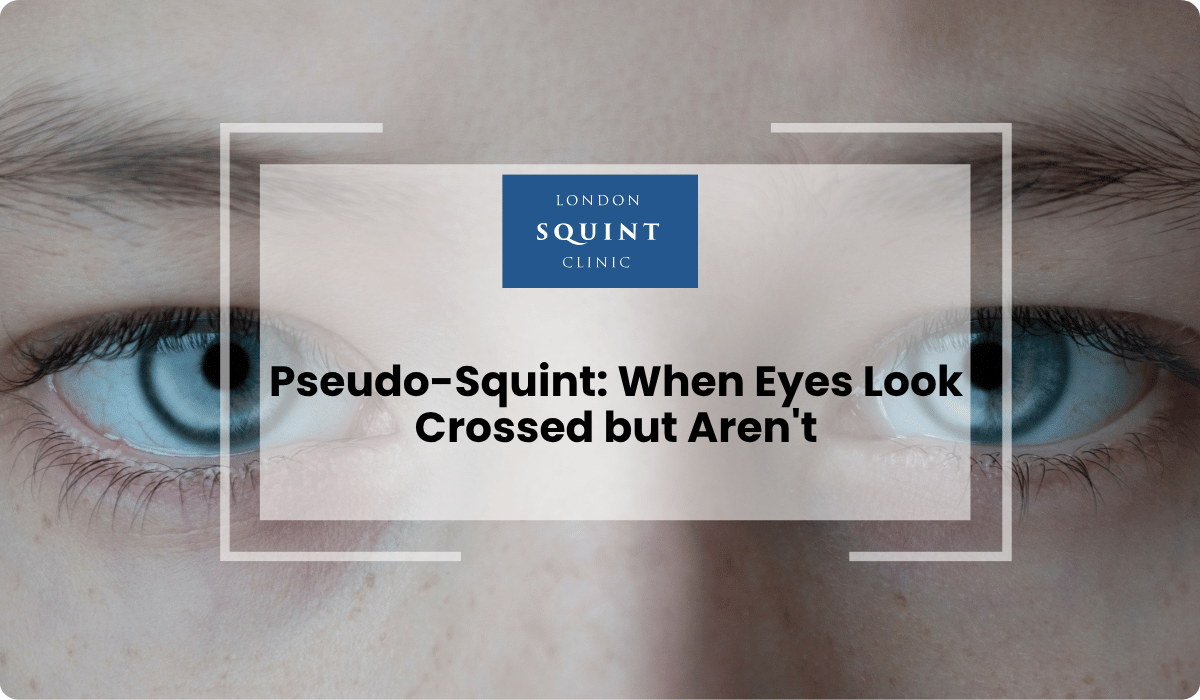
Pseudo-Squint: When Eyes Look Crossed but Aren’t
Why Choose Private Squint Surgery?
In the UK, squint surgery may be performed via the NHS, through insurance, or as self-pay. NHS treatment is free, but waiting times can be long and surgery is often performed by trainees under supervision. Many operations are carried out by surgeons who mainly specialise in children’s squint rather than adult complex cases.
With insurance, fees are standardised — meaning some leading specialists choose not to participate. Self-pay allows you to choose your surgeon directly and prioritise experience, specialisation, and access.
Many centres quote only a surgical fee. Hospital costs, anaesthetic fees and follow-ups are frequently additional. At London Squint Clinic, everything is included in one transparent package.
Our Complete Package – £10,000
- ✔ Advanced surgery by Mr Ali (one or both eyes)
- ✔ Adjustable sutures where clinically indicated
- ✔ Detailed orthoptic planning
- ✔ All hospital & anaesthetic fees included
- ✔ Post-operative medication
- ✔ Two video follow-ups
- ✔ Face-to-face review appointment
What Makes Us Different
- ✔ 100% focused on adult squint & double vision surgery
- ✔ >95% audited success rate
- ✔ Free re-treatment at 3 months if worse (extremely rare)
- ✔ 24/7 direct WhatsApp access to your surgeon during recovery
- ✔ Optional well-being session & pre-op reassurance call
Initial consultation: from £150
Surgery typically within 4 weeks. No referral required. Self-pay only.
Essential Insights for Parents Concerned About Eye Alignment
- Pseudo-squint is a harmless optical illusion where eyes appear misaligned but actually have perfect alignment and normal vision function.
- Common causes include epicanthal folds and wide nasal bridges, which create the appearance of crossed eyes without affecting vision.
- True squint (strabismus) involves actual eye misalignment and requires medical intervention, while pseudo-squint needs no treatment.
- Most cases of pseudo-squint naturally resolve as a child’s facial features develop, particularly as the nasal bridge becomes more prominent.
- Professional assessment is essential when in doubt—look for eye movement when covering/uncovering each eye, which indicates true squint.
- Regular eye examinations remain important even with pseudo-squint to ensure normal visual development continues.
Table of Contents
- Understanding Pseudo-Squint: Definition and Characteristics
- Common Causes of False Squint Appearance in Children
- How Do Epicanthal Folds Create the Illusion of Crossed Eyes?
- Wide Nasal Bridge and Its Relationship to Pseudo-Squint
- How Can You Tell a Real Squint from a Pseudo-Squint?
- When to Seek Professional Assessment for Suspected Squint
- Will My Child’s Pseudo-Squint Disappear as They Grow?
- Treatment Options and Management for True vs. False Squint
Understanding Pseudo-Squint: Definition and Characteristics
Pseudo-squint (pseudostrabismus) is a condition where the eyes appear to be misaligned or crossed when in fact they are perfectly straight. This optical illusion is particularly common in infants and young children and often causes unnecessary concern for parents. Unlike true strabismus (squint), where one eye actually turns inward, outward, upward or downward, pseudo-squint involves no actual misalignment of the visual axes.
The characteristic appearance of pseudo-squint typically manifests as an apparent inward turning of one or both eyes (pseudo-esotropia), giving the impression that the child is cross-eyed. This illusion is created by certain facial features rather than any actual eye muscle imbalance or visual problem. The eyes themselves function normally, with proper binocular vision and depth perception maintained.
It’s important to understand that pseudo-squint does not affect vision development or cause amblyopia (lazy eye), unlike true squint conditions. Children with pseudo-squint have normal visual development and do not require corrective eye muscle surgery or vision therapy. However, because the distinction between true and false squint can be subtle, professional assessment is essential for accurate diagnosis.
Common Causes of False Squint Appearance in Children
Several facial features and anatomical characteristics can create the illusion of a squint when none actually exists. Understanding these common causes of false squint appearance can help parents distinguish between concerning and benign conditions.
The most prevalent causes of pseudo-squint include:
- Epicanthal folds – Extra skin folds at the inner corners of the eyes, particularly common in babies and children of Asian descent
- Broad or wide nasal bridge – Creates an optical illusion of inward-turning eyes
- Flat nasal bridge – Common in infants and can make the eyes appear crossed
- Prominent epicanthal folds with a flat nasal bridge – This combination significantly enhances the appearance of crossed eyes
- Asymmetrical facial features – Can create the impression that one eye is turning more than the other
- Widely or closely set eyes (hypertelorism or hypotelorism) – Affects the perception of eye alignment
These facial characteristics are often hereditary and represent normal variations in facial anatomy rather than pathological conditions. As a child grows and their facial features develop, many of these characteristics become less pronounced, which explains why pseudo-squint often appears to resolve spontaneously with age.
How Do Epicanthal Folds Create the Illusion of Crossed Eyes?
Epicanthal folds are the most common anatomical feature responsible for pseudo-squint. These skin folds extend vertically from the upper eyelid to the lower eyelid, partially covering the inner corner (medial canthus) of the eye. When present, epicanthal folds create a very specific optical illusion that mimics an inward-turning eye (esotropia).
The mechanism behind this illusion is straightforward but compelling. The fold of skin covers part of the white sclera on the nasal side of the iris, making less of the white of the eye visible on the inner portion compared to the outer portion. This asymmetrical display of sclera creates the impression that the eye is turning inward, even though the eye is actually looking straight ahead.
This effect is particularly noticeable when a child looks slightly to one side. From certain angles, especially when photographed, the epicanthal folds can make it appear as though one eye is properly aligned while the other is turning inward. In reality, both eyes are tracking normally, and the child has perfect binocular vision.
Epicanthal folds are a normal variant in facial anatomy and are particularly common in:
- Infants of all ethnicities (often diminishing with age)
- Children of Asian, Native American, or certain European ancestries
- Children with certain genetic conditions such as Down syndrome
Understanding the role of epicanthal folds in creating the appearance of crossed eyes can help reassure parents that what they’re seeing is likely a harmless anatomical variation rather than a vision problem requiring intervention.
Wide Nasal Bridge and Its Relationship to Pseudo-Squint
A wide or flat nasal bridge is another significant contributor to the appearance of pseudo-squint in children. This facial characteristic creates an optical illusion of inward-turning eyes (pseudo-esotropia) through several mechanisms related to facial proportions and light reflection.
When a child has a wide nasal bridge, the distance between the inner corners of the eyes appears increased. This wider spacing creates an impression that the eyes are turning inward to compensate for the additional distance. In reality, the eyes are perfectly aligned, but the proportional relationship between the nasal bridge and the eyes creates this visual misconception.
Additionally, a flat nasal bridge affects how light reflects off the eyes and how shadows form around the inner eye area. These lighting effects can enhance the illusion of eye misalignment, particularly in photographs where flash photography may accentuate these shadows.
The combination of a wide nasal bridge with epicanthal folds creates an even more pronounced appearance of pseudo-squint. This is because both features work together to conceal portions of the sclera (white of the eye) on the nasal side, reinforcing the impression of inward-turning eyes.
It’s worth noting that a wide or flat nasal bridge is a normal developmental feature in many infants. As facial bones develop and grow throughout childhood, the nasal bridge typically becomes more pronounced, which often leads to a natural resolution of the pseudo-squint appearance without any medical intervention.
How Can You Tell a Real Squint from a Pseudo-Squint?
Distinguishing between a true squint (strabismus) and a pseudo-squint is crucial for appropriate management. While a definitive diagnosis should always come from an eye care professional, there are several observations parents can make to help determine whether further assessment is needed.
Key differences between real and pseudo-squint include:
- Corneal light reflex test: In normal alignment, light reflected off both corneas appears in the same position in each eye. In true squint, the reflection appears in different positions.
- Cover test observation: When one eye is covered and then uncovered, a true squint will show movement in the uncovered eye as it adjusts to take up fixation. In pseudo-squint, no movement occurs.
- Consistency of appearance: True squint typically appears consistent regardless of the direction of gaze, while pseudo-squint may be more noticeable in certain gaze directions.
- Facial features: Pseudo-squint is often associated with specific facial characteristics like epicanthal folds or a wide nasal bridge.
- Visual behaviour: Children with true squint may tilt their head, close one eye, or show signs of visual discomfort. Those with pseudo-squint typically have normal visual behaviour.
Parents should also be aware that true squint can sometimes be intermittent, appearing only when a child is tired or focusing intently. This intermittent nature can make home assessment challenging, which is why professional evaluation is essential when there’s any doubt about eye alignment.
As discussed in our article on squint recurrence after surgery, even treated squints require monitoring, highlighting the importance of accurate initial diagnosis between true and pseudo conditions.
When to Seek Professional Assessment for Suspected Squint
While many cases of apparent eye misalignment turn out to be pseudo-squint, it’s crucial to know when professional assessment is warranted. Early detection and treatment of true squint are vital for preventing long-term vision problems such as amblyopia (lazy eye) and ensuring proper binocular vision development.
Parents should seek professional evaluation if they notice:
- Persistent appearance of eye misalignment, especially if it doesn’t seem related to facial features
- Intermittent turning of one eye, particularly when the child is tired or concentrating
- Any change in the appearance of eye alignment
- Eyes that appear to move independently of each other
- Child frequently tilting their head or closing one eye to see better
- Child complaining of double vision or visual confusion
- Difficulty with depth perception or hand-eye coordination
- Family history of strabismus or other eye alignment issues
The appropriate professionals for assessment include:
- Paediatric ophthalmologist: A medical doctor specialising in children’s eye conditions
- Orthoptist: A healthcare professional specifically trained in diagnosing and treating eye movement disorders
- Optometrist: Can perform initial screenings and refer to specialists if needed
Professional assessment typically involves several tests including the cover test, corneal light reflex evaluation, and assessment of visual acuity and refractive error. These comprehensive examinations can definitively distinguish between true strabismus requiring intervention and benign pseudo-squint.
Will My Child’s Pseudo-Squint Disappear as They Grow?
Parents often wonder whether their child’s pseudo-squint will resolve naturally with age. The good news is that in most cases, the appearance of pseudo-squint does diminish as a child grows and their facial features develop.
The natural resolution of pseudo-squint typically occurs due to several developmental changes:
- Nasal bridge development: As children grow, their nasal bridge becomes more prominent and defined, reducing the optical illusion of crossed eyes.
- Facial proportions: The overall proportions of a child’s face change significantly during growth, with the mid-face region developing and extending forward.
- Epicanthal fold changes: In many children, epicanthal folds become less pronounced with age, particularly in non-Asian children where these folds often disappear entirely by school age.
- Orbital development: The eye sockets (orbits) continue to develop throughout childhood, affecting the positioning and appearance of the eyes.
The timeline for these changes varies considerably between children. Some may show noticeable improvement by 12-18 months of age, while for others, the pseudo-squint appearance may persist into early school years before gradually resolving.
It’s important to note that while waiting for natural development to resolve pseudo-squint is appropriate, regular eye examinations remain important to ensure that:
- The condition is indeed pseudo-squint and not true strabismus
- No other vision issues develop during this waiting period
- Visual development proceeds normally in all other respects
Parents should document any changes in their child’s appearance with photographs taken periodically, as these can be helpful for both tracking progress and sharing with eye care professionals during assessments.
Treatment Options and Management for True vs. False Squint
Understanding the distinct approaches to managing pseudo-squint versus true squint is essential for parents navigating concerns about their child’s eye alignment. The treatment pathways differ significantly based on the diagnosis.
Management of Pseudo-Squint:
- Observation: As pseudo-squint does not involve actual eye misalignment, no active treatment is required for the condition itself.
- Reassurance: Parents benefit from education about the benign nature of pseudo-squint and understanding that it typically improves with facial development.
- Regular monitoring: Periodic eye examinations are recommended to confirm the condition remains pseudo-squint and to check overall eye health.
- Documentation: Photographs taken at intervals can help track subtle changes in appearance over time.
Treatment Options for True Squint (Strabismus):
- Glasses: Often the first-line treatment, especially when squint is related to uncorrected refractive errors like hyperopia (long-sightedness).
- Patching therapy: Used when squint has led to amblyopia (lazy eye), involving covering the stronger eye to strengthen the weaker one.
- Vision therapy exercises: May help strengthen eye muscles and improve coordination in certain types of squint.
- Prism lenses: Can help align images for patients with certain types of strabismus.
- Eye muscle surgery: Surgical intervention to adjust the tension of the eye muscles may be recommended when other treatments are insufficient.
- Botulinum toxin injections: Sometimes used as an alternative or adjunct to surgery in specific cases.
The decision between these treatment approaches depends entirely on accurate diagnosis. This highlights why professional assessment is crucial when there’s any doubt about whether a child has true strabismus or pseudo-squint. Treating pseudo-squint as if it were true strabismus is unnecessary and could subject a child to interventions they don’t need, while failing to treat true strabismus can lead to permanent vision impairment.
For children with confirmed pseudo-squint, parents can take comfort in knowing that no medical intervention is needed, and the cosmetic appearance will likely improve naturally with growth and development.
Frequently Asked Questions
What is the main difference between pseudo-squint and true squint?
Pseudo-squint is an optical illusion where the eyes appear misaligned but are actually perfectly straight with normal vision function. True squint (strabismus) involves actual misalignment of the eyes due to muscle imbalance or other issues. The key difference is that pseudo-squint doesn’t affect vision development or cause amblyopia, while true squint can lead to vision problems if untreated.
At what age does pseudo-squint typically disappear?
Pseudo-squint typically diminishes gradually as a child grows and their facial features develop. Many children show noticeable improvement by 12-18 months, while for others, the appearance may persist into early school years before resolving. The timeline varies considerably between children, depending on their individual facial development, particularly of the nasal bridge and epicanthal folds.
Can pseudo-squint turn into a real squint?
Pseudo-squint cannot turn into a real squint as they are completely different conditions. Pseudo-squint is a cosmetic appearance caused by facial features, while true squint involves actual eye muscle or vision problems. However, it’s possible for a child to have both conditions simultaneously, or to develop a true squint later for unrelated reasons, which is why regular eye examinations are important.
How do doctors test for pseudo-squint versus real squint?
Eye care professionals use several tests to distinguish between pseudo-squint and real squint. The corneal light reflex test examines whether light reflects from the same position on both eyes. The cover test observes if an eye moves to take up fixation when the other is covered and then uncovered (indicating true squint). They also assess visual acuity, eye movements in different directions, and examine facial features that might contribute to pseudo-squint.
Are children with epicanthal folds more likely to have pseudo-squint?
Yes, children with prominent epicanthal folds are more likely to have the appearance of pseudo-squint. These skin folds at the inner corners of the eyes cover part of the white sclera on the nasal side of the iris, creating an illusion of inward-turning eyes. This is particularly common in infants of all ethnicities and children of Asian descent, where epicanthal folds are a normal facial feature.
Should I be concerned if my baby appears cross-eyed sometimes?
Occasional crossing of the eyes in newborns up to about 3-4 months of age can be normal as their eye coordination develops. However, persistent or frequent eye crossing after 4 months warrants professional assessment. It’s important to distinguish between true intermittent strabismus and pseudo-squint. If the appearance is consistent and related to facial features like a flat nasal bridge, it’s more likely pseudo-squint, but an eye care professional should make this determination.
Can pseudo-squint affect a child’s vision or development?
Pseudo-squint does not affect a child’s vision or visual development. Unlike true strabismus, pseudo-squint involves no actual misalignment of the eyes, so binocular vision, depth perception, and visual acuity develop normally. The condition is purely cosmetic, resulting from facial features creating an optical illusion. No treatment is necessary for pseudo-squint itself, and it typically improves naturally as the child’s facial features develop.
Related Posts

Find out if you are suitable for Double Vision Treatment
Find out if you could benefit from this life changing surgery by contacting us today
Our most popular procedures



Hello, I’m Nadeem Ali
I’m one of the few eye surgeons in the world with 100% focus on Squint and Double Vision Surgery.
I have 24 years of eye surgery experience, and worked for 13 years as a Consultant at London’s renowned Moorfields Eye Hospital.
In 2023, I left the NHS to focus fully on treating patients from across the world at the London Squint Clinic. You can read more about me here.
There’s lots of information on the website about: squint surgery, double vision surgery and our pricing.
The most rewarding part of my job is hearing patients tell me how squint or double vision surgery has changed their lives. You can hear these stories here.
Mr Nadeem Ali
MA MB BChir MRCOphth FRCSEd(Ophth)