
Esotropia Surgery Adults: Inward Squint Correction London

Why Choose Private Squint Surgery?
In the UK, squint surgery may be performed via the NHS, through insurance, or as self-pay. NHS treatment is free, but waiting times can be long and surgery is often performed by trainees under supervision. Many operations are carried out by surgeons who mainly specialise in children’s squint rather than adult complex cases.
With insurance, fees are standardised — meaning some leading specialists choose not to participate. Self-pay allows you to choose your surgeon directly and prioritise experience, specialisation, and access.
Many centres quote only a surgical fee. Hospital costs, anaesthetic fees and follow-ups are frequently additional. At London Squint Clinic, everything is included in one transparent package.
Our Complete Package – £10,000
- ✔ Advanced surgery by Mr Ali (one or both eyes)
- ✔ Adjustable sutures where clinically indicated
- ✔ Detailed orthoptic planning
- ✔ All hospital & anaesthetic fees included
- ✔ Post-operative medication
- ✔ Two video follow-ups
- ✔ Face-to-face review appointment
What Makes Us Different
- ✔ 100% focused on adult squint & double vision surgery
- ✔ >95% audited success rate
- ✔ Free re-treatment at 3 months if worse (extremely rare)
- ✔ 24/7 direct WhatsApp access to your surgeon during recovery
- ✔ Optional well-being session & pre-op reassurance call
Initial consultation: from £150
Surgery typically within 4 weeks. No referral required. Self-pay only.
Finding Specialized Esotropia Treatment in London
When seeking treatment for adult esotropia in London, finding a specialist with specific expertise in strabismus is crucial for achieving optimal results. Unlike general ophthalmologists, strabismus specialists have dedicated training and experience in the complex field of eye misalignment disorders.
The London Squint Clinic represents one of the UK’s leading centers for adult strabismus treatment, offering several advantages for patients with esotropia:
- Specialist expertise: Our surgeons focus exclusively on strabismus, performing hundreds of adult squint procedures annually, far exceeding the volume at general eye clinics.
- Comprehensive assessment: We utilize advanced diagnostic technologies including computerized eye movement recording, specialized imaging, and detailed sensory testing.
- Tailored treatment plans: Rather than a one-size-fits-all approach, we develop individualized strategies based on your specific type of esotropia, measurements, and visual needs.
- Advanced surgical techniques: Our surgeons employ the latest approaches including adjustable sutures, minimally invasive methods, and muscle repositioning techniques not widely available elsewhere.
- Multidisciplinary approach: Complex cases benefit from our collaboration with neurologists, endocrinologists, and other specialists when underlying medical conditions contribute to esotropia.
When researching esotropia treatment options in London, consider these important factors:
- The surgeon’s specific experience with adult strabismus (not just pediatric cases)
- Fellowship training in strabismus surgery
- Published success rates and outcomes
- Access to the full range of treatment options, both surgical and non-surgical
- Availability of adjustable suture techniques for precision alignment
- Comprehensive aftercare protocols
Most patients benefit from obtaining a referral from their GP or optometrist, though many specialist strabismus centers also accept self-referrals. Initial consultations typically involve a thorough assessment lasting 45-60 minutes to properly evaluate your condition and discuss treatment options.
While NHS treatment is available for adult esotropia, specialized centers often provide more comprehensive options and shorter waiting times. Many private health insurance plans cover strabismus treatment when it causes functional problems like double vision.
Table of Contents
- Understanding Adult Esotropia: Causes and Symptoms
- Diagnosing Convergent Squint in Adults: What to Expect
- Is Esotropia Surgery Successful for Adult Patients?
- Esotropia Correction Options: Surgical vs Non-Surgical
- The Adult Esotropia Surgery Procedure Explained
- Recovery and Aftercare Following Inward Squint Surgery
- Finding Specialized Esotropia Treatment in London
- Long-Term Outcomes and Life After Esotropia Correction
Understanding Adult Esotropia: Causes and Symptoms
Esotropia, commonly known as an inward squint, is a form of strabismus where one or both eyes turn inward towards the nose. While often associated with childhood, esotropia can develop or persist into adulthood, affecting both vision and appearance.
Adult esotropia typically stems from several causes. Some individuals experience a recurrence of childhood esotropia that was previously corrected or controlled. Others develop it as a new condition in adulthood due to neurological events, trauma, or other health conditions. Common causes include:
- Decompensated accommodative esotropia (when previously controlled childhood esotropia returns)
- Cranial nerve palsies affecting the sixth nerve
- Thyroid eye disease
- Stroke or brain injury
- Orbital trauma
- Age-related changes in eye muscle function
- Uncorrected hyperopia (farsightedness)
The symptoms of adult esotropia extend beyond the visible inward turning of the eye. Patients frequently report:
- Double vision (diplopia), particularly when looking at distant objects
- Eye strain and fatigue
- Headaches, especially after prolonged visual tasks
- Difficulty with depth perception
- Closing or covering one eye to alleviate double vision
- Social anxiety or self-consciousness about appearance
Unlike children, adults with esotropia almost always experience double vision because their brains have already developed normal binocular vision and cannot suppress the image from the misaligned eye. This makes adult esotropia not just a cosmetic concern but a significant functional issue affecting daily activities.
Diagnosing Convergent Squint in Adults: What to Expect
Accurate diagnosis of convergent squint (esotropia) in adults requires comprehensive assessment by a specialist ophthalmologist with expertise in strabismus. At your initial consultation, expect a thorough evaluation process designed to determine the precise nature and cause of your eye misalignment.
The diagnostic journey typically begins with a detailed medical history. Your specialist will enquire about when you first noticed the inward turning, whether it’s constant or intermittent, and if there are specific circumstances that trigger or worsen the condition. Any history of previous eye conditions, surgeries, neurological disorders, or recent health changes will be particularly relevant.
Visual acuity testing forms the foundation of your assessment, measuring how well each eye can see with and without correction. This is followed by a refraction assessment to determine if uncorrected hyperopia (long-sightedness) might be contributing to your esotropia.
The specialist will then conduct specific tests to measure the degree of misalignment:
- Prism cover test – precisely measures the angle of deviation in different gaze positions
- Ocular motility assessment – evaluates how well your eye muscles function in all directions
- Convergence testing – assesses how well your eyes work together for near vision
- Sensory testing – determines how your brain is processing the images from each eye
- Diplopia charting – maps out when and where you experience double vision
Advanced imaging may be recommended in some cases, particularly if a neurological cause is suspected. This might include MRI scans to examine the brain, eye muscles, and surrounding structures.
At the London Squint Clinic, our diagnostic approach is particularly thorough, as we understand that accurate measurement and identification of the underlying cause are essential for developing an effective treatment plan for adult esotropia. The diagnostic process not only confirms the presence of convergent strabismus but also helps determine whether surgical intervention is appropriate and what specific technique would yield the best results.
Is Esotropia Surgery Successful for Adult Patients?
Many adults with esotropia wonder whether surgery can effectively address a condition they may have lived with for years or decades. The encouraging news is that esotropia surgery in adults has excellent success rates, with significant improvements possible regardless of age.
At the London Squint Clinic, our audited success rate for adult strabismus surgery exceeds 95%. This high success rate reflects both the advancement in surgical techniques and the specialised expertise of our surgeons who focus exclusively on strabismus correction.
Success in esotropia surgery is typically measured across several parameters:
- Alignment improvement: Most patients achieve significant improvement in eye alignment, with many attaining perfect or near-perfect alignment.
- Double vision resolution: Approximately 80-90% of adults with acquired esotropia experience complete elimination of double vision after surgery.
- Functional improvements: Patients typically report enhanced depth perception, reduced eye strain, and improved peripheral vision.
- Psychological benefits: Studies show significant improvements in social confidence, self-esteem, and quality of life following successful alignment.
Factors that influence surgical success include the cause of esotropia, its duration, the degree of misalignment, and whether previous surgeries have been performed. Intermittent squints may have different success profiles compared to constant deviations.
It’s important to understand that in some complex cases, particularly those involving nerve palsies or previous multiple surgeries, a second procedure might be needed to achieve optimal results. During your consultation, your surgeon will provide a personalised assessment of your likely outcomes based on your specific condition.
Research consistently demonstrates that adult strabismus surgery is not “merely cosmetic” but provides substantial functional and psychological benefits. A landmark study published in the British Journal of Ophthalmology found that successful alignment surgery improved visual function scores by an average of 84% in adult patients, highlighting the life-changing potential of this intervention.
Esotropia Correction Options: Surgical vs Non-Surgical
When addressing adult esotropia, treatment approaches fall into two main categories: non-surgical and surgical interventions. The optimal path depends on the underlying cause, severity, and individual patient factors.
Non-Surgical Options:
For some adults with esotropia, non-surgical approaches may be appropriate initial treatments:
- Prescription eyewear: If hyperopia (long-sightedness) contributes to your esotropia, corrective lenses can sometimes reduce or eliminate the inward turning by decreasing the need for accommodation.
- Prism glasses: These special lenses contain prisms that bend light, effectively realigning images without moving the eyes themselves. Prisms can be particularly useful for smaller angles of deviation or as a temporary measure.
- Botulinum toxin (Botox) injections: These can temporarily weaken overactive eye muscles, potentially improving alignment. While not permanent, Botox can be useful as a diagnostic tool or for patients who cannot undergo surgery.
- Vision therapy: Though generally less effective for established adult esotropia, specific exercises may help in mild cases or as a complement to other treatments.
Surgical Correction:
For most adults with significant esotropia, surgery provides the most definitive and lasting correction. Surgical approaches include:
- Recession procedure: The most common approach for esotropia, involving moving an overactive muscle further back on the eye to weaken its pulling effect.
- Resection procedure: Strengthening an underactive muscle by shortening it.
- Adjustable suture technique: Allows fine-tuning of muscle position after the initial surgery, often performed under local anaesthesia.
- Combined procedures: Many patients benefit from procedures on multiple muscles or both eyes for optimal alignment.
When determining the most appropriate treatment approach, several factors are considered, including the angle of deviation, presence of double vision, history of previous treatments, and overall health status. At the London Squint Clinic, we conduct thorough evaluations to determine whether non-surgical options might suffice or if surgery offers the best chance for meaningful improvement.
For most adults with moderate to severe esotropia, particularly those experiencing double vision or significant cosmetic concerns, surgical correction typically provides superior and more lasting results than non-surgical alternatives.
The Adult Esotropia Surgery Procedure Explained
Understanding what happens during esotropia surgery can help alleviate anxiety and prepare you for the procedure. Adult esotropia surgery is a precise, specialised operation performed on the extraocular muscles that control eye movement.
The procedure is typically performed as a day case, meaning you won’t need to stay overnight in hospital. Most adult esotropia surgeries at the London Squint Clinic are performed under general anaesthesia, though local anaesthesia with sedation may be an option in certain cases, particularly when adjustable sutures are used.
The surgical process follows these general steps:
- Pre-operative preparation: After administering anaesthesia, the surgical team prepares the eye area using antiseptic solution and places a speculum to keep the eye open during surgery.
- Accessing the muscles: The surgeon makes a small incision in the conjunctiva (the clear membrane covering the white of the eye) to access the extraocular muscles. This approach means there are no visible external scars after surgery.
- Muscle adjustment: Depending on your specific condition, the surgeon will either:
- Perform a recession – detaching an overactive muscle from the eye and reattaching it further back to weaken its action
- Perform a resection – removing a section of an underactive muscle to shorten and strengthen it
- Often, a combination of these techniques on different muscles is required
- Suturing: The adjusted muscles are secured with absorbable sutures, and the conjunctival incision is closed.
- Adjustable sutures (if applicable): In some cases, the surgeon may use a technique that allows for post-operative adjustment of the muscle position to fine-tune the alignment.
The entire procedure typically takes 45-90 minutes, depending on the complexity and number of muscles requiring adjustment. Most patients require surgery on two to four muscles, which may involve one or both eyes.
Modern microsurgical techniques and instruments allow for precise adjustments measured in millimetres, enabling surgeons to achieve predictable results. The surgery does not involve entering the inside of the eyeball, which significantly reduces risks compared to intraocular procedures.
After surgery, you’ll spend a short time in the recovery area before being discharged with detailed aftercare instructions and appropriate medication to manage discomfort and prevent infection.
Recovery and Aftercare Following Inward Squint Surgery
Recovery from adult esotropia surgery follows a predictable timeline, though individual experiences may vary. Understanding what to expect can help you prepare for the weeks following your procedure and ensure optimal healing.
Immediate Post-Operative Period (1-3 days):
The first few days after surgery typically involve:
- Moderate discomfort that can be managed with prescribed pain medication
- Redness and swelling of the operated eye(s)
- Temporary double vision as your brain adjusts to the new eye position
- Light sensitivity and increased tearing
During this time, you’ll need to:
- Apply prescribed antibiotic and anti-inflammatory eye drops
- Use cold compresses to reduce swelling
- Sleep with your head elevated
- Avoid strenuous activities and heavy lifting
- Keep the eye area clean, following specific instructions from your surgeon
Early Recovery (1-2 weeks):
As you progress through the first couple of weeks:
- Discomfort should significantly decrease
- Redness will begin to fade, though some pinkness may persist
- Vision should start stabilising, with double vision typically resolving or improving
- You can gradually resume light activities
- Most patients can return to desk work within 7-10 days
Full Recovery (4-6 weeks):
Complete healing takes approximately 4-6 weeks, during which time:
- All redness and swelling should resolve
- Eye alignment stabilises to its final position
- Vision adaptation is complete
- You can resume all normal activities, including swimming and contact sports
Follow-up appointments are crucial to monitor your healing and alignment. Typically, you’ll have a check-up within the first week, then at 2-4 weeks, and again at 2-3 months post-surgery.
Important aftercare guidelines include:
- Completing the full course of prescribed eye drops
- Avoiding eye rubbing for at least two weeks
- Wearing sunglasses outdoors to protect from UV light and reduce sensitivity
- Using artificial tears if you experience dryness
- Contacting your surgeon promptly if you notice increasing pain, discharge, or vision changes
Most patients find that recovery from esotropia surgery is straightforward, with discomfort manageable and diminishing rapidly after the first few days. By following your surgeon’s specific aftercare instructions, you can help ensure optimal healing and the best possible outcome from your procedure.
Finding Specialized Esotropia Treatment in London
# Frequently Asked Questions
## Can esotropia in adults be corrected?
Yes, esotropia in adults can be successfully corrected. Treatment options include prescription eyewear, prism glasses, Botox injections, and surgery. Surgical correction has a success rate exceeding 95% at specialized centers like the London Squint Clinic. Even adults who have had esotropia for many years can achieve significant improvement in eye alignment, elimination of double vision, and enhanced visual function through appropriate treatment.
## How successful is adult strabismus surgery?
Adult strabismus surgery for esotropia is highly successful, with specialized centers reporting success rates above 95%. Approximately 80-90% of adults experience complete elimination of double vision after surgery. Most patients achieve significant improvement in eye alignment, with many attaining perfect or near-perfect alignment. The success rate depends on factors including the cause of esotropia, its duration, degree of misalignment, and whether previous surgeries have been performed.
## What is the recovery time for adult esotropia surgery?
Recovery from adult esotropia surgery follows a predictable timeline:
– Days 1-3: Moderate discomfort, redness, swelling, and temporary double vision
– Weeks 1-2: Decreasing discomfort, fading redness, stabilizing vision; most patients return to desk work within 7-10 days
– Weeks 4-6: Complete healing with resolved redness and swelling, stabilized eye alignment, and completed vision adaptation
Full recovery typically takes 4-6 weeks, after which patients can resume all normal activities including swimming and contact sports.
## What causes esotropia in adults?
Adult esotropia (inward eye turning) can be caused by:
– Decompensated accommodative esotropia (recurrence of childhood esotropia)
– Cranial nerve palsies affecting the sixth nerve
– Thyroid eye disease
– Stroke or brain injury
– Orbital trauma
– Age-related changes in eye muscle function
– Uncorrected hyperopia (farsightedness)
Unlike childhood esotropia, adult-onset cases often result from neurological events, trauma, or other health conditions, and almost always cause double vision.
## Is esotropia surgery painful?
Esotropia surgery itself is not painful as it’s performed under anesthesia. During recovery, patients typically experience moderate discomfort rather than severe pain. This discomfort is most noticeable in the first 1-3 days after surgery and can be effectively managed with prescribed pain medication. Most patients report that the discomfort decreases significantly after the first few days, with minimal pain by the end of the first week.
## Can esotropia come back after surgery?
Yes, esotropia can recur after initially successful surgery in some cases. Recurrence rates vary depending on the underlying cause, with rates ranging from 5-20%. Factors that may increase the risk of recurrence include certain neurological conditions, thyroid eye disease, previous multiple surgeries, and significant scarring. Regular follow-up appointments help monitor alignment and address any early signs of recurrence. If needed, additional procedures can be performed to correct recurring esotropia.
## What happens if esotropia is left untreated in adults?
If left untreated, adult esotropia can lead to:
– Persistent double vision (diplopia)
– Chronic headaches and eye strain
– Reduced depth perception affecting daily activities
– Compensatory head posturing to minimize double vision
– Potential worsening of the misalignment over time
– Psychological impacts including social anxiety and reduced self-confidence
Unlike in children, adult brains cannot suppress the image from the misaligned eye, making untreated esotropia a significant functional issue that affects quality of life.
Related Posts

Find out if you are suitable for Double Vision Treatment
Find out if you could benefit from this life changing surgery by contacting us today
Our most popular procedures

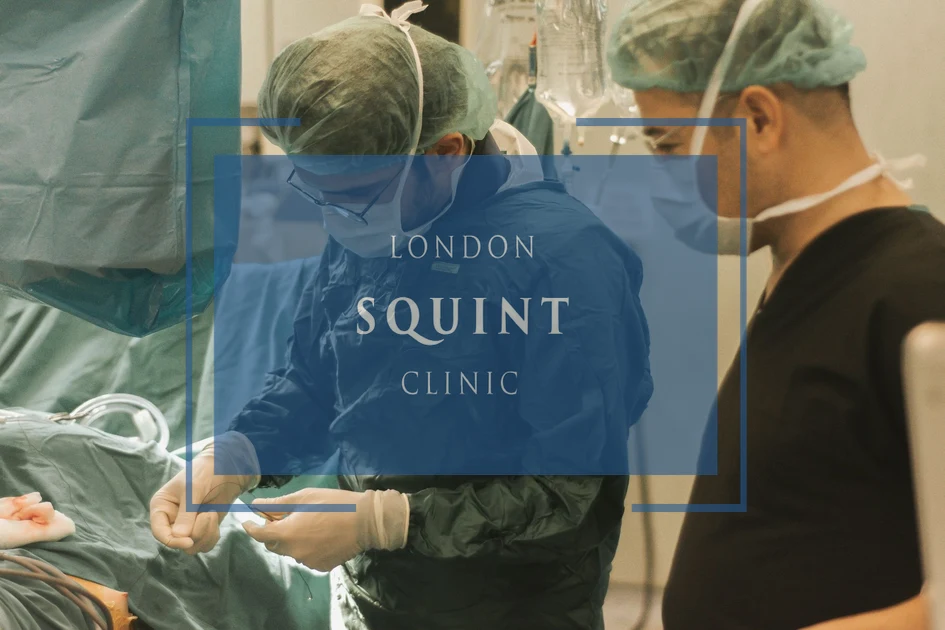

Hello, I’m Nadeem Ali
I’m one of the few eye surgeons in the world with 100% focus on Squint and Double Vision Surgery.
I have 24 years of eye surgery experience, and worked for 13 years as a Consultant at London’s renowned Moorfields Eye Hospital.
In 2023, I left the NHS to focus fully on treating patients from across the world at the London Squint Clinic. You can read more about me here.
There’s lots of information on the website about: squint surgery, double vision surgery and our pricing.
The most rewarding part of my job is hearing patients tell me how squint or double vision surgery has changed their lives. You can hear these stories here.
Mr Nadeem Ali
MA MB BChir MRCOphth FRCSEd(Ophth)