
Calculating the Hidden Costs of Long NHS Waiting Lists for Squint Surgery
Why Choose Private Squint Surgery?
In the UK, squint surgery may be performed via the NHS, through insurance, or as self-pay. NHS treatment is free, but waiting times can be long and surgery is often performed by trainees under supervision. Many operations are carried out by surgeons who mainly specialise in children’s squint rather than adult complex cases.
With insurance, fees are standardised — meaning some leading specialists choose not to participate. Self-pay allows you to choose your surgeon directly and prioritise experience, specialisation, and access.
Many centres quote only a surgical fee. Hospital costs, anaesthetic fees and follow-ups are frequently additional. At London Squint Clinic, everything is included in one transparent package.
Our Complete Package – £10,000
- ✔ Advanced surgery by Mr Ali (one or both eyes)
- ✔ Adjustable sutures where clinically indicated
- ✔ Detailed orthoptic planning
- ✔ All hospital & anaesthetic fees included
- ✔ Post-operative medication
- ✔ Two video follow-ups
- ✔ Face-to-face review appointment
What Makes Us Different
- ✔ 100% focused on adult squint & double vision surgery
- ✔ >95% audited success rate
- ✔ Free re-treatment at 3 months if worse (extremely rare)
- ✔ 24/7 direct WhatsApp access to your surgeon during recovery
- ✔ Optional well-being session & pre-op reassurance call
Initial consultation: from £150
Surgery typically within 4 weeks. No referral required. Self-pay only.
NHS Waiting List Costs: Calculating the True Impact
The nhs waiting list costs for adult squint surgery involve significant non-financial burdens that impact daily life. This analysis quantifies the true opportunity cost of a long strabismus surgery wait time, examining the decline in quality of life, loss of earnings, and mental health challenges many individuals face. Prolonged waits can lead to career stagnation due to driving restrictions or difficulty with screen-based work, while the psychological toll affects social confidence. Understanding these hidden impacts provides a complete picture of the consequences of delayed treatment for strabismus and diplopia.
This article draws on specialist clinical experience in adult squint and double vision surgery. It highlights the functional and psychological challenges patients encounter while waiting for care, providing an evidence-based perspective on why timely intervention is critical for restoring well-being and independence.
To explore your options, contact us to schedule your consultation. You can also reach us via: View private surgery costs, Book an appointment, Read More
The nhs waiting list costs for adult squint surgery extend beyond inconvenience to include financial, psychological, and social burdens. While waiting for treatment, many individuals experience a decline in quality of life, face barriers to career progression, and struggle with mental health. This article examines these hidden impacts, quantifying the opportunity cost of prolonged strabismus surgery wait times and the benefits of timely, specialist intervention.
Beyond the Appointment: Unpacking the True NHS Waiting List Costs for Squint Surgery
Extended NHS waiting periods for strabismus surgery create more than financial costs. They are a cumulative burden on well-being, professional life, and daily function. These “hidden” costs build over time, turning a medical delay into a life impediment affecting mental health, earning potential, and independence.
What are the primary ‘hidden’ NHS waiting list costs for adults with a squint?
The primary hidden costs are non-monetary impacts that degrade quality of life and can lead to financial losses, including:
- Diminished Quality of Life: Persistent discomfort, eye strain, headaches, and the functional challenges of double vision (diplopia) or misaligned eyes reduce overall well-being.
- Mental Health Decline: Increased anxiety, social withdrawal, depression, and a significant loss of self-esteem are common consequences of living with a visible squint or disabling double vision.
- Loss of Independence: Restrictions on driving due to diplopia can severely limit mobility, affecting employment, social activities, and family responsibilities.
- Career Stagnation: Difficulty with tasks requiring binocular vision (e.g., screen work), reduced confidence in professional interactions, and missed opportunities can halt career progression.
- Social and Relational Strain: Avoidance of social situations, difficulty making eye contact, and the emotional toll of the condition can strain personal and professional relationships.
How Long NHS Waits Impact Your Life: From Confidence to Career
A prolonged strabismus surgery wait time affects every aspect of life. A manageable condition can become a source of chronic stress and a barrier to personal and professional fulfillment. The impact on quality of life affects mental health and financial stability.
The Erosion of Social Confidence and Mental Well-being
A visible eye misalignment or disorienting double vision is psychologically taxing. Many adults report feeling self-conscious, leading to avoidance of eye contact and social withdrawal. This heightened self-awareness can foster social anxiety and depression.
Managing double vision by tilting the head or closing one eye causes physical strain and detracts from social interactions. Over months or years on a waiting list, this loss of confidence can become ingrained, affecting relationships and mental health. The impacts on confidence and daily life are well-documented.
Opportunity Cost: Lost Earnings and Stalled Career Progression
The financial implications of waiting for surgery are a critical opportunity cost. For many, double vision or severe eye strain makes prolonged computer use, reading detailed documents, or operating machinery difficult and inefficient. This can reduce productivity, lead to negative performance reviews, or require reduced working hours.
Lack of confidence can make individuals hesitant to seek promotions, lead meetings, or network for career advancement. This stagnation causes a direct loss of earnings as promotions are missed and earning potential is capped by the untreated condition’s functional and psychological limitations.
Driving, Work, and Well-being: The Daily Toll of Delayed Squint Treatment
Delayed squint treatment creates everyday challenges that compound over time. Activities like driving or reading can become difficult or impossible. This daily friction adds stress and frustration.
Navigating Driving Restrictions and Loss of Independence
For many adults, double vision (diplopia) immediately impacts independence through the loss of their driving license. UK DVLA regulations require adequate binocular vision for safe driving. Diplopia is a disqualifying condition unless it can be controlled, for example, by wearing a patch over one eye.
This restriction can prevent commuting, taking children to school, or accessing essential services, especially in areas with limited public transport. Driving with double vision is heavily regulated for safety, and waiting for surgery means prolonged dependence on others. More information on medical driving standards is available from the Driver and Vehicle Licensing Agency (DVLA).
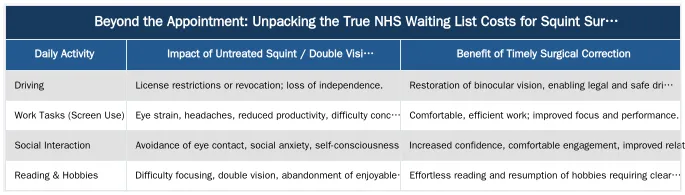
The Compounding Burden: A Daily Life Impact Comparison
Daily life transforms dramatically after successful squint surgery. The table below contrasts living with an untreated condition and the functional restoration from timely treatment.
The Specialist Perspective: Why Timely Squint Correction Matters
Clinically, delaying adult strabismus treatment allows functional and psychological challenges to become entrenched. Prompt intervention is medically important to achieve the best outcomes and prevent long-term adaptation issues.
Mr Ali’s Insight: Preventing Irreversible Impacts and Restoring Function
Mr Nadeem Ali has 24 years of surgical experience, including 13 as a Consultant at Moorfields Eye Hospital. His work, now 100% focused on adult squint and double vision, shows that prolonged waiting can cause brain adaptations to poor vision that are harder to reverse. For example, individuals may develop habitual head postures to compensate for double vision, leading to chronic neck and shoulder pain.
Mr Ali emphasizes that timely surgery restores comfortable binocular single vision, which is crucial for depth perception, coordination, and functional well-being. Early intervention prevents negative psychological and social consequences, allowing a quicker return to normal life.
Addressing Complex Cases: The Value of Dedicated Expertise
Prompt action is critical in complex cases, such as revision surgeries or strabismus from neurological conditions like cranial nerve palsies. Waiting on a general ophthalmology list can cause further muscle contracture or deterioration, making a successful outcome more challenging.
A dedicated specialist can assess these nuances and determine the optimal time for intervention. This expertise, recognized by institutions like the Royal College of Ophthalmologists, ensures patients with complex needs receive specific, effective care, avoiding delays that could compromise the surgical result.
Is Private Squint Surgery Worth It? Weighing the Investment Against NHS Delays
Long strabismus surgery wait times lead many to evaluate private treatment. The decision involves weighing the financial investment against the accumulating hidden costs of waiting. For many, reclaiming quality of life, career momentum, and independence makes private surgery a valuable choice.
The Cost-Benefit Analysis: Time, Expertise, and Quality of Life
Private surgery is an investment in time, function, and well-being. Avoiding a multi-year wait can prevent thousands of pounds in lost earnings or missed career opportunities. A detailed comparison of private surgery versus the NHS reveals that the upfront cost can be offset by long-term financial and personal gains.
The table below models the opportunity costs of waiting versus the investment in prompt private care.

Transparent Pricing and Rapid Access: The London Squint Clinic Difference
Fear of hidden fees can be a barrier to private care. Specialist providers like London Squint Clinic address this by offering transparent, bundled pricing. This approach includes the surgeon’s fees, anaesthetist fees, hospital charges, and post-operative follow-up in a single, clear figure. This transparency allows patients to make an informed financial decision.
Scheduling surgery within weeks, not years, counteracts the main drawbacks of the NHS pathway. It provides an efficient route to resolving the functional and psychological burdens of strabismus, mitigating the accumulating nhs waiting list costs.
Reclaim Your Vision and Life: Explore Private Squint Surgery Options
The hidden nhs waiting list costs for squint surgery are substantial, impacting mental health, career progression, and daily life like driving. While waiting, an adult’s quality of life often declines. Private, specialist care is an effective way to bypass these delays and their burdens. Investing in prompt treatment restores vision, confidence, and independence.
If you are affected by a long wait for strabismus surgery, contact us to understand your options. You can also View private surgery costs, Book an appointment, or Read More about the surgical process.
Frequently Asked Questions
What are the main hidden nhs waiting list costs for adult squint surgery?
The primary hidden costs are initially non-financial, including diminished social confidence, anxiety, and difficulties with work or driving. Over time, these can translate into significant financial impacts like lost productivity and missed career opportunities. These cumulative effects are the true nhs waiting list costs.
How do long NHS waiting times for squint surgery affect a person’s career?
The professional consequences of delayed surgery can be substantial. Many roles require stable binocular vision, and living with double vision or a visible squint can hinder job performance, lead to being overlooked for promotions, and reduce productivity due to eye strain or headaches.
Are there psychological impacts included in the nhs waiting list costs?
Absolutely. The psychological toll is a significant component of the nhs waiting list costs. Living with a visible squint or disabling double vision can lead to social anxiety, low self-esteem, and even depression, which are often worsened by the uncertainty of a long wait for treatment.
Can my eye condition worsen while on a long NHS waiting list?
While the physical misalignment of the eyes may remain stable, the brain’s adaptation to the condition can become more entrenched over time. This prolonged adaptation can sometimes make correcting associated double vision more challenging. Prompt treatment is often beneficial for achieving the best possible functional and cosmetic outcome.
How does private surgery help avoid the hidden nhs waiting list costs?
Private surgery provides a definitive timeline, with treatment typically arranged within a few weeks. This eliminates the prolonged period of uncertainty and the accumulation of negative impacts on your career and well-being. The surgical fee is an investment in rapidly restoring your quality of life, effectively cancelling out the hidden nhs waiting list costs.
How can I get a clear plan to avoid a long NHS wait for squint surgery?
The first step is to schedule a consultation with a specialist to discuss your specific case and goals. An expert can assess your condition and explain the potential outcomes of timely treatment. You can book an appointment to receive a comprehensive evaluation and a clear plan for moving forward without delay.
Related Posts


Find out if you are suitable for Double Vision Treatment
Find out if you could benefit from this life changing surgery by contacting us today
Our most popular procedures





Hello, I’m Nadeem Ali
I’m one of the few eye surgeons in the world with 100% focus on Squint and Double Vision Surgery.
I have 24 years of eye surgery experience, and worked for 13 years as a Consultant at London’s renowned Moorfields Eye Hospital.
In 2023, I left the NHS to focus fully on treating patients from across the world at the London Squint Clinic. You can read more about me here.
There’s lots of information on the website about: squint surgery, double vision surgery and our pricing.
The most rewarding part of my job is hearing patients tell me how squint or double vision surgery has changed their lives. You can hear these stories here.
Mr Nadeem Ali
MA MB BChir MRCOphth FRCSEd(Ophth)