
What is the ‘Adjustment’ Procedure Like on the Day After Surgery?
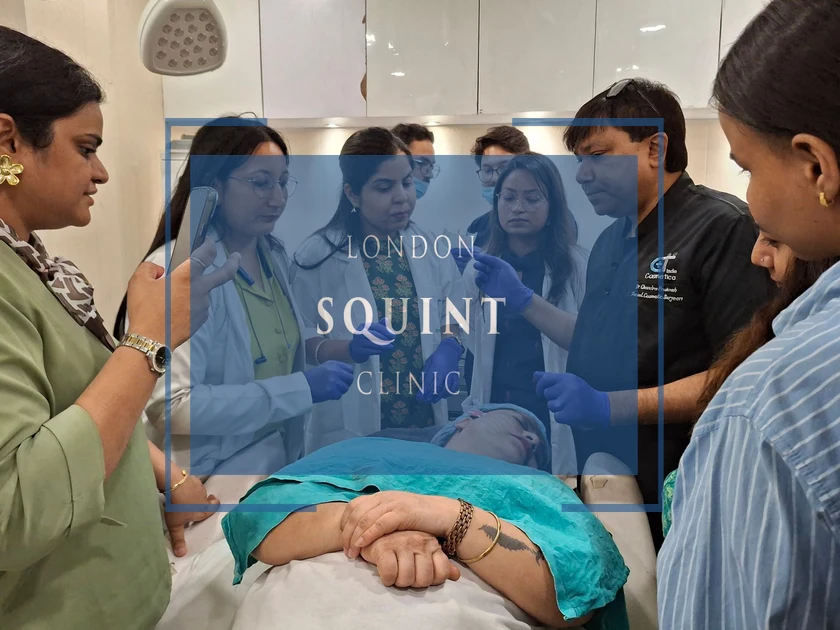
Why Choose Private Squint Surgery?
In the UK, squint surgery may be performed via the NHS, through insurance, or as self-pay. NHS treatment is free, but waiting times can be long and surgery is often performed by trainees under supervision. Many operations are carried out by surgeons who mainly specialise in children’s squint rather than adult complex cases.
With insurance, fees are standardised — meaning some leading specialists choose not to participate. Self-pay allows you to choose your surgeon directly and prioritise experience, specialisation, and access.
Many centres quote only a surgical fee. Hospital costs, anaesthetic fees and follow-ups are frequently additional. At London Squint Clinic, everything is included in one transparent package.
Our Complete Package – £10,000
- ✔ Advanced surgery by Mr Ali (one or both eyes)
- ✔ Adjustable sutures where clinically indicated
- ✔ Detailed orthoptic planning
- ✔ All hospital & anaesthetic fees included
- ✔ Post-operative medication
- ✔ Two video follow-ups
- ✔ Face-to-face review appointment
What Makes Us Different
- ✔ 100% focused on adult squint & double vision surgery
- ✔ >95% audited success rate
- ✔ Free re-treatment at 3 months if worse (extremely rare)
- ✔ 24/7 direct WhatsApp access to your surgeon during recovery
- ✔ Optional well-being session & pre-op reassurance call
Initial consultation: from £150
Surgery typically within 4 weeks. No referral required. Self-pay only.
Squint Surgery Adjustment Procedure: Precise Eye Alignment
The squint surgery adjustment procedure is a fine-tuning process performed in the clinic, typically the day after surgery, to achieve precise eye alignment. This post-operative step allows the surgeon to modify the eye muscle’s position using an adjustable suture while the patient is awake and comfortable, aided by topical anaesthetic. The goal is to refine the surgical outcome, correct any residual misalignment, and restore comfortable binocular vision. This technique is crucial for adults, where even minor deviations can cause double vision, making the adjustment a key part of the overall operation.
At London Squint Clinic, Mr Nadeem Ali specialises exclusively in adult squint and double vision surgery. This focus ensures every procedure, including post-operative adjustments, is performed with the specific goal of achieving optimal functional and cosmetic outcomes for adult patients with complex strabismus.
To explore your options, contact us to schedule your consultation. You can also reach us via: Enquire about squint surgery, Squint Surgery in London
What is the Squint Surgery Adjustment Procedure?
The squint surgery adjustment procedure is a fine-tuning process performed in the clinic, typically the day after eye muscle surgery. It allows the surgeon to make small, precise modifications to the eye’s alignment while the patient is awake. This step uses adjustable sutures to refine the surgical result.
This post-operative adjustment is not a second surgery but the completion of the first. During the main operation, the surgeon repositions the eye muscle and secures it with a suture that can be accessed and modified without further incisions. The adjustment is performed because the eye’s alignment is best assessed when the effects of general anaesthesia have worn off.
Why Post-Operative Fine-Tuning is Essential for Adults
In adults, precise eye alignment is critical for functional vision and cosmetic appearance. The adult brain has a low tolerance for minor misalignment, which can cause persistent double vision (diplopia). The goal is to restore comfortable single vision and enhance binocular vision—the ability of the eyes to work together.
The adjustment allows the surgeon to address residual deviation or overcorrection that becomes apparent once the patient is awake. This precision is important in complex cases, such as revision surgeries or strabismus caused by nerve palsies. Fine-tuning the muscle position increases the chance of achieving straightness and eliminating double vision in one operation. This technique is used in adult strabismus care, as detailed in studies published by the National Institutes of Health.
How Does the Adjustment Procedure Work?
The adjustment is performed in an ophthalmology clinic. It uses the adjustable suture technique, where the eye muscle is reattached to the sclera (the white of the eye) with a suture that has an accessible knot, like a slipknot or bow-tie.
The surgeon exposes this suture, located under the conjunctiva (the clear outer layer of the eye). Using specialised instruments, the surgeon pulls on the suture ends to tighten or loosen it. Tightening the suture pulls the muscle forward, increasing its effect; loosening it allows the muscle to slip back, reducing its effect. This directly changes the eye’s position for real-time correction.
Ensuring Comfort: The Role of Topical Anaesthetic
The procedure is made comfortable with topical anaesthetic eye drops. These drops numb the eye’s surface and are stronger than those used for routine eye pressure checks.
The drops are applied several minutes before the adjustment to ensure the eye is desensitised. Patients typically report feeling pressure or a slight pulling sensation, but not sharp pain.
The Mechanics of Suture Adjustment and Eye Alignment
The procedure involves manipulating the suture knot. The surgeon uses fine forceps to grasp the suture ends. A pull in one direction tightens the loop, advancing the muscle and rotating the eye. A pull in the opposite direction loosens the loop, allowing the muscle to recess and the eye to rotate back. These movements are often less than a millimetre but significantly impact the final eye position.
Throughout this process, the surgeon assesses eye alignment by having the patient look at a distant target and using prisms to measure any remaining deviation. The patient’s feedback on single or double vision is a crucial guide for the surgeon.
What to Expect During Your Adjustment Appointment
Your adjustment appointment is in a standard examination room at the ophthalmology clinic, not an operating theatre. You will be seated in an examination chair, and the process lasts 10 to 20 minutes.
Mr Ali will explain each step. After the anaesthetic drops take effect, a lid speculum may be used to hold your eyelids open, which is not painful and gives the surgeon a clear view. You will be asked to look in various directions to assess the alignment in different positions of gaze.
Patient Cooperation: Your Role in Achieving Perfect Alignment
Unlike the initial surgery under general anaesthesia, the adjustment is a collaborative effort. Your patient cooperation is vital. The surgeon relies on your subjective feedback to guide the fine-tuning. You may be asked questions such as:
- “Are you seeing one image or two?”
- “When you look to the left, does the double vision get better or worse?”
- “Is the image perfectly single now?”
This direct feedback loop between patient and surgeon makes the adjustable suture technique effective, allowing for customisation that is impossible when the patient is asleep.

View data as table
| Aspect | Initial Surgery (Operating Theatre) | Adjustment Procedure (Clinic) |
|---|---|---|
| Consciousness | Unconscious (General Anaesthesia) | Fully awake and alert |
| Patient Role | Passive | Active and collaborative |
| Feedback Provided | None | Crucial verbal feedback on vision (single/double) |
| Environment | Sterile operating theatre | Comfortable examination room |
Immediate Visual Feedback and Results
The adjustment provides an immediate change in vision. As the surgeon makes modifications, you may perceive double vision resolving into a single image. This real-time feedback confirms the alignment is improving. Once the optimal position is achieved, the surgeon secures the suture knot permanently and trims the ends. The final alignment settles as swelling subsides, but the result from the adjustment is a close indicator of the long-term outcome.
The Expertise Behind Precise Eye Alignment
Squint surgery adjustment requires skill, experience, and judgement. The process balances objective measurements with subjective patient feedback, so the choice of a specialist strabismus surgeon is important.
A surgeon focused on adult strabismus, like Mr Nadeem Ali, understands the eye muscle mechanics and binocular vision needed to interpret cues during an adjustment. This expertise, from thousands of procedures, allows for precise manipulations, particularly in complex cases like re-operations or strabismus related to thyroid eye disease.
Why Specialist Strabismus Surgeons Excel in Adjustable Suture Techniques
Specialist training in adult squint provides an advantage. Mr Ali’s background, including training at Cambridge University and 13 years as a Consultant at Moorfields Eye Hospital, focused on adult strabismus and neuro-ophthalmology. This focus develops the proficiency for techniques like adjustable suture squint surgery.
Performing an adjustment under topical anaesthesia while communicating with the patient is a skill developed through experience. A specialist understands how much to move the muscle and can anticipate the eye’s healing response to achieve a stable, long-term result.
Achieving Life-Changing Outcomes: Mr. Ali’s Approach
The goal is to improve a patient’s vision and quality of life. The precision from the adjustment procedure contributes to the high success rates at London Squint Clinic. An audited alignment success rate of 95% from a single operation results from combining surgical technique with post-operative fine-tuning.
The clinic offers a re-operation policy. Using adjustable sutures minimises the need for repeat surgeries, leading to straight eyes and single vision.

View data as table
| Surgical Technique | Typical Success Rate (Single Operation) | Primary Benefit |
|---|---|---|
| Non-Adjustable Sutures | 70-80% | Simpler initial procedure |
| Adjustable Sutures (Specialist-Led) | >90% | Higher precision, lower re-operation rate |
Recovery and Long-Term Stability After Adjustment
After the adjustment is complete and the suture is secured, recovery begins. The eye will be red and may feel gritty or sore. You will be given anti-inflammatory and antibiotic eye drops to use for several weeks to aid healing and prevent infection.
The alignment achieved during the adjustment is stable. While minor fluctuations can occur as tissues heal and swelling resolves, the final position is typically close to what was set in the clinic. The long-term stability of adjustable suture surgery is well-established, providing a durable correction.
Post-Adjustment Care and What to Watch For
You will receive specific care instructions, which include avoiding strenuous activity, swimming, and dusty environments for a short period. Attend all scheduled follow-up appointments to monitor your healing and visual status.
Contact the clinic if you experience significant pain, a sudden change in vision, or signs of infection; these complications are rare. Most patients’ recovery is straightforward, with redness and discomfort subsiding over several weeks. For a detailed timeline, review our day-by-day guide to healing after adult squint surgery.
Considering Adult Squint Surgery? Your Next Steps
The squint surgery adjustment procedure, performed by a specialist, offers a high probability of achieving straight eyes and comfortable single vision.
If you are an adult with a squint or double vision, a specialist consultation is the next step. An assessment can determine if you are a candidate for adjustable suture surgery and explain the possible outcomes.
Conclusion
The choice of surgeon is the most important factor in the outcome of squint surgery. The adjustment procedure demonstrates the precision of specialist care. Choosing a surgeon who masters this technique increases the chance of achieving your visual goals in one operation. Contact us to learn more.
Enquire about squint surgery or learn more about our approach to Squint Surgery in London.
Frequently Asked Questions
When is the squint surgery adjustment procedure typically scheduled?
The squint surgery adjustment procedure is usually performed the day after the initial eye muscle surgery, often within 18-24 hours. This timing is crucial as it allows the effects of general anesthesia to fully wear off, enabling the surgeon to accurately assess the eye’s natural alignment while the patient is fully awake and cooperative. This precise timing ensures optimal fine-tuning for the best possible visual outcome.
What sensations should I expect during the squint surgery adjustment procedure?
Patients typically experience no pain during the adjustment procedure due to the application of topical anesthetic drops that completely numb the eye’s surface. You might feel a light touch or a gentle pulling sensation as Mr. Ali carefully manipulates the suture, but discomfort is minimal. The process is designed to be quick and comfortable, usually lasting only 5-10 minutes.
How long does the entire appointment for the adjustment procedure last?
While the actual adjustment of the suture itself is very brief, typically 5-10 minutes, the entire clinic appointment usually lasts around 30-45 minutes. This allows time for check-in, application of anesthetic drops, a thorough pre-adjustment assessment by Mr. Ali, the adjustment, and a final post-procedure check. This comprehensive approach ensures meticulous care and optimal results.
What is the patient’s active role during the squint surgery adjustment procedure?
During the adjustment, your primary role is to sit comfortably and follow Mr. Ali’s instructions, which typically involve focusing on a specific target. You will be asked to look in various directions to help the surgeon assess your eye alignment and make precise adjustments. Clear communication with Mr. Ali about your vision and comfort is also important to achieve the best possible outcome.
Are all adult squint surgeries performed with adjustable sutures?
No, not all adult squint surgeries utilize adjustable sutures, though they are a preferred technique for many complex cases and for surgeons aiming for the highest precision. Mr. Nadeem Ali, with his 24 years of eye surgery experience, frequently employs adjustable sutures, especially in adults, to allow for post-operative fine-tuning and achieve a 95% audited alignment success rate from one operation. This technique is particularly beneficial for adults where precise alignment is critical to prevent double vision.
What is the primary benefit of the adjustable suture technique for adult squint patients?
The primary benefit of the adjustable suture technique is the ability to achieve highly precise eye alignment, which is crucial for adults to avoid double vision (diplopia) and ensure optimal cosmetic results. This fine-tuning, performed the day after surgery, allows the surgeon to correct any minor residual misalignment that might only become apparent once the patient is fully awake. This significantly enhances the likelihood of achieving comfortable single vision and excellent aesthetic outcomes, contributing to the London Squint Clinic’s high success rates.
Related Posts

Find out if you are suitable for Double Vision Treatment
Find out if you could benefit from this life changing surgery by contacting us today
Our most popular procedures


Hello, I’m Nadeem Ali
I’m one of the few eye surgeons in the world with 100% focus on Squint and Double Vision Surgery.
I have 24 years of eye surgery experience, and worked for 13 years as a Consultant at London’s renowned Moorfields Eye Hospital.
In 2023, I left the NHS to focus fully on treating patients from across the world at the London Squint Clinic. You can read more about me here.
There’s lots of information on the website about: squint surgery, double vision surgery and our pricing.
The most rewarding part of my job is hearing patients tell me how squint or double vision surgery has changed their lives. You can hear these stories here.
Mr Nadeem Ali
MA MB BChir MRCOphth FRCSEd(Ophth)