
Your Complete Guide to Recovery After Private Squint Surgery: Timeline, Tips, and Results
Why Choose Private Squint Surgery?
In the UK, squint surgery may be performed via the NHS, through insurance, or as self-pay. NHS treatment is free, but waiting times can be long and surgery is often performed by trainees under supervision. Many operations are carried out by surgeons who mainly specialise in children’s squint rather than adult complex cases.
With insurance, fees are standardised — meaning some leading specialists choose not to participate. Self-pay allows you to choose your surgeon directly and prioritise experience, specialisation, and access.
Many centres quote only a surgical fee. Hospital costs, anaesthetic fees and follow-ups are frequently additional. At London Squint Clinic, everything is included in one transparent package.
Our Complete Package – £10,000
- ✔ Advanced surgery by Mr Ali (one or both eyes)
- ✔ Adjustable sutures where clinically indicated
- ✔ Detailed orthoptic planning
- ✔ All hospital & anaesthetic fees included
- ✔ Post-operative medication
- ✔ Two video follow-ups
- ✔ Face-to-face review appointment
What Makes Us Different
- ✔ 100% focused on adult squint & double vision surgery
- ✔ >95% audited success rate
- ✔ Free re-treatment at 3 months if worse (extremely rare)
- ✔ 24/7 direct WhatsApp access to your surgeon during recovery
- ✔ Optional well-being session & pre-op reassurance call
Initial consultation: from £150
Surgery typically within 4 weeks. No referral required. Self-pay only.
Recovery After Private Squint Surgery: What to Expect
The recovery after private squint surgery follows a predictable timeline, beginning with redness and mild discomfort that typically resolves within one to two weeks. This guide details the key milestones, from immediate strabismus surgery aftercare and managing eye drops to the gradual settling of your final eye alignment over six to eight weeks. Understanding this process helps manage expectations for symptoms like temporary double vision and clarifies when you can resume driving and work. A well-managed recovery after private squint surgery is fundamental to achieving stable, long-term results and improved vision.
At London Squint Clinic, our consultant-led care is focused exclusively on adult squint and double vision surgery. This specialization ensures that all aftercare guidance is based on extensive experience with the specific healing patterns and needs of adult patients undergoing eye alignment procedures.
To explore your options, contact us to schedule your consultation. You can also reach us via: Enquire about squint surgery, Squint Surgery in London
Understanding Your Recovery After Private Squint Surgery
Recovery after private squint surgery involves redness and mild discomfort for the first one to two weeks, which gradually subsides. Most daily activities, including non-strenuous work, can be resumed within a similar timeframe. The final eye position typically settles over six to eight weeks.
What to Expect in the Initial Days
Immediately following your procedure, your eye will likely be red and feel gritty or scratchy, similar to having an eyelash in it. It may also be watery and sensitive to bright light. Mild aching or discomfort is common and usually managed with over-the-counter pain relief.
Immediate Aftercare: Managing Discomfort and Protecting Your Eyes
Diligent aftercare during the first week protects the eye from infection and strain. Your surgeon will provide specific instructions tailored to your procedure.
Essential Eye Drop Regimen and Hygiene
You will be prescribed antibiotic and anti-inflammatory eye drops. Use these exactly as directed to prevent infection and control inflammation. Always wash your hands before administering drops. To apply them, gently pull down your lower eyelid to create a pocket and release the drop without the bottle tip touching your eye or eyelid.
To clean around the eye, use cooled boiled water and a clean cotton pad, wiping gently from the inner corner outwards. Use a fresh pad for each wipe and for each eye to avoid cross-contamination. Following a consistent strabismus surgery aftercare plan is fundamental to healing.
Minimizing Discomfort and Swelling
Mild post-operative discomfort is manageable with standard analgesics like paracetamol or ibuprofen. Avoid aspirin unless advised, as it can increase the risk of bleeding.
A clean, cool compress applied over the closed eyelid for a few minutes can help reduce swelling. Rest, particularly in the first 24-48 hours, is key to recovery.
What to Expect: Your Squint Surgery Recovery Timeline
While every individual heals at a different pace, recovery follows a predictable pattern. This timeline is a general guide to the milestones during convalescence from adult strabismus surgery.
Key Milestones: From Days to Weeks
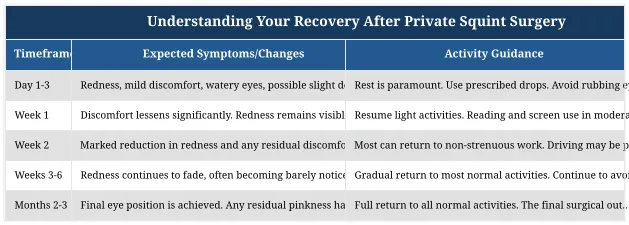
The healing process is phased, with noticeable improvements each week. Adhering to activity guidelines is essential to prevent complications and support your new eye alignment.
View data as table
| Timeframe | Expected Symptoms/Changes | Activity Guidance |
|---|---|---|
| Day 1-3 | Redness, mild discomfort, watery eyes, possible slight double vision. | Rest is paramount. Use prescribed drops. Avoid rubbing eyes. No driving. |
| Week 1 | Discomfort lessens significantly. Redness remains visible but starts to fade. Vision begins to stabilize. | Resume light activities. Reading and screen use in moderation. No heavy lifting, strenuous exercise, or swimming. |
| Week 2 | Marked reduction in redness and any residual discomfort. Vision becomes clearer. | Most can return to non-strenuous work. Driving may be possible if vision is stable and you feel confident (check with your surgeon and insurer). Light exercise can resume. |
| Weeks 3-6 | Redness continues to fade, often becoming barely noticeable. The eye’s final position is settling. | Gradual return to most normal activities. Continue to avoid activities with a high risk of eye injury or exposure to dirt/dust. |
| Months 2-3 | Final eye position is achieved. Any residual pinkness has resolved. A key follow-up appointment occurs. | Full return to all normal activities. The final surgical outcome is assessed by your consultant. |
Restrictions and Precautions During Healing
To protect the surgical site, avoid swimming pools, hot tubs, and the sea for at least two to four weeks, as these environments contain bacteria that can cause infection. Also avoid dusty or smoky environments and refrain from wearing eye makeup until your surgeon gives clearance.
Avoid heavy lifting and strenuous exercise for the first two weeks, as they increase pressure that can strain healing muscles and sutures. These precautions are outlined by organisations like the American Academy of Ophthalmology.
Why Specialist Adult Squint Care Matters for Your Recovery
The quality of your recovery is influenced by the expertise and support around you. For adults with complex or recurrent strabismus, choosing a specialist consultant offers distinct advantages throughout the process.
The Advantage of Consultant-Led Expertise
A surgeon focused on adult squint and double vision offers valuable experience. With 13 years as a Consultant at Moorfields Eye Hospital and a career dedicated 100% to this sub-specialty, Mr Nadeem Ali provides tailored surgical plans and post-operative guidance for adult patients.
Specialist private care often includes support such as direct 24/7 access to the surgical team via services like WhatsApp for patient questions.
Addressing Adult-Specific Concerns During Recovery
Adults undergoing strabismus correction have concerns including the timing of returning to work, driving safety, and the psychological adjustment to a new appearance. A specialist in adult care addresses these factors.
A specialist provides practical advice based on experience with thousands of adult cases to help patients return to work and daily life. This approach is recognised by institutions like Moorfields Eye Hospital.
View data as table
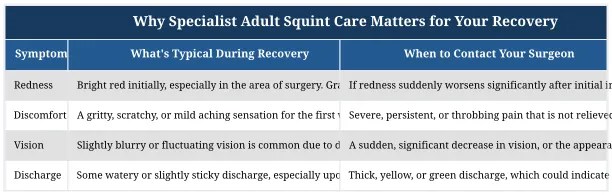
| Symptom | What’s Typical During Recovery | When to Contact Your Surgeon |
|---|---|---|
| Redness | Bright red initially, especially in the area of surgery. Gradually fades to pink over several weeks. | If redness suddenly worsens significantly after initial improvement. |
| Discomfort | A gritty, scratchy, or mild aching sensation for the first week, managed with simple pain relief. | Severe, persistent, or throbbing pain that is not relieved by prescribed or recommended analgesics. |
| Vision | Slightly blurry or fluctuating vision is common due to drops and swelling. Temporary double vision can occur as the brain adapts. | A sudden, significant decrease in vision, or the appearance of flashes and floaters. |
| Discharge | Some watery or slightly sticky discharge, especially upon waking. | Thick, yellow, or green discharge, which could indicate an infection. |
Achieving Lasting Results: Long-Term Outcomes & Follow-Up
Strabismus surgery aims for a stable, long-term improvement in eye alignment, which can enhance confidence, improve eye contact, and resolve or improve double vision.
Understanding Your Final Eye Position and Vision
A significant change in eye alignment is often visible immediately, but the final position settles over several weeks as muscles heal and swelling subsides. This correction can positively impact social and professional interactions.
Patients with double vision often find relief as the brain adapts to the new alignment, fusing images from both eyes. This neuro-adaptation is key to the long-term success of diplopia surgery.
Managing Temporary Side Effects and Follow-Up Care
Some redness may persist for several weeks, gradually fading. Occasional or fleeting double vision can also occur as the eyes and brain adjust.
Scheduled follow-up appointments allow your surgeon, Mr Ali, to monitor healing, check vision and alignment, and ensure an optimal outcome. This is essential for long-term success and addressing any questions. In the rare event of an unsatisfactory outcome, a re-operation policy is available.
Begin Your Journey to Aligned Vision
A successful outcome depends on a precise surgical procedure and a well-managed recovery. Choosing a specialist clinic ensures expert guidance at every step.
Experience Specialist Care and Life-Changing Results
London Squint Clinic offers consultant-led care focused on adult strabismus, transparent package pricing, and a supportive recovery journey. If you are considering surgery to correct an eye misalignment or resolve double vision, we invite you to take the next step.
Conclusion
A successful outcome from adult strabismus surgery depends on both technical skill and your participation in aftercare. A specialist approach ensures your post-operative journey is as meticulously planned and supported as the procedure itself. To learn how specialist care can transform your vision and confidence, contact us.
Take the first step today. Enquire about squint surgery or learn more about Squint Surgery in London.
Frequently Asked Questions
How soon can I resume normal activities like driving or working after private squint surgery?
Most patients find they can return to non-strenuous work and driving within one to two weeks following their procedure. The initial discomfort and redness typically subside significantly during this 7-14 day period. The final eye position, however, continues to settle over approximately six to eight weeks.
What specific aftercare steps are crucial to ensure a smooth recovery after private squint surgery?
Diligent aftercare is vital for optimal healing. You must use the prescribed antibiotic and anti-inflammatory eye drops exactly as directed to prevent infection and manage swelling. Additionally, it is crucial to avoid rubbing your eyes and refrain from swimming for at least two weeks to protect the surgical site.
When can I safely wear eye makeup or swim after my squint correction procedure?
To prevent infection and irritation, it is generally advised to avoid wearing eye makeup for at least two weeks post-surgery. Similarly, swimming should be avoided for a minimum of two weeks to protect the healing eye from waterborne bacteria. Your surgeon will provide specific guidance based on your individual healing progress.
What are the typical follow-up appointments after adult squint surgery?
Post-operative care typically includes several follow-up appointments to monitor your healing and eye alignment. These usually occur at specific intervals, such as one week, one month, and three months after your surgery. These consultations ensure your recovery is progressing as expected and allow for any necessary adjustments or advice.
Is it common to experience temporary double vision or light sensitivity during the initial recovery period?
Yes, it is quite common to experience temporary double vision as your brain adjusts to the new alignment of your eyes. This symptom usually resolves within a few days to a few weeks. Mild light sensitivity and a gritty sensation are also normal in the immediate post-operative phase, typically improving within the first week or two.
What support is available if I have concerns during my recovery after private squint surgery?
During your recovery after private squint surgery, comprehensive support is provided to address any concerns. Patients of London Squint Clinic benefit from 24/7 WhatsApp access to Mr. Ali for peace of mind. This direct line ensures you receive expert guidance and reassurance throughout your healing journey.
Related Posts
Find out if you are suitable for Double Vision Treatment
Find out if you could benefit from this life changing surgery by contacting us today
Our most popular procedures


Hello, I’m Nadeem Ali
I’m one of the few eye surgeons in the world with 100% focus on Squint and Double Vision Surgery.
I have 24 years of eye surgery experience, and worked for 13 years as a Consultant at London’s renowned Moorfields Eye Hospital.
In 2023, I left the NHS to focus fully on treating patients from across the world at the London Squint Clinic. You can read more about me here.
There’s lots of information on the website about: squint surgery, double vision surgery and our pricing.
The most rewarding part of my job is hearing patients tell me how squint or double vision surgery has changed their lives. You can hear these stories here.
Mr Nadeem Ali
MA MB BChir MRCOphth FRCSEd(Ophth)