
Comparing Outcomes of Adjustable vs. Non-Adjustable Strabismus Surgery
Why Choose Private Squint Surgery?
In the UK, squint surgery may be performed via the NHS, through insurance, or as self-pay. NHS treatment is free, but waiting times can be long and surgery is often performed by trainees under supervision. Many operations are carried out by surgeons who mainly specialise in children’s squint rather than adult complex cases.
With insurance, fees are standardised — meaning some leading specialists choose not to participate. Self-pay allows you to choose your surgeon directly and prioritise experience, specialisation, and access.
Many centres quote only a surgical fee. Hospital costs, anaesthetic fees and follow-ups are frequently additional. At London Squint Clinic, everything is included in one transparent package.
Our Complete Package – £10,000
- ✔ Advanced surgery by Mr Ali (one or both eyes)
- ✔ Adjustable sutures where clinically indicated
- ✔ Detailed orthoptic planning
- ✔ All hospital & anaesthetic fees included
- ✔ Post-operative medication
- ✔ Two video follow-ups
- ✔ Face-to-face review appointment
What Makes Us Different
- ✔ 100% focused on adult squint & double vision surgery
- ✔ >95% audited success rate
- ✔ Free re-treatment at 3 months if worse (extremely rare)
- ✔ 24/7 direct WhatsApp access to your surgeon during recovery
- ✔ Optional well-being session & pre-op reassurance call
Initial consultation: from £150
Surgery typically within 4 weeks. No referral required. Self-pay only.
Adjustable Vs Non-adjustable Strabismus Surgery: Comparing Outcomes
The core difference in adjustable vs non-adjustable strabismus surgery is the ability to fine-tune eye alignment after the initial operation. This article compares the surgical outcomes of both methods, focusing on how a post-operative adjustment can enhance precision, particularly in complex adult cases requiring diplopia correction. We examine how each technique impacts eye alignment accuracy and the potential need for revision surgery. Understanding the distinction between these approaches is essential for patients seeking the most effective correction for their specific condition.
At London Squint Clinic, Mr. Nadeem Ali’s practice focuses exclusively on adult squint and double vision surgery. The choice of surgical technique is based on a detailed assessment of each patient’s unique history, including previous surgeries and the complexity of their eye misalignment.
To explore your options, contact us to schedule your consultation. You can also reach us via: Enquire about squint surgery, Squint Surgery in London
Adjustable vs. Non-Adjustable Strabismus Surgery: What’s the Key Difference?
The key difference between adjustable and non-adjustable strabismus surgery is the timing of the final alignment. Non-adjustable surgery secures the eye muscles in their new position permanently during the operation. Adjustable surgery uses a suture technique that allows for fine-tuning of the eye’s alignment in the hours or day after the initial procedure, while the patient is awake and cooperative.
This distinction in adjustable vs non-adjustable strabismus surgery directly impacts the potential for precision in the final outcome. The choice between these methods depends on the complexity of the strabismus, the patient’s history, and the surgeon’s assessment.
Understanding the Goal of Strabismus Surgery
The goal of strabismus surgery is to correct the misalignment of the eyes by repositioning one or more of the extraocular muscles that control eye movement. For many adults, the objectives are to achieve straighter-looking eyes for improved social confidence and to resolve or reduce double vision (diplopia), restoring single binocular vision.
Effective surgery rebalances the muscular forces acting on the eye, allowing the brain to fuse the images from both eyes into a single, three-dimensional picture. The precision of this rebalancing is critical for a successful functional and aesthetic result.
Traditional Approach: How Non-Adjustable Strabismus Surgery Works
Conventional, or non-adjustable, strabismus surgery is an established and effective procedure for many types of eye misalignment. During this operation, the surgeon makes a small incision in the conjunctiva (the clear surface layer of the eye) to access the eye muscles. The targeted muscle is detached from its original insertion point and reattached to a new, predetermined position.
Fixed Sutures and Initial Alignment
The defining feature of this technique is the use of permanent, non-absorbable sutures to fix the muscle in its new location. The surgeon relies on pre-operative measurements, calculations, and experience to determine the ideal placement. Once these sutures are tied, the alignment is set. The surgical outcome is entirely dependent on the accuracy of the initial placement during the operation.
The final eye position can be influenced by factors like the effects of general anaesthesia on muscle tone or individual healing responses, which are not fully apparent until after the patient has recovered.
When Non-Adjustable Surgery is Considered
Non-adjustable surgery is a suitable option for many patients, particularly in straightforward cases. This may include certain types of childhood strabismus or adult cases with a long history of stable, predictable deviation. The procedure is generally quicker than the initial phase of an adjustable operation because it does not involve creating the temporary suture mechanism for later adjustment.
The Precision Advantage: Adjustable Suture Strabismus Surgery
Adjustable suture strabismus surgery is a refined technique for optimal eye alignment. This technique provides a “second chance” to perfect the eye’s position after the initial operation is complete and the patient is awake and able to participate in the alignment process.
The Mechanism of Post-Operative Adjustment
During the primary surgery, the surgeon reattaches the eye muscle using a suture that is temporarily secured with a sliding knot or bow-tie, rather than a permanent knot. The ends of this suture are left accessible, often tucked under the eyelid. The following day, in a clinic setting, the surgeon assesses the eye alignment with the patient fully awake. If the alignment is not perfect, topical anaesthetic drops are applied to numb the eye. The surgeon can then tighten or loosen the suture to minutely adjust the muscle’s position, fine-tuning the eye’s alignment until it is optimal. Once the ideal position is achieved, the suture is tied off permanently.
This technique allows the surgeon to account for the state of the eye muscles without the influence of general anaesthesia, for a more accurate final result. For more information on the specifics of this method, you can read about how adjustable suture squint surgery works and why it improves accuracy.
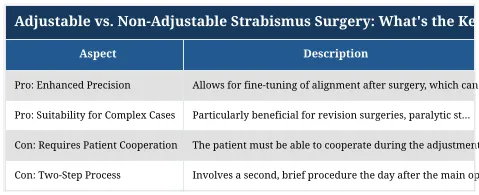
View data as table
| Aspect | Description |
|---|---|
| Pro: Enhanced Precision | Allows for fine-tuning of alignment after surgery, which can improve the final outcome, especially for diplopia correction. |
| Pro: Suitability for Complex Cases | Particularly beneficial for revision surgeries, paralytic strabismus, and cases with unpredictable surgical responses. |
| Con: Requires Patient Cooperation | The patient must be able to cooperate during the adjustment phase, making it less suitable for young children or anxious adults. |
| Con: Two-Step Process | Involves a second, brief procedure the day after the main operation, which requires an additional clinic visit. |
Enhancing Eye Alignment Accuracy and Outcomes
Post-operative adjustment enhances eye alignment accuracy. This is particularly crucial for adults with double vision, where even a small residual misalignment can prevent the brain from fusing the two images. By fine-tuning the alignment, the surgeon increases the likelihood of eliminating diplopia and restoring comfortable single vision.
Mr. Ali’s Expertise: Why Adjustable Sutures for Adult Squint and Double Vision?
For a specialist surgeon like Mr. Nadeem Ali, whose practice is dedicated to adult strabismus and diplopia, the adjustable suture technique is an indispensable tool. Adults often present with more complex conditions than children, including long-standing squints, scar tissue from previous operations, or misalignment caused by neurological issues or trauma. These factors can make the surgical outcome less predictable.
Optimizing Results for Complex and Revision Cases
In revision surgery, anatomy and muscle behaviour are altered by scar tissue, making standard surgical calculations less reliable. Similarly, in paralytic strabismus, such as a cranial nerve palsy, muscle function is abnormal. Mr. Ali’s experience, including his tenure as a consultant at Moorfields Eye Hospital, informs his use of adjustable sutures to manage this unpredictability. This technique provides the control needed to manage these challenges and achieve the best possible alignment. You can learn more about this advanced technique for better results in complex cases.
The goal of strabismus surgery is precise realignment, and the adjustable method is a key technology for achieving this in difficult adult cases.
The Patient Experience: Comfort and Confidence in Adjustment
The post-operative adjustment is a well-tolerated procedure. The eye is numbed with anaesthetic drops, so patients typically feel little to no pain, perhaps only a mild sensation of pressure or pulling. The process is brief and performed in a calm clinical environment. For patients, the knowledge that their alignment can be fine-tuned provides reassurance and confidence in the surgical outcome.
Comparing Outcomes: Precision, Recovery, and Long-Term Stability
The primary metrics for evaluating outcomes of adjustable vs non-adjustable strabismus surgery are alignment accuracy, the need for subsequent operations, and long-term stability. The adjustable method offers an advantage in predictability and precision, which directly influences these outcomes.
A Side-by-Side Look at Key Differences
The choice between surgical approaches is a clinical decision based on individual patient factors. The following table provides a qualitative comparison of the two methods.
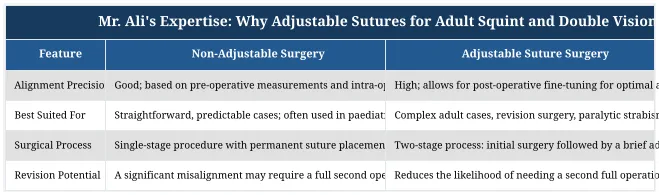
View data as table
| Feature | Non-Adjustable Surgery | Adjustable Suture Surgery |
|---|---|---|
| Alignment Precision | Good; based on pre-operative measurements and intra-operative judgement. | High; allows for post-operative fine-tuning for optimal accuracy. |
| Best Suited For | Straightforward, predictable cases; often used in paediatric surgery. | Complex adult cases, revision surgery, paralytic strabismus, and diplopia correction. |
| Surgical Process | Single-stage procedure with permanent suture placement. | Two-stage process: initial surgery followed by a brief adjustment session. |
| Revision Potential | A significant misalignment may require a full second operation. | Reduces the likelihood of needing a second full operation for residual misalignment. |
Achieving Lasting Eye Alignment and Functional Vision
The goal is stable, long-term eye alignment that provides both functional and cosmetic benefits. By allowing for a highly accurate initial setting, adjustable suture surgery creates a stable foundation for the eyes to work together. This precision is a critical factor in improving strabismus surgery success rates, particularly in the cases frequently seen in a specialist adult practice. For a deeper understanding of what to expect, read about adult squint surgery success rates and recovery.
Choosing the Right Path for Your Adult Squint Correction
The choice in adjustable vs non-adjustable strabismus surgery is not about one method being universally better, but which is most appropriate for an individual’s clinical situation. For adults, especially those with complex histories or double vision, the precision offered by the adjustable suture technique is often a significant advantage.
A consultation with a specialist surgeon experienced in both techniques is the essential first step. This allows for a thorough assessment of your eye condition and a clear discussion of the surgical plan best suited to achieve your goals of straighter eyes and single, comfortable vision.
Conclusion
The key decision criterion when comparing strabismus surgery techniques is the level of precision required to meet the patient’s goals. While non-adjustable surgery is effective for many, the adjustable suture method provides a high degree of control, which is critical for correcting complex adult strabismus and eliminating double vision. Seek an expert opinion to determine the most effective approach for your circumstances. To explore your options with a leading specialist, contact us to schedule a consultation. You can also Enquire about squint surgery or learn more about Squint Surgery in London.
Frequently Asked Questions
What is the primary difference in precision between adjustable and non-adjustable strabismus surgery outcomes?
The core distinction lies in the ability to fine-tune eye alignment. Adjustable strabismus surgery allows for precise adjustments of the eye muscles in the hours following the initial operation, while the patient is awake, aiming for optimal alignment. Non-adjustable surgery fixes the muscle position permanently during the initial procedure, without this post-operative refinement capability.
When might non-adjustable strabismus surgery be considered a suitable option for adults?
Non-adjustable surgery remains a viable and effective option for specific cases, particularly for straightforward squints with stable, smaller angles, or when it is a patient’s first strabismus correction. The suitability is determined by a thorough assessment of the individual’s eye anatomy, the type of squint, and its complexity.
Why does Mr. Nadeem Ali often recommend adjustable suture surgery for adult squint correction?
Mr. Nadeem Ali, with his extensive experience, frequently recommends adjustable suture surgery for most adult cases to maximize the accuracy of the final eye alignment. This approach is particularly beneficial for complex or revision surgeries, where the ability to fine-tune the outcome significantly enhances the potential for a successful result.
Do patients experience a different recovery process with adjustable vs non-adjustable strabismus surgery?
The initial recovery immediately after the main operation is largely similar for both methods. However, with adjustable strabismus surgery, patients undergo a brief, painless adjustment procedure the day after surgery, performed with numbing eye drops while they are awake. This additional step is crucial for achieving the most accurate alignment.
What are the specific benefits of adjustable strabismus surgery for complex adult cases, such as those with nerve palsies?
For complex adult cases, including those involving nerve palsies or thyroid eye disease, adjustable strabismus surgery offers a significant advantage due to its post-operative fine-tuning capability. This allows the surgeon to achieve a more precise and stable alignment, which is often challenging in cases with variable muscle function or scar tissue from previous operations.
Is the adjustment procedure for adjustable strabismus surgery uncomfortable for the patient?
The adjustment procedure, typically performed the day after the main surgery, is generally not uncomfortable. Topical anaesthetic eye drops are used to thoroughly numb the eye, ensuring the patient experiences minimal to no pain during the brief process. Patients are awake and cooperative, which aids in achieving the optimal final alignment.
Related Posts

Find out if you are suitable for Double Vision Treatment
Find out if you could benefit from this life changing surgery by contacting us today
Our most popular procedures

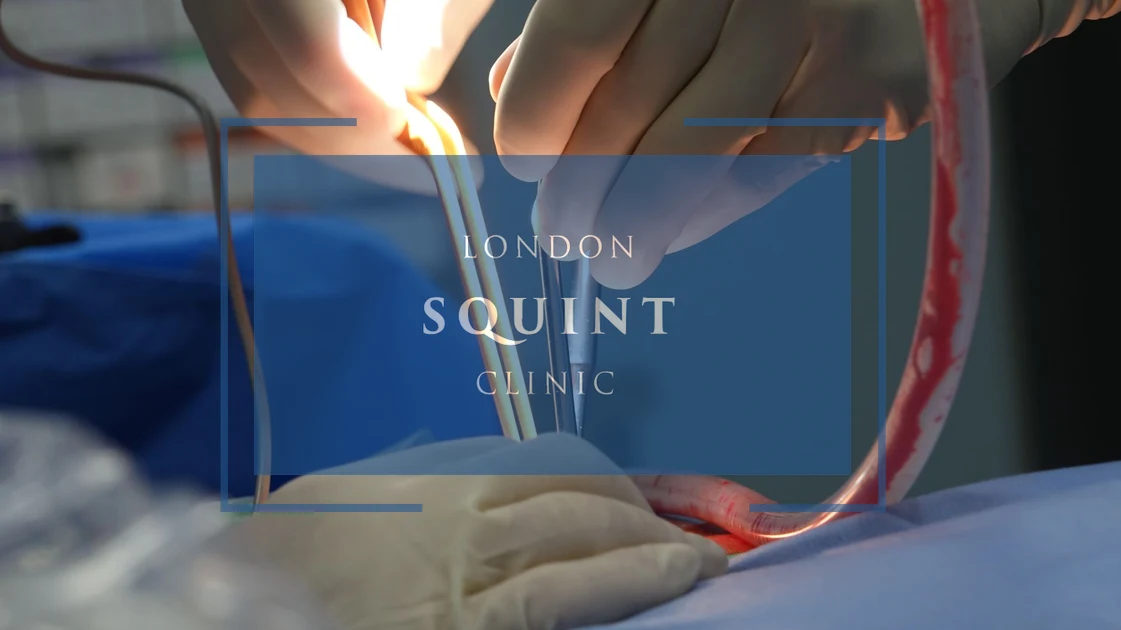

Hello, I’m Nadeem Ali
I’m one of the few eye surgeons in the world with 100% focus on Squint and Double Vision Surgery.
I have 24 years of eye surgery experience, and worked for 13 years as a Consultant at London’s renowned Moorfields Eye Hospital.
In 2023, I left the NHS to focus fully on treating patients from across the world at the London Squint Clinic. You can read more about me here.
There’s lots of information on the website about: squint surgery, double vision surgery and our pricing.
The most rewarding part of my job is hearing patients tell me how squint or double vision surgery has changed their lives. You can hear these stories here.
Mr Nadeem Ali
MA MB BChir MRCOphth FRCSEd(Ophth)