
Anaesthesia for Adult Squint Surgery: What to Expect from General vs. Local Options
Why Choose Private Squint Surgery?
In the UK, squint surgery may be performed via the NHS, through insurance, or as self-pay. NHS treatment is free, but waiting times can be long and surgery is often performed by trainees under supervision. Many operations are carried out by surgeons who mainly specialise in children’s squint rather than adult complex cases.
With insurance, fees are standardised — meaning some leading specialists choose not to participate. Self-pay allows you to choose your surgeon directly and prioritise experience, specialisation, and access.
Many centres quote only a surgical fee. Hospital costs, anaesthetic fees and follow-ups are frequently additional. At London Squint Clinic, everything is included in one transparent package.
Our Complete Package – £10,000
- ✔ Advanced surgery by Mr Ali (one or both eyes)
- ✔ Adjustable sutures where clinically indicated
- ✔ Detailed orthoptic planning
- ✔ All hospital & anaesthetic fees included
- ✔ Post-operative medication
- ✔ Two video follow-ups
- ✔ Face-to-face review appointment
What Makes Us Different
- ✔ 100% focused on adult squint & double vision surgery
- ✔ >95% audited success rate
- ✔ Free re-treatment at 3 months if worse (extremely rare)
- ✔ 24/7 direct WhatsApp access to your surgeon during recovery
- ✔ Optional well-being session & pre-op reassurance call
Initial consultation: from £150
Surgery typically within 4 weeks. No referral required. Self-pay only.
Anaesthesia for Adult Squint Surgery: Safety & Comfort
The choice of anaesthesia for adult squint surgery is a critical decision focused on safety and surgical precision. While local anaesthetic is an option in some eye procedures, general anaesthesia is the standard for most strabismus surgery. This approach, managed by a consultant anaesthetist, ensures the eye remains completely still, allowing for the meticulous muscle adjustments required for successful alignment. Understanding the roles of general and local anaesthesia helps patients prepare for their procedure, recovery, and post-operative care.
At London Squint Clinic, Mr Nadeem Ali works with specialist consultant anaesthetists to create a personalised care plan. This collaboration ensures the highest standards of surgical safety and patient comfort, from the pre-operative assessment through to the recovery phase of your treatment.
To explore your options, contact us to schedule your consultation. You can also reach us via: Enquire about squint surgery, Squint Surgery in London
Anaesthesia for Adult Squint Surgery: Your Options Explained
For adults undergoing squint correction, the choice of anaesthetic is a key part of the surgical plan. At specialist centres like London Squint Clinic, most procedures are performed under general anaesthesia. This ensures the patient is comfortable and unaware during the operation, providing the surgeon with the optimal, still conditions required for precise eye muscle adjustment.
While local anaesthetic options exist in ophthalmology, their use in adult squint surgery is limited. The decision is made with a specialist anaesthetist, prioritising patient safety and surgical outcome.
Why Anaesthesia is Crucial for Eye Alignment Surgery
The primary goal of anaesthesia for adult squint surgery is a safe and controlled environment, which involves more than preventing pain. In strabismus surgery, muscles are repositioned by fractions of a millimetre, so any unintended eye movement can compromise the result. Anaesthesia ensures the eye remains still, eliminates patient anxiety, and allows the surgeon to focus on achieving the best alignment.
General Anaesthesia for Squint Surgery: What to Expect
General anaesthesia induces a controlled unconsciousness, meaning you are asleep throughout the procedure. It is administered and monitored by a consultant anaesthetist. This method is standard for most adult strabismus surgery because it provides maximum control and patient comfort.
The Benefits of General Anaesthesia for Precision Surgery
The main advantage of general anaesthesia is the elimination of eye movement (saccades) and the blink reflex. This stillness is critical for the surgeon to perform the meticulous adjustments needed to realign the eyes. It removes any possibility of sudden patient movement, which is crucial for surgical safety.
It also ensures the patient experiences no discomfort or anxiety. Since eye surgery can be stressful, being asleep removes this psychological burden.
Understanding the Recovery from General Anaesthesia
After surgery, the anaesthetic is reversed, and you wake up in a recovery area. It is common to feel drowsy for a few hours. Some patients experience temporary side effects, such as post-operative nausea. The anaesthesia team manages these effects with medication to ensure comfort.
The immediate effects of the anaesthetic typically wear off the same day. A responsible adult must accompany you home and stay with you for the first 24 hours. For more details, read about how long adult squint surgery takes and whether adult squint surgery hurts.
View data as table
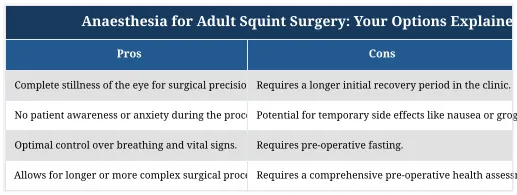
| Pros | Cons |
|---|---|
| Complete stillness of the eye for surgical precision. | Requires a longer initial recovery period in the clinic. |
| No patient awareness or anxiety during the procedure. | Potential for temporary side effects like nausea or grogginess. |
| Optimal control over breathing and vital signs. | Requires pre-operative fasting. |
| Allows for longer or more complex surgical procedures. | Requires a comprehensive pre-operative health assessment. |
Is Local Anaesthesia an Option for Adult Squint Surgery?
Local anaesthesia, which numbs a specific area while the patient remains awake, is common for other eye procedures like cataract surgery. For adult squint surgery, it is rarely the preferred option. Squint surgery involves working on the muscles on the outside of the eyeball, not inside it. The manipulation of these muscles can cause a deep, pulling sensation that is difficult to block completely with local anaesthetic alone.
Even with sedation, maintaining the required stillness is challenging for an awake patient. Involuntary eye movements or a reaction to surgical sensations can interfere with delicate adjustments. While technically possible in rare cases, local anaesthesia is less suitable because it can compromise the surgical outcome.
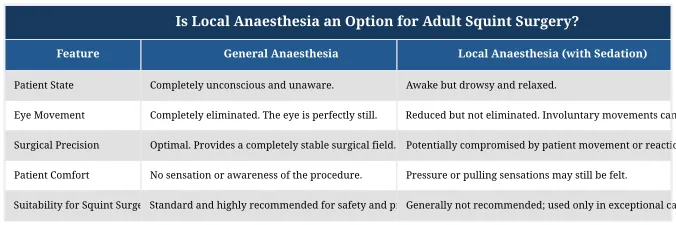
Local vs. General Anaesthesia: A Comparative Overview for Squint Surgery
View data as table
| Feature | General Anaesthesia | Local Anaesthesia (with Sedation) |
|---|---|---|
| Patient State | Completely unconscious and unaware. | Awake but drowsy and relaxed. |
| Eye Movement | Completely eliminated. The eye is perfectly still. | Reduced but not eliminated. Involuntary movements can still occur. |
| Surgical Precision | Optimal. Provides a completely stable surgical field. | Potentially compromised by patient movement or reaction. |
| Patient Comfort | No sensation or awareness of the procedure. | Pressure or pulling sensations may still be felt. |
| Suitability for Squint Surgery | Standard and highly recommended for safety and precision. | Generally not recommended; used only in exceptional cases. |
Your Pre-Operative Anaesthesia Assessment
Before surgery, a pre-operative assessment is conducted. This vital step ensures the anaesthetic plan is tailored to your health needs. You will discuss your medical history, current medications, and any previous experiences with anaesthesia.
At London Squint Clinic, this assessment is conducted by a senior consultant anaesthetist who works with Mr. Nadeem Ali. This collaboration ensures the surgical and anaesthetic plans are aligned. Learn more about the steps before, during, and after treatment.
The Role of the Consultant Anaesthetist in Your Care
The consultant anaesthetist is responsible for your wellbeing before, during, and after surgery. They review your medical file, discuss potential risks, and answer your questions. Their expertise is crucial for managing patients with other health conditions to ensure the anaesthetic is safe. This personalised plan minimises risks and optimises recovery. Care standards are outlined by bodies like the Royal College of Anaesthetists.
Preparing for Your Anaesthesia: What You Need to Know
You will receive specific instructions about fasting. An empty stomach is essential before a general anaesthetic to prevent complications. You will be told when to stop eating and drinking. Provide a complete list of your medications, including over-the-counter drugs and supplements, as some may need to be paused. Following these instructions is a key part of the adult strabismus surgery process and ensures a safe procedure.
Why Specialist Clinics Prioritize General Anaesthesia for Squint Correction
The preference for general anaesthesia is a clinical decision based on experience and a commitment to achieving the best eye alignment. The choice of anaesthesia directly impacts the quality of the result.
Optimizing Surgical Outcomes Through Controlled Conditions
Squint surgery is highly precise; the surgeon must weaken, strengthen, or reposition muscles with sub-millimetre accuracy. General anaesthesia provides a motionless and relaxed surgical field. This control improves outcome predictability and can reduce the likelihood of needing revision surgery.
Patient Comfort and Experience
Patient psychological comfort is a major consideration. Being awake during eye surgery, even with a numb eye, can cause stress and anxiety. General anaesthesia removes this anxiety.
Next Steps with London Squint Clinic
The decision to use general anaesthesia is based on a commitment to surgical precision, patient safety, and comfort. The London Squint Clinic team, led by Mr. Nadeem Ali and consultant anaesthetists, is dedicated to providing the best possible care and outcome.
Conclusion
The choice of anaesthesia for adult squint surgery depends on the need for surgical precision. The demands of eye muscle repositioning make general anaesthesia the superior choice for optimal alignment and patient comfort. A pre-operative assessment with a consultant anaesthetist creates a personalised, safe surgical plan. To learn more, contact us.
Enquire about squint surgery or learn more about our Squint Surgery in London.
Frequently Asked Questions
What type of anaesthesia is typically recommended for adult squint surgery at specialist clinics?
At specialist clinics like the London Squint Clinic, general anaesthesia is the standard recommendation for adult squint surgery. This approach ensures the patient is completely unconscious and still, which is crucial for the precise eye muscle adjustments required during the procedure. A senior consultant anaesthetist, specializing in ophthalmic surgery, oversees the entire process to ensure maximum safety and comfort.
Why is local anaesthesia generally not preferred for complex adult squint surgery?
While local anaesthesia is used for some eye procedures, it is rarely the best option for complex adult squint surgery. The need for precise eye muscle manipulation means patient movement or discomfort could compromise the surgical outcome. General anaesthesia provides the necessary stillness and ensures a more comfortable experience for the patient throughout the intricate procedure.
What are the key advantages of choosing general anaesthesia for this type of eye alignment procedure?
General anaesthesia for adult squint surgery offers several significant benefits, including complete unconsciousness and absence of pain or awareness during the operation. This allows the surgeon to perform the delicate eye muscle adjustments without any patient movement, which is critical for achieving optimal alignment. It also ensures a stress-free experience for the patient.
Who is responsible for administering and monitoring anaesthesia during adult squint surgery?
A senior consultant anaesthetist, who is a specialist in ophthalmic anaesthesia, is responsible for administering and continuously monitoring the anaesthesia during adult squint surgery. They remain with the patient from the induction of sleep until the patient is safely in the recovery area, ensuring constant oversight of vital signs and patient well-being.
What should I expect during the pre-operative assessment for anaesthesia?
During the pre-operative assessment, you will have a consultation with a specialist anaesthetist to review your full medical history, including any existing conditions, medications, and allergies. This assessment helps determine the safest and most appropriate anaesthetic plan for your adult squint surgery. It’s an opportunity to discuss any concerns and ensure you are in optimal condition for the procedure.
Are there specific fasting guidelines to follow before general anaesthesia for adult squint surgery?
Yes, specific fasting guidelines are crucial before general anaesthesia to minimize risks like aspiration. Generally, patients are advised to stop eating solid foods and non-clear fluids, such as milk or juice with pulp, at least six hours before surgery. Clear liquids like water or black coffee may be permitted up to two hours prior, but you will receive precise instructions from your surgical team.
Related Posts
Find out if you are suitable for Double Vision Treatment
Find out if you could benefit from this life changing surgery by contacting us today
Our most popular procedures


Hello, I’m Nadeem Ali
I’m one of the few eye surgeons in the world with 100% focus on Squint and Double Vision Surgery.
I have 24 years of eye surgery experience, and worked for 13 years as a Consultant at London’s renowned Moorfields Eye Hospital.
In 2023, I left the NHS to focus fully on treating patients from across the world at the London Squint Clinic. You can read more about me here.
There’s lots of information on the website about: squint surgery, double vision surgery and our pricing.
The most rewarding part of my job is hearing patients tell me how squint or double vision surgery has changed their lives. You can hear these stories here.
Mr Nadeem Ali
MA MB BChir MRCOphth FRCSEd(Ophth)