
Can Surgery Permanently Fix Double Vision in Adults?
Why Choose Private Squint Surgery?
In the UK, squint surgery may be performed via the NHS, through insurance, or as self-pay. NHS treatment is free, but waiting times can be long and surgery is often performed by trainees under supervision. Many operations are carried out by surgeons who mainly specialise in children’s squint rather than adult complex cases.
With insurance, fees are standardised — meaning some leading specialists choose not to participate. Self-pay allows you to choose your surgeon directly and prioritise experience, specialisation, and access.
Many centres quote only a surgical fee. Hospital costs, anaesthetic fees and follow-ups are frequently additional. At London Squint Clinic, everything is included in one transparent package.
Our Complete Package – £10,000
- ✔ Advanced surgery by Mr Ali (one or both eyes)
- ✔ Adjustable sutures where clinically indicated
- ✔ Detailed orthoptic planning
- ✔ All hospital & anaesthetic fees included
- ✔ Post-operative medication
- ✔ Two video follow-ups
- ✔ Face-to-face review appointment
What Makes Us Different
- ✔ 100% focused on adult squint & double vision surgery
- ✔ >95% audited success rate
- ✔ Free re-treatment at 3 months if worse (extremely rare)
- ✔ 24/7 direct WhatsApp access to your surgeon during recovery
- ✔ Optional well-being session & pre-op reassurance call
Initial consultation: from £150
Surgery typically within 4 weeks. No referral required. Self-pay only.
Permanently Fix Double Vision: a Lasting Surgical Correction
Surgery can permanently fix double vision for most adults by correcting the underlying eye misalignment. This article explains how the procedure achieves stable eye alignment, enabling the brain to restore clear binocular single vision. We detail the critical role of neuro-adaptation in securing a long-term outcome and clarify when surgery becomes the definitive solution, particularly when prism glasses are no longer effective. Understanding these surgical principles is essential for anyone seeking a lasting correction to improve daily function and regain their quality of life.
The London Squint Clinic focuses exclusively on adult squint and double vision surgery. Led by consultant surgeon Mr Nadeem Ali, our approach is based on extensive experience in achieving stable, long-term outcomes for patients with complex diplopia, including those requiring revision surgery.
To explore your options, contact us to schedule your consultation. You can also reach us via: Enquire about double vision surgery, Time to say goodbye to double vision
Can Surgery Permanently Fix Double Vision in Adults? Understanding Diplopia Correction
Yes, for most adults, specialised surgery offers a lasting solution to double vision (diplopia). The procedure’s goal is to realign the eyes, allowing the brain to fuse the two images into a single picture. This surgical correction aims for a stable, long-term outcome, restoring comfortable single vision and eliminating the functional difficulties of seeing double.
Diplopia occurs when the eyes are misaligned and point in different directions, a condition known as strabismus or a squint. Each eye sends a different image to the brain, which it cannot merge, resulting in the perception of two images. This can be disorienting and debilitating, affecting daily activities like reading, driving, and walking. While some cases are managed with temporary measures, many adults seek surgery to permanently fix double vision and regain their quality of life. The success of this approach hinges on precise surgical technique and the brain’s ability to adapt to the newly aligned eyes. A comprehensive overview is available in our guide on Adult Double Vision Surgery Explained.
How Adult Double Vision Surgery Achieves Stable, Long-Term Alignment
Diplopia surgery’s objective is stable eye alignment, the foundation for a lasting correction. The procedure involves adjusting the tension of the extraocular muscles—the muscles on the outside of the eyeball that control its movement. By strengthening (resecting) or weakening (recessing) specific muscles, a surgeon changes the eye’s resting position, bringing it into correct alignment with its partner.
This physical realignment is the first step. The surgeon calculates the precise adjustment needed based on detailed pre-operative measurements. The aim is not just cosmetic straightening but positioning the eyes so the brain can achieve comfortable binocular single vision. This allows the brain to use both eyes together, providing depth perception and a single view.
The Role of Neuro-Adaptation in Sustained Single Vision
A permanent result extends beyond surgery, relying on a process called neuro-adaptation. After the eyes are physically realigned, the brain must learn to accept and maintain this new position. The brain may have been suppressing one eye’s image or adapting to the misalignment for years. Post-surgery, the neural pathways for vision must recalibrate to the corrected input.
Successful neuro-adaptation solidifies the surgical outcome, turning a mechanical adjustment into a stable, functional improvement. The brain learns the new alignment is correct and works to maintain it, reinforcing single vision. This process is key to the surgery’s long-term success, ensuring results do not drift over time. The brain’s plasticity is a core component of a lasting correction, as detailed in studies on neuroplasticity.
Adjustable Suture Surgery: Precision for Lasting Results
Specialist surgeons often use adjustable suture surgery to enhance precision and permanence. In this procedure, the repositioned eye muscle is secured with a suture that can be fine-tuned after the operation. A few hours after surgery, once the patient is awake and anaesthesia effects have worn off, the surgeon assesses eye alignment in real-time.
If minor misalignment exists, the surgeon makes small, painless suture adjustments for optimal positioning. This technique allows for a high degree of accuracy, which is valuable in complex cases or revision surgeries. Finalising the alignment with the patient’s active participation significantly increases the likelihood of a successful, permanent outcome from a single procedure.
When is Double Vision Surgery the Right Permanent Solution?
Surgery is considered when conservative treatments are ineffective or unsuitable. A lasting solution is often sought when temporary measures, such as prism glasses, prove insufficient. The decision for surgery is based on an evaluation of the patient’s condition, its impact on daily life, and the potential for long-term quality of life improvement. For those seeking to permanently fix double vision, surgery is often the most definitive path.
Beyond Prisms: Why Surgery Becomes Necessary
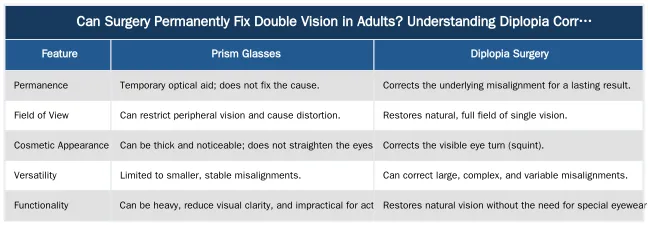
Prism glasses are a common non-surgical treatment for double vision. They work by bending light before it enters the eye, helping align the two images for the brain to fuse. While effective for small, stable misalignments, prisms have limitations. They can be thick, heavy, and cosmetically unappealing. They also reduce visual clarity and do not correct the underlying eye turn. For larger or variable misalignments, prisms may not be strong enough to eliminate double vision, leading to prism glasses failure.
When a patient’s misalignment is too large for prisms, or if the glasses are impractical or visually compromising, surgery becomes the next step. Unlike prisms, which are a temporary optical aid, surgery corrects the physical misalignment of the eyes for a permanent solution. Learn more about moving beyond temporary fixes: Time to say goodbye to double vision.
View data as table
| Feature | Prism Glasses | Diplopia Surgery |
|---|---|---|
| Permanence | Temporary optical aid; does not fix the cause. | Corrects the underlying misalignment for a lasting result. |
| Field of View | Can restrict peripheral vision and cause distortion. | Restores natural, full field of single vision. |
| Cosmetic Appearance | Can be thick and noticeable; does not straighten the eyes. | Corrects the visible eye turn (squint). |
| Versatility | Limited to smaller, stable misalignments. | Can correct large, complex, and variable misalignments. |
| Functionality | Can be heavy, reduce visual clarity, and impractical for active lifestyles. | Restores natural vision without the need for special eyewear. |
Addressing Complex Cases and Previous Surgery Failures
A specialist diplopia surgeon handles complex scenarios, including double vision from cranial nerve palsies (e.g., 3rd, 4th, or 6th nerve palsy), thyroid eye disease, head trauma, or neurological conditions. These cases often involve intricate patterns of muscle weakness or restriction that require a highly nuanced surgical approach.
A significant number of patients seek help after a previous operation failed to resolve their symptoms. Revision squint surgery is more challenging than a primary procedure because of scar tissue and altered anatomy. It demands a surgeon with deep experience in these situations. With advanced techniques and meticulous planning, even patients with prior unsuccessful surgeries can achieve a long-term correction. Information on revision options for failed squint surgery is available.
The London Squint Clinic Difference: Expertise for Permanent Diplopia Correction
Long-term success in strabismus surgery depends on the surgeon’s expertise. Mr. Nadeem Ali focuses exclusively on adult squint and double vision surgery, with over two decades of experience. His background as a lead consultant at Moorfields Eye Hospital, one of the world’s leading eye hospitals, provided him with extensive experience managing the most complex forms of diplopia. This dedicated focus is crucial for a permanent correction.
Audited Success Rates and the Peace of Mind Re-operation Policy
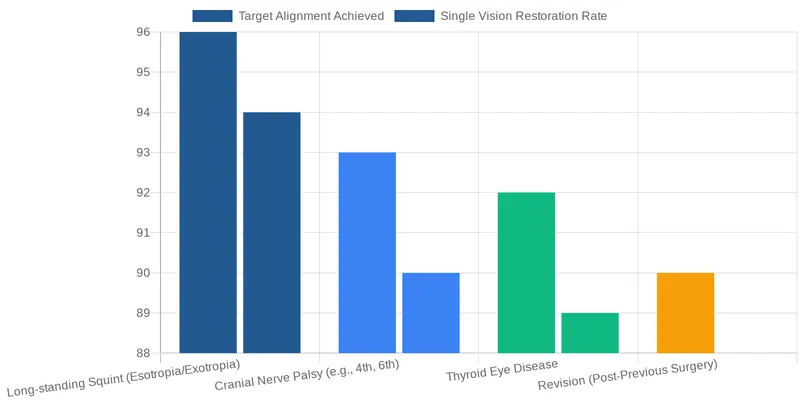
Verifiable results support confidence in a lasting outcome. At the London Squint Clinic, audited data shows a 95% success rate in achieving satisfactory eye alignment from a single operation. This high rate reflects the precision of surgical planning and execution. The clinic also offers a peace of mind re-operation policy. If a patient’s double vision is worse at the three-month post-operative review, any necessary further surgery is provided without an additional surgical fee.
View data as table
| Condition Type | Target Alignment Achieved | Single Vision Restoration Rate |
|---|---|---|
| Long-standing Squint (Esotropia/Exotropia) | 96% | 94% |
| Cranial Nerve Palsy (e.g., 4th, 6th) | 93% | 90% |
| Thyroid Eye Disease | 92% | 89% |
| Revision (Post-Previous Surgery) | 90% | 88% |
Why Choose a Consultant-Led Specialist for Your Vision
A specialist diplopia surgeon manages your care and deals with these conditions daily. A consultant-led service means the most experienced professional is involved in every step: consultation, surgical planning, the operation, and post-operative care. This continuity of care is vital for complex conditions. The Royal College of Ophthalmologists outlines the high standards for consultant-level practice in the UK, ensuring patients receive care from qualified professionals. This specialisation is important for a successful, permanent outcome in adult diplopia surgery.
Life After Double Vision Surgery: Restoring Independence and Quality of Life
Successful diplopia surgery significantly improves quality of life. The primary benefit is restoring clear, single vision, which profoundly impacts daily functioning. Activities that were once challenging or impossible—such as driving, reading, using a computer, navigating stairs, or playing sports—become manageable again. This return to normalcy improves quality of life, restoring confidence and independence.
Beyond functional benefits, correcting the eye misalignment can improve social confidence. Many adults with a visible squint feel self-conscious. By straightening the eyes, surgery addresses both the functional problem of double vision and the cosmetic aspect of the squint, improving self-esteem and social interactions.
Recovery Timeline and Post-Operative Care
Recovery from double vision surgery is typically straightforward. Most patients return to non-strenuous activities and office-based work within one to two weeks. The eye will be red and feel gritty for a few weeks, which is a normal part of healing. Eye drops are prescribed to prevent infection and reduce inflammation.
Vision commonly fluctuates in the first few weeks as the eyes and brain adapt. The final alignment and visual outcome are typically stable by the three-month mark. Follow-up appointments are crucial to monitor healing and ensure the best result. Adhering to post-operative care instructions is essential for a smooth recovery and a lasting outcome. A detailed recovery timeline and success rates overview provides insight into what to expect.
Ready to Permanently Fix Your Double Vision? Take the Next Step
Living with double vision is a significant burden, but a permanent solution is often achievable. If you have diplopia and temporary measures like prisms are no longer working, surgery may be the right choice. The first step is a consultation with a specialist to determine the cause of your double vision and discuss the most effective treatment plan.
The London Squint Clinic helps adults find a lasting resolution to their vision problems. We offer in-person and video consultations with no referral needed, providing fast access to expert care. To begin your journey towards clear, single vision, contact us to schedule an appointment.
Conclusion
For adults with double vision, the key criterion for surgery is the potential for stable, long-term restoration of single vision. While non-surgical options exist, surgery is the most definitive method for correcting eye misalignment, especially in cases of prism failure or complex strabismus. Success hinges on the surgeon’s expertise, precise techniques like adjustable sutures, and the brain’s neuro-adaptation. The recommended next step is a consultation with a surgeon who focuses on adult diplopia. This ensures a thorough assessment and a treatment plan for a permanent, high-quality visual outcome. To explore your options, contact us.
Enquire about double vision surgery or find out why it’s Time to say goodbye to double vision.
Frequently Asked Questions
What specific conditions make an adult a suitable candidate for surgery to permanently fix double vision?
Adults are typically suitable candidates for surgery to permanently fix double vision when their underlying condition, such as a long-standing nerve palsy, decompensated squint, or post-trauma diplopia, is stable. Surgery is often recommended when prism glasses are no longer sufficient or tolerated, and the double vision significantly impacts daily function. Mr. Nadeem Ali conducts a thorough assessment to confirm the stability of the condition before recommending the procedure.
What is the audited long-term success rate for adult double vision surgery at London Squint Clinic?
The London Squint Clinic boasts a 95% audited alignment success rate from a single operation, indicating a high likelihood of a lasting outcome for adult double vision. This success is attributed to meticulous surgical planning and the use of advanced techniques like adjustable sutures by Mr. Nadeem Ali. The goal is to achieve stable, long-term eye alignment, restoring comfortable single vision.
How long does it typically take to recover and achieve stable single vision after adult double vision surgery?
Patients often experience immediate improvement in their double vision after surgery, though some initial blurriness or mild discomfort is normal. Stable single vision typically develops over several weeks to a few months as the eyes adjust to their new alignment. The London Squint Clinic provides 24/7 WhatsApp access to Mr. Ali during recovery to support this process.
When is surgery considered a better option than prism glasses to permanently fix double vision?
Surgery is often considered the superior option to permanently fix double vision when prism glasses become insufficient, cause discomfort, or limit a patient’s quality of life and independence. While prisms offer a temporary solution, surgery aims to correct the underlying eye misalignment, providing a stable and lasting resolution. This is particularly true for patients seeking to eliminate the daily inconvenience and visual limitations associated with diplopia.
What is the transparent pricing for adult double vision surgery at London Squint Clinic, and what does it include?
The London Squint Clinic offers a transparent fixed package price of £12,000 for complete adult double vision surgery, with no hidden costs. This comprehensive fee includes all aspects of your care, from the initial consultation to post-operative follow-ups and a peace of mind re-operation policy if needed at 3 months. Patients receive start-to-finish care directly from Mr. Nadeem Ali.
Can surgery effectively address double vision caused by complex conditions like cranial nerve palsies or thyroid eye disease?
Yes, surgery can effectively correct complex double vision stemming from conditions such as cranial nerve palsies, thyroid eye disease, or post-trauma cases. Mr. Nadeem Ali specializes in these intricate adult diplopia cases, leveraging his neuro-ophthalmology expertise and advanced surgical techniques. The goal is to achieve optimal eye alignment and restore single vision even in challenging situations.
Related Posts

Find out if you are suitable for Double Vision Treatment
Find out if you could benefit from this life changing surgery by contacting us today
Our most popular procedures



Hello, I’m Nadeem Ali
I’m one of the few eye surgeons in the world with 100% focus on Squint and Double Vision Surgery.
I have 24 years of eye surgery experience, and worked for 13 years as a Consultant at London’s renowned Moorfields Eye Hospital.
In 2023, I left the NHS to focus fully on treating patients from across the world at the London Squint Clinic. You can read more about me here.
There’s lots of information on the website about: squint surgery, double vision surgery and our pricing.
The most rewarding part of my job is hearing patients tell me how squint or double vision surgery has changed their lives. You can hear these stories here.
Mr Nadeem Ali
MA MB BChir MRCOphth FRCSEd(Ophth)