
Comparing Childhood vs. Adult Squint Surgery Techniques and Outcomes
Why Choose Private Squint Surgery?
In the UK, squint surgery may be performed via the NHS, through insurance, or as self-pay. NHS treatment is free, but waiting times can be long and surgery is often performed by trainees under supervision. Many operations are carried out by surgeons who mainly specialise in children’s squint rather than adult complex cases.
With insurance, fees are standardised — meaning some leading specialists choose not to participate. Self-pay allows you to choose your surgeon directly and prioritise experience, specialisation, and access.
Many centres quote only a surgical fee. Hospital costs, anaesthetic fees and follow-ups are frequently additional. At London Squint Clinic, everything is included in one transparent package.
Our Complete Package – £10,000
- ✔ Advanced surgery by Mr Ali (one or both eyes)
- ✔ Adjustable sutures where clinically indicated
- ✔ Detailed orthoptic planning
- ✔ All hospital & anaesthetic fees included
- ✔ Post-operative medication
- ✔ Two video follow-ups
- ✔ Face-to-face review appointment
What Makes Us Different
- ✔ 100% focused on adult squint & double vision surgery
- ✔ >95% audited success rate
- ✔ Free re-treatment at 3 months if worse (extremely rare)
- ✔ 24/7 direct WhatsApp access to your surgeon during recovery
- ✔ Optional well-being session & pre-op reassurance call
Initial consultation: from £150
Surgery typically within 4 weeks. No referral required. Self-pay only.
Childhood Vs Adult Squint Surgery: Goals & Techniques
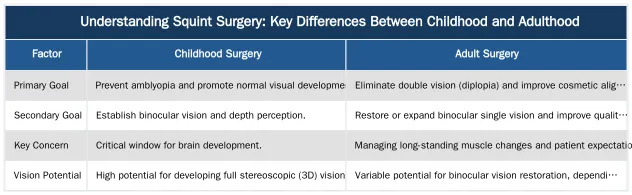
The comparison of childhood vs adult squint surgery reveals critical differences in goals, techniques, and potential outcomes. Surgery in children aims to prevent amblyopia and support visual development, whereas adult procedures focus on correcting alignment, eliminating double vision, and restoring binocular function. This guide explains why techniques like adjustable suture surgery are standard for adults but not children. Understanding the distinction between childhood and adult strabismus surgery helps set realistic expectations for achieving functional and cosmetic improvements at any age.
At the London Squint Clinic, Mr Nadeem Ali focuses exclusively on adult squint and double vision surgery. With over a decade of experience as a Consultant at Moorfields Eye Hospital, his practice is dedicated to complex cases, including revision surgery and restoring single vision for adults.
To explore your options, contact us to schedule your consultation. You can also reach us via: Enquire about squint surgery, Squint Surgery in London
The comparison of childhood vs adult squint surgery differs in goals, techniques, and patient experience. Strabismus surgery in children focuses on proper visual development, while in adults, objectives include eliminating double vision, restoring binocular function, and improving psychosocial well-being. This article analyzes these distinctions, from surgical methods like adjustable sutures to recovery expectations and vision restoration potential.
Understanding Squint Surgery: Key Differences Between Childhood and Adulthood
Squint surgery for children and adults differs in techniques and objectives. Adult procedures use adjustable sutures to fine-tune post-operative alignment, a method unsuitable for young children who cannot cooperate with the adjustment. The goals shift from preventing developmental vision loss (amblyopia) in childhood to correcting long-standing alignment issues and double vision in adulthood.
Strabismus surgery involves adjusting the tension of the extraocular muscles. The surgeon detaches a muscle from the eyeball and reattaches it to a new position to strengthen or weaken its effect. This principle applies to all ages, but the approach differs between a developing and a mature visual system.
Why Do Surgical Goals Differ for Children and Adults?
Strabismus correction objectives are tailored to the patient’s age and visual maturity. For children, the primary goal is to align the eyes, allowing the brain’s visual pathways to develop correctly and preventing permanent vision loss in the misaligned eye—amblyopia or “lazy eye.” Early intervention is critical to foster binocular vision, the ability for the eyes to work together.
Adult goals are multifaceted. Many adults seeking surgery have had a squint since childhood; others develop it later from medical conditions or trauma. Primary objectives for adults include eliminating double vision (diplopia), expanding the field of single vision, and improving cosmetic alignment. Restoring confidence and enabling social interaction, such as direct eye contact, are significant functional outcomes.
Addressing Amblyopia and Binocular Vision in Different Age Groups
Preventing amblyopia is time-critical in childhood, but adults with pre-existing amblyopia can still benefit from surgery. Even if vision in one eye cannot be fully restored, proper alignment can eliminate diplopia and improve quality of life. Many adults can achieve some binocular vision restoration, including depth perception, especially if the squint developed later in life. According to the National Eye Institute, treating the underlying cause of amblyopia, such as strabismus, is a key step in managing the condition at any age.
Advanced Techniques in Adult Squint Surgery: The Role of Adjustable Sutures
Adult strabismus surgery uses advanced techniques for greater precision, most significantly adjustable suture strabismus surgery. The surgeon places the reattached eye muscle on a temporary, adjustable knot. Hours after surgery, once the patient is awake, the surgeon can fine-tune the eye’s alignment in the clinic by adjusting the suture. This avoids a second operation if a small correction is needed.
This technique is a cornerstone of adult squint correction because it accounts for anaesthesia’s variable effect on eye muscles and allows patient feedback. It is performed under local anaesthesia with sedation, not general anaesthetic, enabling patient cooperation during adjustment. This precision is valuable in complex cases like revision surgery or squints from nerve palsies.
Precision and Personalisation: How Adjustable Sutures Enhance Outcomes
Refining the surgical outcome on the same day increases the success rate for optimal alignment. Personalising the final muscle position tailors the result to the patient’s anatomy and visual needs. Modern approaches also use techniques like the fornix incision, hidden in the eyelid’s fold, over the older limbal incision for less visible scarring and faster healing. For certain squints, non-surgical options like Botox for strabismus can be a temporary or diagnostic measure. Learn more about the benefits of adjustable squint surgery for better results.
Recovery and Outcomes: A Comparative Look at Squint Surgery Success
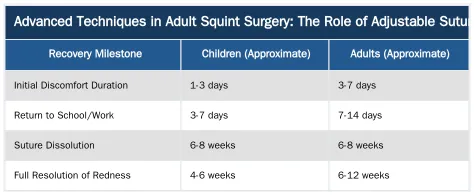
The strabismus surgery recovery is similar for both age groups, with key differences in patient experience. The operated eye will be red and feel sore or gritty. Children recover quickly, returning to normal activities within days. Adults may experience more initial discomfort and fluctuating double vision for several weeks as the brain adapts.
Surgical success rates are high for children and adults, with most achieving significant alignment improvement from one operation. The definition of “success” differs. For a child, success is the long-term development of good vision in both eyes. For an adult, it is relief from double vision and the confidence from improved eye alignment.
Post-Operative Expectations: Healing, Success Rates, and Revision Surgery
Most patients return to work or school within one to two weeks, though strenuous activity and swimming should be avoided for longer. Redness typically fades over 6-8 weeks. A small percentage of patients may require further intervention. Revision surgery may be needed for under- or over-correction and is more common in adults with long-standing or complex squints. An adult strabismus specialist can manage these cases. Explore information on adult squint surgery success rates and recovery.
Choosing Your Specialist: The London Squint Clinic’s Adult Focus
Adult strabismus requires a specialist. Unlike paediatric ophthalmology’s focus on a developing visual system, adult squint surgery requires managing long-term muscle changes, scar tissue, and the link between alignment and diplopia. An adult specialist understands the functional and emotional impact of a squint and tailors treatment accordingly.
At the London Squint Clinic, Mr. Nadeem Ali provides this expertise. With 24 years of surgical experience, including 13 years as a Consultant at Moorfields Eye Hospital, his practice focuses exclusively on adult squint and double vision. This specialisation provides deep understanding for managing complex cases, including those from thyroid eye disease, cranial nerve palsies, or failed previous surgeries. The Royal College of Ophthalmologists sets high standards for specialist training.
Mr. Nadeem Ali’s Expertise in Correcting Childhood Squint in Adulthood
Many adults seeking treatment have had a childhood squint their entire lives, sometimes being told nothing more could be done. Mr. Ali’s experience shows this is often not the case. Applying advanced techniques like adjustable suture surgery within a consultant-led, patient-centric model achieves excellent outcomes. This approach helps adults address their eye alignment, offering transparent pricing and direct specialist access. It is possible to correct a childhood squint in adulthood.
Ready for a Life-Changing Transformation? Enquire About Adult Squint Surgery
For adults with functional or social challenges from a squint or double vision, specialist care offers a solution. Correcting eye misalignment can restore single vision, improve confidence, and enhance quality of life. The London Squint Clinic provides expert, personalised care.
To learn more, contact us. You can Enquire about squint surgery or find more information on Squint Surgery in London.
Conclusion
Childhood and adult squint surgeries align the eyes but have different principles and goals. Paediatric surgery is a developmental necessity to prevent amblyopia. Adult surgery is a restorative procedure to correct long-standing issues, improve function, eliminate double vision, and boost confidence. Advanced techniques like adjustable sutures and specialist care offer adults an excellent opportunity for successful, lasting alignment. A consultation with an adult strabismus expert is the first step for those considering treatment.
Frequently Asked Questions
What is the main technical difference in childhood vs adult squint surgery?
The most significant technical difference in childhood vs adult squint surgery is the routine use of adjustable sutures in adults. This advanced technique allows the surgeon to fine-tune the eye’s alignment after the patient is awake and cooperative, which is not feasible with young children. This precision dramatically increases the success rate for achieving optimal eye alignment in a single operation.
Are the outcomes different when comparing childhood vs adult squint surgery?
Yes, the primary goals and outcomes differ significantly. In children, the main objective is to enable normal visual development and prevent permanent vision loss (amblyopia). For adults, the goals are typically to eliminate double vision, improve eye alignment for better social interaction and confidence, and restore binocular function. The comparison of childhood vs adult squint surgery shows a shift from developmental necessity to functional and psychosocial improvement.
Is the anaesthesia different for adults compared to children?
While general anaesthesia is standard for all children undergoing the procedure, adults have more options. Adult squint surgery can be performed under general anaesthesia or, in many cases, under local anaesthesia with sedation. This choice is discussed with the consultant, Mr. Ali, to determine the safest and most comfortable approach for the individual patient.
Is recovery longer for adults than for children after strabismus surgery?
The physical recovery timeline is quite similar, with most patients experiencing redness and a gritty sensation for a few weeks. Adults can typically return to desk work and light activities within one to two weeks. A key difference is the adult’s active participation in the post-operative adjustment process if adjustable sutures are used, which is a crucial part of the procedure itself.
Why is a specialist approach important for childhood vs adult squint surgery?
A specialist approach is crucial because the underlying causes and surgical goals are distinct. Adult squints often involve long-standing muscle changes, previous failed surgeries, or neurological conditions, requiring complex techniques. The focus on eliminating double vision and achieving precise cosmetic alignment in adults is a different skill set than the developmental focus in paediatric cases, making the distinction in childhood vs adult squint surgery vital for success.
How do I find out if I am a suitable candidate for adult squint surgery?
The first step is to schedule a consultation with a specialist consultant like Mr. Nadeem Ali. During this assessment, your specific eye alignment, medical history, and personal goals will be thoroughly evaluated to determine the best surgical approach for your needs. You can enquire about a consultation to begin the process toward clearer, straighter vision.
Related Posts
Find out if you are suitable for Double Vision Treatment
Find out if you could benefit from this life changing surgery by contacting us today
Our most popular procedures

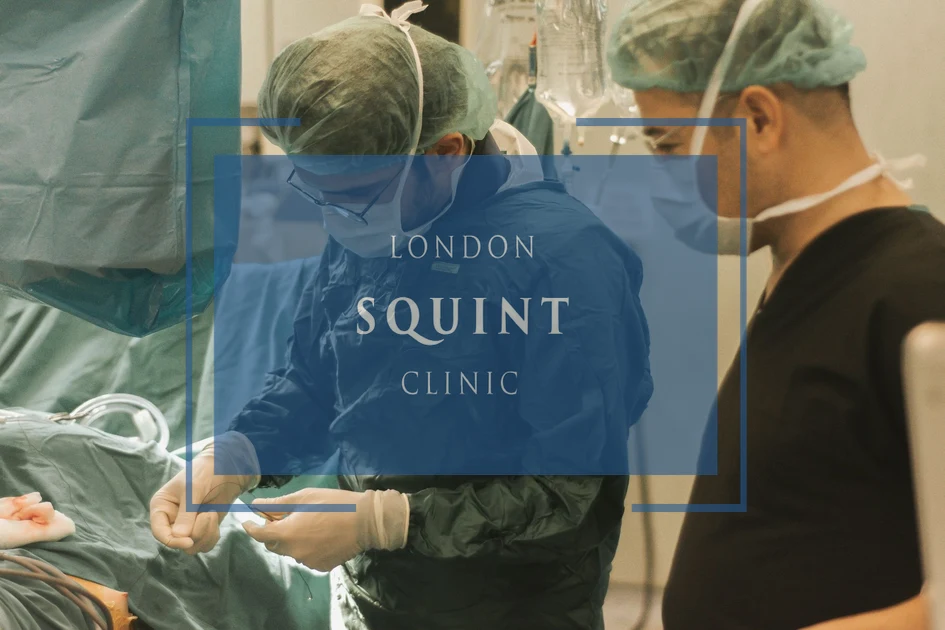

Hello, I’m Nadeem Ali
I’m one of the few eye surgeons in the world with 100% focus on Squint and Double Vision Surgery.
I have 24 years of eye surgery experience, and worked for 13 years as a Consultant at London’s renowned Moorfields Eye Hospital.
In 2023, I left the NHS to focus fully on treating patients from across the world at the London Squint Clinic. You can read more about me here.
There’s lots of information on the website about: squint surgery, double vision surgery and our pricing.
The most rewarding part of my job is hearing patients tell me how squint or double vision surgery has changed their lives. You can hear these stories here.
Mr Nadeem Ali
MA MB BChir MRCOphth FRCSEd(Ophth)