
Medical Conditions That Might Complicate or Prevent Strabismus Surgery
Why Choose Private Squint Surgery?
In the UK, squint surgery may be performed via the NHS, through insurance, or as self-pay. NHS treatment is free, but waiting times can be long and surgery is often performed by trainees under supervision. Many operations are carried out by surgeons who mainly specialise in children’s squint rather than adult complex cases.
With insurance, fees are standardised — meaning some leading specialists choose not to participate. Self-pay allows you to choose your surgeon directly and prioritise experience, specialisation, and access.
Many centres quote only a surgical fee. Hospital costs, anaesthetic fees and follow-ups are frequently additional. At London Squint Clinic, everything is included in one transparent package.
Our Complete Package – £10,000
- ✔ Advanced surgery by Mr Ali (one or both eyes)
- ✔ Adjustable sutures where clinically indicated
- ✔ Detailed orthoptic planning
- ✔ All hospital & anaesthetic fees included
- ✔ Post-operative medication
- ✔ Two video follow-ups
- ✔ Face-to-face review appointment
What Makes Us Different
- ✔ 100% focused on adult squint & double vision surgery
- ✔ >95% audited success rate
- ✔ Free re-treatment at 3 months if worse (extremely rare)
- ✔ 24/7 direct WhatsApp access to your surgeon during recovery
- ✔ Optional well-being session & pre-op reassurance call
Initial consultation: from £150
Surgery typically within 4 weeks. No referral required. Self-pay only.
Strabismus Surgery Contraindications: Assessing Your Fitness
Understanding strabismus surgery contraindications is essential for determining patient suitability and ensuring a safe, effective outcome. While absolute barriers are rare, conditions like unstable thyroid eye disease, myasthenia gravis, and significant cardiovascular issues require careful management. This guide explains the difference between relative and absolute contraindications, clarifying how factors such as previous eye surgery or uncontrolled diabetes influence surgical planning. A thorough ophthalmic assessment is critical to navigate these potential issues and tailor the procedure to individual health profiles, addressing anaesthesia risks and optimising results.
At the London Squint Clinic, Mr Nadeem Ali specialises in adult strabismus, including complex cases with underlying medical conditions. This focus ensures a comprehensive evaluation of all factors to determine the safest and most effective surgical approach for each patient.
To explore your options, contact us to schedule your consultation. You can also reach us via: Enquire about squint surgery, Squint Surgery in London
Understanding strabismus surgery contraindications is key to a safe procedure for correcting eye misalignment. While absolute barriers are uncommon, various medical, ophthalmic, and neurological conditions can influence eligibility, timing, and surgical approach. These factors range from systemic health issues like diabetes to specific eye conditions such as thyroid eye disease. A specialist evaluation is essential to create a personalised treatment plan for adults seeking squint correction.
What Medical Conditions Might Complicate or Prevent Strabismus Surgery?
Several medical conditions can complicate or delay strabismus surgery, though few prevent it. They fall into three categories: systemic health issues, ophthalmic conditions, and neurological disorders. Management and timing are often more critical than outright exclusion.
A specialist assessment determines if a condition is an absolute contraindication (surgery is unsafe) or a relative one (surgery can proceed with caution, adjustments, or after the condition is stabilised). For most patients, complicating factors can be managed.
Understanding Absolute vs. Relative Contraindications
- Absolute Contraindications: These are rare and include active, severe, unstable medical conditions making any elective surgery, including anaesthesia, life-threatening. Examples include a recent heart attack or an active, sight-threatening eye infection.
- Relative Contraindications: This larger category includes chronic but stable conditions like well-controlled diabetes, or conditions requiring a quiescent phase, such as thyroid eye disease. These factors require pre-operative assessment and planning but do not prevent surgery.
How General Health Conditions Impact Squint Surgery Eligibility
A patient’s overall health affects eligibility for eye muscle surgery. Certain systemic conditions require management to minimise risks and support healing.
Managing Diabetes and Cardiovascular Health
Uncontrolled diabetes can impair wound healing and increase post-operative infection risk. Surgeons require stable blood sugar levels (HbA1c) within an acceptable range before surgery.
Significant cardiovascular issues, such as unstable angina, severe hypertension, or a recent stroke or heart attack, pose surgical risks. An anaesthetist requires clearance from a cardiologist or GP. The NHS guide to pre-operative assessment provides more information.
Anaesthesia Risks and Pre-Operative Clearance
Adult strabismus surgery is typically performed under general anaesthesia, which carries risks heightened by conditions like severe respiratory disease (e.g., COPD) or obstructive sleep apnoea. A mandatory pre-operative evaluation by an anaesthetist reviews medical history, medications, and fitness to tailor the anaesthetic plan.
Ophthalmic Conditions: Navigating Complexities in Eye Alignment
Pre-existing ophthalmic conditions can influence the surgical plan, expected outcome, and timing of the procedure.
Thyroid Eye Disease (TED) and Surgical Timing
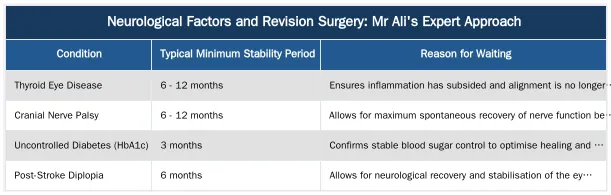
Thyroid Eye Disease (TED) is a common cause of adult-onset strabismus and double vision. Operating during the active, inflammatory phase of TED is a contraindication because unstable eye muscle size and tension make surgical correction unpredictable. Surgery is considered only after the disease has been medically stable and inactive for at least six months. Learn more about Thyroid Eye Disease and double vision.
Impact of Previous Eye Surgery, Retinal Detachment, and Glaucoma
Prior eye operations can create scar tissue (fibrosis) that complicates access to eye muscles. Previous retinal detachment surgery with a scleral buckle can obstruct muscles and alter the globe’s shape. Severe glaucoma may involve thin scleral tissue or filtering blebs that must be avoided. A detailed surgical history is vital for planning.

Neurological Factors and Revision Surgery: Mr Ali’s Expert Approach
Strabismus cases rooted in neurological conditions or previous, unsuccessful operations are complex and require specialised expertise combining ophthalmology with neurology.
Addressing Cranial Nerve Palsies and Myasthenia Gravis
Conditions affecting eye movement nerves, such as third, fourth, or sixth cranial nerve palsies, often involve incomplete or variable muscle paralysis, requiring techniques like muscle transposition. For myasthenia gravis, which causes fluctuating muscle weakness, surgery is generally avoided unless the double vision is stable and unresponsive to medical management. Mr Nadeem Ali’s fellowship training in neuro-ophthalmology provides expertise in managing double vision caused by nerve palsy.
Complex and Failed Previous Squint Surgery
Revision (re-do) surgery is more complex than a primary procedure. Scar tissue can obscure landmarks, restrict muscle movement, and affect blood supply. Locating and isolating muscles requires experienced dissection. Mr Ali’s practice focuses on complex and revision cases, offering advanced techniques and guidance on revision options after failed squint surgery.
Comprehensive Ophthalmic Assessment
A comprehensive pre-operative assessment identifies and mitigates potential risks, including strabismus surgery contraindications, to tailor the procedure to the individual.
Personalised Risk Assessment and Treatment Planning
A consultation with Mr Ali includes a detailed ophthalmic assessment, a full review of medical and surgical history, an evaluation of eye health (including retinal and optic nerve assessment), and precise measurements of eye alignment in different gazes. This review of health and visual goals determines if you are an ideal candidate for adult squint surgery.
When Surgery Can Still Proceed Safely
A complicating medical or ophthalmic condition does not automatically disqualify a patient from surgery. It often requires co-management with other specialists (like an endocrinologist or cardiologist) to achieve stability. Successful outcomes in complex cases depend on patient selection and timing (Source: American Academy of Ophthalmology). A specialist can guide you on stabilising your condition to make surgery a safe option.
Seeking Expert Advice for Your Squint Surgery Journey
A consultation with a specialist ophthalmologist is required to determine eligibility for adult squint surgery, especially with an underlying health condition. The assessment clarifies specific circumstances, risks, and the likelihood of a successful outcome.
If you are considering treatment for strabismus or double vision, a personalised evaluation is the next step to build a treatment plan around your health profile and visual goals.
Your Path to Clearer, Aligned Vision
While many health conditions influence the approach to eye muscle surgery, few are an absolute barrier. Identifying and managing these factors through a comprehensive assessment is critical. For patients with complex histories, including thyroid eye disease, nerve palsies, or previous failed operations, successful alignment is achievable with the right specialist. Understanding potential strabismus surgery contraindications and seeking an expert opinion is the first step.
To discuss your circumstances with Mr Nadeem Ali, contact us for a consultation. You can also Enquire about squint surgery or learn more about Squint Surgery in London.
Frequently Asked Questions
What are the main strabismus surgery contraindications related to general health?
While absolute barriers are rare, severe and unstable systemic conditions like advanced heart or lung disease can increase anaesthesia risks. A thorough pre-operative assessment is crucial to evaluate these potential strabismus surgery contraindications and ensure patient safety. Most controlled conditions, such as diabetes or high blood pressure, are not a barrier but require careful management.
Is active Thyroid Eye Disease (TED) one of the key strabismus surgery contraindications?
Yes, active TED is a significant consideration. Surgery is typically delayed until the condition has been stable for at least six months to ensure a predictable and lasting outcome. Operating during the active inflammatory phase is a major factor among strabismus surgery contraindications as it can lead to unpredictable results and the need for further operations.
Can previous eye surgery, like for cataracts or retinal detachment, prevent squint correction?
Previous eye operations are not typically contraindications for squint correction, but they can create scar tissue that makes the procedure more complex. This requires the expertise of a surgeon experienced in revision and complex cases. It is vital to provide your full surgical history so the surgeon can plan the safest and most effective approach.
How do neurological issues like a cranial nerve palsy affect eligibility for squint surgery?
A squint caused by a nerve palsy can often be corrected, but stability is paramount. Surgeons usually recommend waiting 6 to 12 months to allow for any potential spontaneous recovery. Operating on an unstable or changing misalignment is a relative contraindication, so this waiting period ensures the best possible surgical result.
Are there any absolute strabismus surgery contraindications that would completely prevent the procedure?
Truly absolute strabismus surgery contraindications are very uncommon but include active, severe eye infections or systemic health problems that make anaesthesia unacceptably risky. In nearly all other situations, the issue is not if surgery can be done, but when and how it should be performed for the best outcome. A specialist assessment is required to determine your specific suitability.
How can I find out if I have any personal strabismus surgery contraindications?
The best way to understand your suitability is through a specialist consultation. An expert will conduct a comprehensive assessment of your eye alignment, medical history, and overall health to identify any potential issues. You can enquire about a consultation to receive a personalised evaluation and treatment plan.
Related Posts


Find out if you are suitable for Double Vision Treatment
Find out if you could benefit from this life changing surgery by contacting us today
Our most popular procedures




Hello, I’m Nadeem Ali
I’m one of the few eye surgeons in the world with 100% focus on Squint and Double Vision Surgery.
I have 24 years of eye surgery experience, and worked for 13 years as a Consultant at London’s renowned Moorfields Eye Hospital.
In 2023, I left the NHS to focus fully on treating patients from across the world at the London Squint Clinic. You can read more about me here.
There’s lots of information on the website about: squint surgery, double vision surgery and our pricing.
The most rewarding part of my job is hearing patients tell me how squint or double vision surgery has changed their lives. You can hear these stories here.
Mr Nadeem Ali
MA MB BChir MRCOphth FRCSEd(Ophth)