
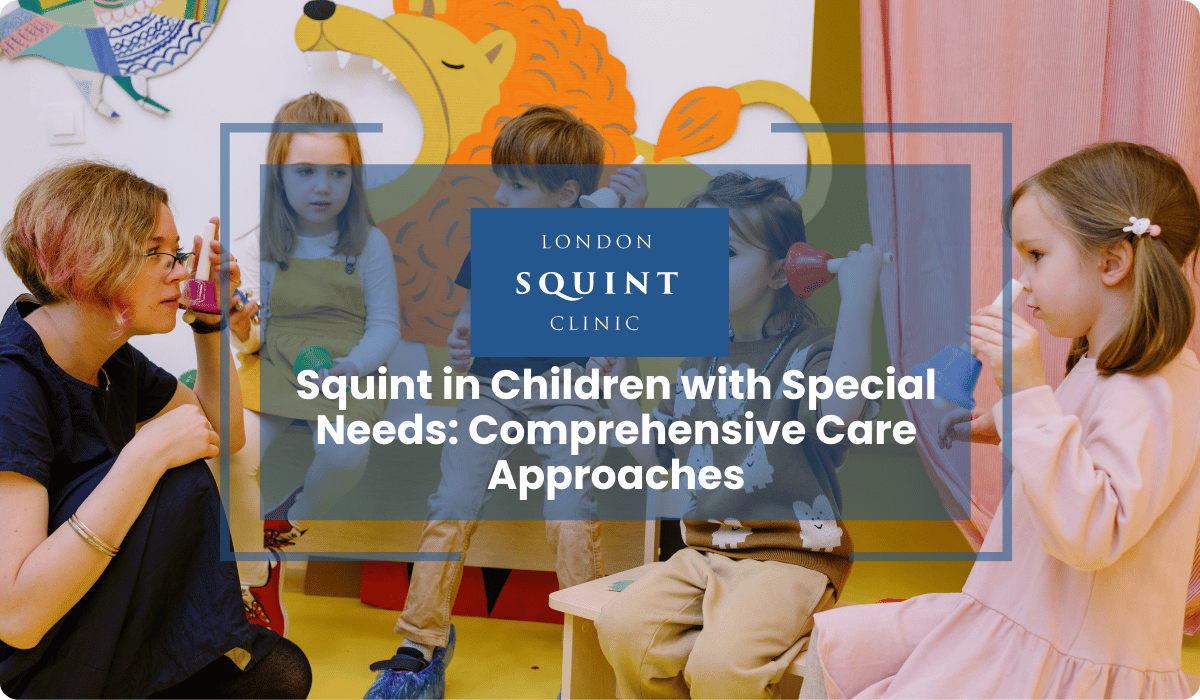
Squint in Children with Special Needs: Comprehensive Care Approaches
Why Choose Private Squint Surgery?
In the UK, squint surgery may be performed via the NHS, through insurance, or as self-pay. NHS treatment is free, but waiting times can be long and surgery is often performed by trainees under supervision. Many operations are carried out by surgeons who mainly specialise in children’s squint rather than adult complex cases.
With insurance, fees are standardised — meaning some leading specialists choose not to participate. Self-pay allows you to choose your surgeon directly and prioritise experience, specialisation, and access.
Many centres quote only a surgical fee. Hospital costs, anaesthetic fees and follow-ups are frequently additional. At London Squint Clinic, everything is included in one transparent package.
Our Complete Package – £10,000
- ✔ Advanced surgery by Mr Ali (one or both eyes)
- ✔ Adjustable sutures where clinically indicated
- ✔ Detailed orthoptic planning
- ✔ All hospital & anaesthetic fees included
- ✔ Post-operative medication
- ✔ Two video follow-ups
- ✔ Face-to-face review appointment
What Makes Us Different
- ✔ 100% focused on adult squint & double vision surgery
- ✔ >95% audited success rate
- ✔ Free re-treatment at 3 months if worse (extremely rare)
- ✔ 24/7 direct WhatsApp access to your surgeon during recovery
- ✔ Optional well-being session & pre-op reassurance call
Initial consultation: from £150
Surgery typically within 4 weeks. No referral required. Self-pay only.
Essential Insights for Supporting Children with Special Needs and Vision Challenges
- Strabismus (squint) affects 25-50% of children with developmental disabilities compared to just 2-4% in the general pediatric population, highlighting the critical need for specialized care approaches.
- Neurological differences, genetic factors, and sensory processing challenges create unique visual profiles across different conditions—with cerebral palsy showing the highest strabismus rates (60-70%) and distinctive patterns in Down syndrome and autism spectrum disorders.
- Successful eye examinations require sensory-friendly environments, modified assessment techniques, and communication adaptations tailored to each child’s specific needs and abilities.
- Treatment approaches must be individualized, with specially designed optical interventions, modified occlusion therapy, and carefully timed surgical interventions when appropriate.
- Creating supportive home and educational environments with appropriate accommodations significantly enhances vision therapy outcomes and overall development.
- Multidisciplinary collaboration between ophthalmologists, developmental pediatricians, therapists, and educators is essential for comprehensive care that addresses both visual function and developmental needs.
- Emerging technologies including telehealth adaptations, wearable devices, and personalized medicine approaches offer promising new directions for more inclusive and effective pediatric ophthalmology care.
Table of Contents
- Understanding Squint in Children with Developmental Disabilities
- Why Are Special Needs Children More Vulnerable to Eye Problems?
- Common Eye Conditions Across Different Neurodevelopmental Disorders
- Adapting Eye Examinations for Children with Special Needs
- Specialized Treatment Approaches for Strabismus in Disabled Children
- Creating Supportive Environments for Vision Therapy Success
- Collaborative Care: Working with Multidisciplinary Teams
- Future Directions in Inclusive Pediatric Ophthalmology
Understanding Squint in Children with Developmental Disabilities
Squint (strabismus) presents unique challenges in children with developmental disabilities, occurring at significantly higher rates compared to typically developing children. In the general paediatric population, squint affects approximately 2-4% of children, but this prevalence increases dramatically to 25-50% in children with various neurodevelopmental conditions.
Strabismus in special needs children often manifests differently, with more complex presentations and variable patterns. While the fundamental mechanism remains the same—misalignment of the eyes due to imbalanced muscle control or neurological factors—the underlying causes are frequently intertwined with the child’s primary diagnosis. Children with developmental disabilities may experience constant or intermittent squint, with horizontal deviations (esotropia or exotropia) being most common, though vertical and complex pattern deviations are also frequently observed.
The impact of untreated squint extends beyond visual function in these children. It can significantly affect their already challenged developmental trajectory, potentially limiting their ability to engage with therapeutic interventions for their primary condition. Early identification and management are therefore crucial, as visual input plays a fundamental role in cognitive, motor, and social development—areas where children with special needs often require additional support.
Understanding the bidirectional relationship between developmental disabilities and strabismus is essential for comprehensive care. The neurological differences that cause conditions like autism spectrum disorder or cerebral palsy often affect the same brain regions responsible for visual processing and eye movement control, creating a complex interplay that requires specialised assessment and intervention approaches.
Why Are Special Needs Children More Vulnerable to Eye Problems?
Children with developmental disabilities face a significantly higher risk of developing vision problems, particularly strabismus, due to several interconnected factors. The neurological basis of many developmental conditions directly impacts visual pathway development and oculomotor control. Brain regions responsible for coordinating eye movements and processing visual information often overlap with areas affected in conditions such as autism spectrum disorder, cerebral palsy, and intellectual disabilities.
Genetic factors play a substantial role in this increased vulnerability. Many chromosomal abnormalities associated with developmental disabilities, such as Down syndrome, are also linked to specific ocular manifestations including refractive errors, accommodative dysfunction, and strabismus. These genetic conditions often affect multiple body systems, including the complex neural and muscular mechanisms controlling eye alignment and movement.
Structural differences in facial and orbital anatomy, commonly seen in certain genetic syndromes, can alter the biomechanics of eye movement. For instance, the characteristic facial features in Down syndrome, including a flatter nasal bridge and altered orbital structure, can affect the functional positioning of extraocular muscles, predisposing children to specific types of strabismus.
Sensory processing differences, prevalent in conditions like autism spectrum disorder, can significantly impact visual attention and fixation stability. These children may demonstrate atypical visual behaviours that can either mimic strabismus or contribute to its development through inconsistent visual fixation patterns and altered visual preferences.
Additionally, many children with special needs experience developmental delays that affect the typical timeline for visual system maturation. The critical periods for binocular vision development may be extended or altered, creating both challenges and opportunities for intervention. Early identification of these vision problems is crucial, as untreated visual issues can compound existing developmental challenges and limit the effectiveness of other therapeutic interventions.
Common Eye Conditions Across Different Neurodevelopmental Disorders
Different neurodevelopmental disorders are associated with specific patterns of ocular and visual pathway abnormalities. Understanding these condition-specific associations enables more targeted screening and intervention approaches.
In children with Down syndrome, approximately 50% develop strabismus, with esotropia (inward turning eyes) being particularly common. These children also frequently experience refractive errors, especially hyperopia and astigmatism, along with accommodative insufficiency that affects their ability to focus at near distances. Distinctive features include upward slanting palpebral fissures, epicanthal folds, and Brushfield spots on the iris, which while not directly affecting vision, are important diagnostic markers.
Autism spectrum disorder presents with a complex visual profile. Studies indicate that 21-50% of children with autism experience strabismus, with exotropia (outward turning eyes) being more prevalent than in the general population. Many demonstrate unusual visual behaviours such as peripheral gazing, visual stimming, and hypersensitivity to certain visual stimuli. Sensory squint is particularly relevant in this population, where poor visual processing can lead to eye misalignment.
Children with cerebral palsy show the highest prevalence of strabismus among neurodevelopmental conditions, affecting up to 60-70% of cases. The type of strabismus often correlates with the specific form of cerebral palsy, with spastic forms frequently associated with esotropia. These children commonly experience significant refractive errors, cortical visual impairment, and oculomotor apraxia that affects their ability to initiate voluntary eye movements.
In intellectual disability of various aetiologies, strabismus prevalence increases with the severity of cognitive impairment. These children often have delayed visual maturation and may demonstrate atypical visual behaviours that complicate assessment and treatment. Nystagmus (involuntary eye movements) is also more common in this population and can coexist with strabismus, creating complex management challenges.
Across all neurodevelopmental conditions, amblyopia (lazy eye) represents a significant concern, as the underlying developmental disability may mask early signs of vision loss and complicate traditional treatment approaches.
Adapting Eye Examinations for Children with Special Needs
Conducting comprehensive eye examinations for children with special needs requires thoughtful adaptations to standard protocols while maintaining clinical rigour. The examination environment itself plays a crucial role in successful assessment. Creating sensory-friendly spaces with reduced auditory and visual stimulation helps minimise anxiety and sensory overload. Dimmed lighting, minimal decorations, and quiet examination rooms can significantly improve cooperation and reliability of findings.
Timing considerations are essential when scheduling appointments. Booking during the child’s optimal alertness period, allowing extra time for adjustment and examination, and offering shorter but more frequent visits can enhance the quality of assessment. Many specialists find that early morning appointments, before fatigue sets in, yield the most reliable results for children with developmental disabilities.
Modified examination techniques must be tailored to the child’s specific needs and abilities. For non-verbal children, objective assessment methods become paramount. These include photorefraction, retinoscopy, and automated vision screening devices that require minimal cooperation. Visual evoked potentials (VEPs) and electroretinography may be employed to assess visual pathway function when subjective responses are unreliable.
Communication adaptations are fundamental to successful examinations. Using simple, concrete language, visual supports, social stories, and augmentative communication devices helps children understand what to expect and how to participate. Many specialists incorporate the child’s preferred communication method, whether it involves picture exchange systems, sign language, or assistive technology.
Behavioural strategies such as positive reinforcement, first-then approaches, and systematic desensitisation to examination equipment can transform a potentially stressful experience into a manageable one. Some practices employ specialists in applied behaviour analysis to develop individualised examination protocols for children with significant behavioural challenges.
Parental involvement throughout the examination process provides both reassurance to the child and valuable contextual information to the clinician. Parents can offer insights into subtle visual behaviours observed at home and help interpret the child’s responses during assessment.
Specialized Treatment Approaches for Strabismus in Disabled Children
Managing strabismus in children with developmental disabilities requires individualised approaches that consider both the visual condition and the child’s underlying neurodevelopmental profile. Treatment strategies often need modification from standard protocols to ensure effectiveness and compliance.
Optical interventions remain the first-line approach for many children with special needs who have strabismus. Specially designed frames with features like flexible hinges, wrap-around temples, and adjustable nose pads can improve tolerance and compliance. For children with sensory sensitivities, gradual introduction to spectacle wear through desensitisation programmes may be necessary. In cases of accommodative esotropia, bifocal or progressive lenses might be prescribed at younger ages than typically recommended to address both distance and near vision needs.
Non-surgical interventions such as prism therapy can be particularly valuable for children who may not be suitable surgical candidates due to medical complexities. Fresnel prisms offer a temporary and adjustable solution that can be especially useful for children with variable angles of deviation or those requiring assessment before more permanent interventions.
Occlusion therapy for amblyopia presents unique challenges in this population. Traditional patching may be poorly tolerated by children with sensory sensitivities or behavioural challenges. Modified approaches include shorter patching periods, atropine penalisation as an alternative to physical patches, and specially designed occluders that allow peripheral awareness while blocking central vision. Digital therapy options using tablet-based games designed for amblyopia treatment offer engaging alternatives that may improve compliance.
Surgical interventions for strabismus require careful consideration of timing, technique, and expected outcomes. Children with special needs often benefit from earlier surgical intervention to promote binocular vision development during critical periods. Surgical planning must account for factors such as associated medical conditions, potential for general anaesthesia complications, and postoperative care requirements. Adjustable suture techniques may be particularly valuable in cases where preoperative measurements are challenging to obtain reliably.
Botulinum toxin injections represent an alternative or adjunct to traditional surgery, particularly useful in children with dynamic or variable strabismus patterns. This less invasive approach can be especially beneficial for children with medical complexities that increase surgical risks.
Creating Supportive Environments for Vision Therapy Success
Successful vision therapy for children with special needs extends beyond clinical interventions to encompass supportive environments that facilitate engagement and progress. Home-based reinforcement of vision therapy exercises is crucial, but requires thoughtful adaptation to fit within family routines and the child’s capabilities. Creating structured, distraction-free spaces dedicated to vision exercises helps establish consistent practice patterns. Parents benefit from detailed visual guides and video demonstrations of exercises, along with simplified tracking systems to monitor progress without adding undue burden to caregiving responsibilities.
Educational settings play a vital role in supporting vision development for children with special needs and strabismus. Classroom accommodations might include preferential seating, modified learning materials with enhanced visual contrast, and adjusted screen time to reduce visual fatigue. Educating teachers about the child’s specific visual challenges helps ensure appropriate support during academic activities. For children with both strabismus and developmental disabilities, individualised education plans (IEPs) should explicitly address visual needs alongside other learning supports.
Sensory integration approaches can significantly enhance vision therapy outcomes. Many children with developmental disabilities experience challenges with sensory processing that affect their visual attention and engagement. Incorporating proprioceptive and vestibular activities before visual tasks can improve attention and reduce sensory-seeking behaviours that interfere with visual focus. Weighted lap pads, therapy balls, or movement breaks may help children maintain the postural stability needed for effective visual engagement.
Technology adaptations offer innovative solutions for vision therapy compliance. Tablet-based vision therapy applications with customisable features can address individual needs while providing the engaging, immediate feedback that benefits many children with developmental disabilities. Augmented reality systems are emerging as promising tools that can make traditional vision exercises more engaging while collecting objective data on performance and progress.
Peer and sibling involvement can transform vision therapy from an isolating medical intervention to an inclusive activity. Adapting vision exercises into games that siblings or peers can participate in not only improves compliance but also supports social development. This approach is particularly valuable for children with autism spectrum disorder or social communication challenges, for whom the social engagement may provide additional motivation.
Collaborative Care: Working with Multidisciplinary Teams
Effective management of strabismus in children with special needs necessitates a coordinated multidisciplinary approach that addresses both ocular and developmental needs. The ophthalmologist or orthoptist specialising in paediatric strabismus serves as a critical member of this team, but optimal outcomes depend on seamless collaboration with other professionals.
Developmental paediatricians provide essential context regarding the child’s overall developmental trajectory and how visual function impacts or is impacted by their primary condition. This bidirectional information exchange helps prioritise interventions and establish realistic timelines for visual improvement within the broader developmental framework. Regular communication between ophthalmology and developmental paediatrics ensures that visual status is considered during developmental assessments and vice versa.
Occupational therapists with expertise in sensory integration play a pivotal role in addressing the sensory processing challenges that often accompany both developmental disabilities and strabismus. They can develop strategies to improve visual attention, reduce sensory barriers to wearing glasses or patches, and incorporate visual skills development into broader therapy goals. The integration of visual-motor activities into occupational therapy sessions reinforces ophthalmological interventions while addressing functional skills.
Speech and language therapists contribute valuable insights into how visual function affects communication development, particularly for non-verbal children who rely heavily on visual communication systems. Conversely, they can adapt communication strategies to accommodate visual limitations imposed by strabismus or amblyopia. For children using picture exchange communication systems or visual schedules, understanding their visual field deficits or preferred gaze direction is essential for effective communication support.
Educational psychologists help translate clinical visual findings into practical classroom accommodations. They can assess how visual challenges impact learning and recommend appropriate educational supports, ensuring that visual limitations are not misinterpreted as cognitive or behavioural issues. This collaboration is particularly important during key educational transitions or when developing individualised education plans.
Care coordination becomes essential in this complex network of providers. Many families benefit from designated care coordinators who help navigate appointments, ensure information sharing between specialists, and advocate for comprehensive consideration of the child’s visual needs across all settings. Regular multidisciplinary team meetings, whether virtual or in-person, facilitate holistic care planning and prevent fragmentation of services.
Future Directions in Inclusive Pediatric Ophthalmology
The field of paediatric ophthalmology is evolving rapidly to better serve children with special needs through innovative approaches and technologies. Telehealth adaptations represent one of the most promising developments, offering remote assessment options that reduce the stress of clinic visits for children with sensory sensitivities or behavioural challenges. Advanced home-based vision monitoring systems using smartphone applications can track eye alignment and visual function between appointments, providing valuable data while minimising disruption to the child’s routine. These technologies are particularly valuable for families in remote areas or those facing transportation challenges.
Wearable technology is creating new possibilities for both assessment and intervention. Smart glasses with eye-tracking capabilities can provide objective measurements of eye alignment and movement patterns in natural environments, offering insights beyond what can be observed in clinical settings. For children with cortical visual impairment, wearable devices that enhance visual contrast or filter specific wavelengths show promise in improving functional vision. These technologies may eventually allow for continuous monitoring of treatment effectiveness in real-world settings.
Personalised medicine approaches are increasingly relevant in managing strabismus in children with developmental disabilities. Genetic testing can now identify specific mutations associated with both developmental conditions and ocular manifestations, potentially allowing for targeted interventions. Understanding the genetic underpinnings of conditions
Frequently Asked Questions
How common is squint in children with developmental disabilities?
Squint (strabismus) affects approximately 25-50% of children with developmental disabilities, compared to just 2-4% in the general pediatric population. The prevalence varies by condition: up to 50% in Down syndrome, 21-50% in autism spectrum disorder, and 60-70% in cerebral palsy. The risk increases with the severity of cognitive impairment across all neurodevelopmental conditions.
Why do children with special needs have higher rates of eye problems?
Children with special needs have higher rates of eye problems due to several factors: neurological differences affecting visual pathways and eye movement control, genetic factors that impact multiple body systems including vision, structural differences in facial anatomy, sensory processing challenges, and developmental delays that alter the timeline for visual system maturation. These factors often interact, creating complex visual profiles unique to each child’s condition.
How are eye examinations modified for children with developmental disabilities?
Eye examinations for children with developmental disabilities are modified through: creating sensory-friendly environments with reduced stimulation, scheduling appointments during optimal alertness periods, using objective assessment methods like photorefraction and automated screening devices, adapting communication with visual supports or augmentative devices, employing behavioral strategies such as positive reinforcement, and involving parents throughout the examination process.
What treatment options are available for strabismus in children with special needs?
Treatment options for strabismus in children with special needs include: specially designed glasses with adaptive features, prism therapy for those not suitable for surgery, modified occlusion therapy approaches (shorter patching periods, atropine penalization, digital therapy options), earlier surgical interventions with techniques accounting for associated medical conditions, and botulinum toxin injections as a less invasive alternative for children with medical complexities.
How can parents support vision therapy at home for children with developmental disabilities?
Parents can support vision therapy at home by creating structured, distraction-free spaces for exercises, following detailed visual guides and video demonstrations provided by specialists, incorporating vision exercises into daily routines, using technology adaptations like customizable tablet applications, involving siblings or peers to make exercises more engaging, and implementing sensory integration approaches that improve visual attention and engagement.
Which professionals should be involved in managing eye conditions in children with special needs?
A comprehensive team approach should include: ophthalmologists/orthoptists specializing in pediatric strabismus, developmental pediatricians to address overall developmental context, occupational therapists with sensory integration expertise, speech and language therapists to connect visual and communication needs, educational psychologists to translate clinical findings into classroom accommodations, and care coordinators to help families navigate the complex network of services and ensure information sharing between specialists.
Can strabismus in children with developmental disabilities be completely corrected?
The potential for complete correction of strabismus in children with developmental disabilities varies significantly based on the underlying condition, severity of the strabismus, age at intervention, and associated visual pathway involvement. While many children can achieve significant improvement in eye alignment and functional vision, complete correction may not always be possible, particularly in cases with neurological components. Treatment goals often focus on maximizing functional vision, preventing amblyopia, expanding visual field, and improving quality of life rather than achieving perfect cosmetic alignment.
Related Posts

Find out if you are suitable for Double Vision Treatment
Find out if you could benefit from this life changing surgery by contacting us today
Our most popular procedures


Hello, I’m Nadeem Ali
I’m one of the few eye surgeons in the world with 100% focus on Squint and Double Vision Surgery.
I have 24 years of eye surgery experience, and worked for 13 years as a Consultant at London’s renowned Moorfields Eye Hospital.
In 2023, I left the NHS to focus fully on treating patients from across the world at the London Squint Clinic. You can read more about me here.
There’s lots of information on the website about: squint surgery, double vision surgery and our pricing.
The most rewarding part of my job is hearing patients tell me how squint or double vision surgery has changed their lives. You can hear these stories here.
Mr Nadeem Ali
MA MB BChir MRCOphth FRCSEd(Ophth)