
Skew Deviation: Brainstem-Related Vertical Double Vision

Why Choose Private Squint Surgery?
In the UK, squint surgery may be performed via the NHS, through insurance, or as self-pay. NHS treatment is free, but waiting times can be long and surgery is often performed by trainees under supervision. Many operations are carried out by surgeons who mainly specialise in children’s squint rather than adult complex cases.
With insurance, fees are standardised — meaning some leading specialists choose not to participate. Self-pay allows you to choose your surgeon directly and prioritise experience, specialisation, and access.
Many centres quote only a surgical fee. Hospital costs, anaesthetic fees and follow-ups are frequently additional. At London Squint Clinic, everything is included in one transparent package.
Our Complete Package – £10,000
- ✔ Advanced surgery by Mr Ali (one or both eyes)
- ✔ Adjustable sutures where clinically indicated
- ✔ Detailed orthoptic planning
- ✔ All hospital & anaesthetic fees included
- ✔ Post-operative medication
- ✔ Two video follow-ups
- ✔ Face-to-face review appointment
What Makes Us Different
- ✔ 100% focused on adult squint & double vision surgery
- ✔ >95% audited success rate
- ✔ Free re-treatment at 3 months if worse (extremely rare)
- ✔ 24/7 direct WhatsApp access to your surgeon during recovery
- ✔ Optional well-being session & pre-op reassurance call
Initial consultation: from £150
Surgery typically within 4 weeks. No referral required. Self-pay only.
Brainstem-Related Vertical Double Vision
Skew deviation is a vertical eye misalignment caused by brainstem or cerebellar damage, not by eye muscle or nerve problems. It disrupts vestibular pathways that maintain eye alignment, resulting in one eye appearing higher than the other and causing vertical double vision.
Unlike other forms of strabismus, skew deviation typically shows equal misalignment in all gaze directions and often improves when the head is tilted toward the lower eye. It frequently appears alongside other neurological symptoms like dizziness and imbalance.
Diagnosis requires comprehensive neuro-ophthalmological assessment including the head-tilt test and brain MRI. Treatment focuses on addressing the underlying cause (stroke, MS, tumors) while managing symptoms with prism glasses, vestibular rehabilitation, and occasionally surgery for persistent cases.
Seek immediate medical attention for sudden vertical double vision, especially when accompanied by dizziness, headache, coordination problems, or other neurological symptoms, as these may indicate serious conditions requiring urgent intervention.
Table of Contents
- Understanding Skew Deviation: Causes and Mechanisms
- How Brainstem Disorders Lead to Vertical Double Vision
- Diagnosing Skew Deviation: Tests and Clinical Evaluation
- What Distinguishes Skew Deviation from Other Eye Misalignments?
- Treatment Options for Brainstem-Related Vertical Diplopia
- Living with Central Nervous System Squint: Management Strategies
- When to Seek Medical Help for Suspected Skew Deviation
Understanding Skew Deviation: Causes and Mechanisms
Skew deviation is a unique form of vertical ocular misalignment resulting from damage to the central nervous system, particularly the brainstem or cerebellum. Unlike common forms of strabismus that originate from eye muscle or nerve dysfunction, skew deviation stems from disruption to the vestibular system pathways that help maintain eye alignment.
The fundamental mechanism involves an imbalance in the otolith-ocular reflexes. These reflexes normally work to maintain proper eye alignment during head movements by integrating signals from the vestibular system. When brainstem lesions occur, they disrupt this delicate balance, resulting in vertical misalignment of the eyes.
Skew deviation typically manifests as one eye positioned higher than the other (hypertropia), leading to troublesome vertical double vision (diplopia). This misalignment often varies with head position, which is a distinguishing clinical feature. The condition may be accompanied by other neurological symptoms depending on the location and extent of the underlying brainstem pathology.
Common causes include stroke, multiple sclerosis, brainstem tumours, traumatic brain injury, and inflammatory conditions affecting the central nervous system. The severity of skew deviation correlates with the extent of damage to the vestibular nuclei or their connections within the brainstem.
How Brainstem Disorders Lead to Vertical Double Vision
The brainstem serves as a critical junction for neural pathways controlling eye movements and alignment. When disorders affect this region, they can disrupt the complex integration of visual and vestibular signals, resulting in vertical double vision. This occurs through several specific mechanisms:
Firstly, damage to the vestibular nuclei in the brainstem disrupts the otolith-ocular pathways. These pathways normally ensure that eye position adjusts appropriately with head movements and spatial orientation. When compromised, the eyes no longer maintain proper vertical alignment, causing images to appear at different heights.
Secondly, brainstem lesions can affect the medial longitudinal fasciculus (MLF), a nerve tract crucial for coordinating eye movements. Disruption to the MLF often results in internuclear ophthalmoplegia, which may present alongside skew deviation in conditions like multiple sclerosis.
Thirdly, damage to the cerebellum or its connections to the brainstem can impair the fine-tuning mechanisms that maintain binocular vision. The cerebellum normally helps calibrate eye movements and position; when this calibration fails, vertical misalignment occurs.
The resulting vertical diplopia from these brainstem disorders is often accompanied by other neurological symptoms such as dizziness, imbalance, nausea, and sometimes hearing changes, reflecting the broader impact of brainstem dysfunction on multiple sensory systems.
Diagnosing Skew Deviation: Tests and Clinical Evaluation
Accurate diagnosis of skew deviation requires a comprehensive neuro-ophthalmological assessment. The evaluation typically begins with a detailed history, focusing on the onset, pattern, and associated symptoms of the vertical double vision. Sudden onset diplopia with accompanying neurological symptoms strongly suggests a central nervous system origin.
Clinical examination includes several specific tests. The alternate cover test measures the magnitude and pattern of vertical misalignment in different gaze positions. A key diagnostic feature is the change in vertical deviation with head tilt—known as the “head-tilt test.” In skew deviation, the vertical misalignment typically decreases when the head is tilted toward the side of the lower eye (positive head-tilt test), distinguishing it from fourth nerve palsy.
The three-step test, traditionally used to identify which eye muscle is affected in other forms of strabismus, often yields inconsistent results in skew deviation—another diagnostic clue. Fundus photography may reveal excyclotorsion (outward rotation) of the hypertropic eye and incyclotorsion (inward rotation) of the hypotropic eye, a pattern known as “ocular tilt reaction.”
Neuroimaging is essential for confirming the diagnosis and identifying the underlying cause. MRI of the brain with particular attention to the brainstem and cerebellum is the preferred imaging modality. Additional vestibular function tests, including videonystagmography and rotational chair testing, may help assess the extent of vestibular involvement and aid in localising the lesion.
What Distinguishes Skew Deviation from Other Eye Misalignments?
Differentiating skew deviation from other forms of vertical strabismus is crucial for appropriate management. Several key clinical features help distinguish this central nervous system squint from peripheral causes of ocular misalignment.
The most significant distinguishing feature is comitance—skew deviation typically shows relatively equal misalignment in all directions of gaze, unlike nerve palsies which show incomitant patterns. Additionally, skew deviation often presents as part of the ocular tilt reaction triad: vertical misalignment, head tilt, and ocular torsion. This complete triad is rarely seen in other forms of strabismus.
The response to the head-tilt test provides another important distinction. In skew deviation, the vertical misalignment typically decreases when the head is tilted toward the side of the lower eye, whereas in fourth nerve palsy, the opposite pattern occurs. This difference reflects the distinct neurological mechanisms underlying each condition.
Associated neurological symptoms also help differentiate skew deviation. Patients often report dizziness, imbalance, nausea, and other brainstem or cerebellar signs that would be unusual in isolated ocular motor nerve palsies or mechanical strabismus. The presence of nystagmus, particularly vertical or torsional, strongly suggests a central cause.
Finally, the temporal pattern can be revealing. Skew deviation may fluctuate with changes in head position or body orientation, reflecting its vestibular origins. This variability is less common in other forms of vertical strabismus, which tend to remain more constant regardless of position.
Treatment Options for Brainstem-Related Vertical Diplopia
Management of brainstem-related vertical diplopia focuses on addressing both the underlying cause and the symptomatic double vision. Treatment approaches vary depending on the aetiology, severity, and chronicity of the skew deviation.
The primary treatment goal is to address the underlying brainstem pathology when possible. This may involve medical management of conditions like multiple sclerosis with immunomodulatory therapy, surgical intervention for tumours, or stroke management protocols. In many cases, as the primary condition improves, the skew deviation may partially or completely resolve.
For symptomatic management of persistent vertical diplopia, prism glasses are often the first-line approach. Fresnel prisms (temporary press-on prisms) can be applied to spectacles to realign the visual axes and eliminate double vision. These can be particularly useful as the deviation may change over time, allowing for adjustments without replacing the entire lens.
In cases where the skew deviation is stable and persistent, ground-in prisms may provide a more permanent and cosmetically acceptable solution. The prism power is determined through careful measurements of the vertical deviation in different gaze positions and head postures.
For patients with large-angle deviations not adequately managed with prisms, or those who cannot tolerate prisms, strabismus surgery may be considered. However, surgery is typically reserved for stable, long-standing skew deviation that has not shown improvement over time, as there is a risk of overcorrection if spontaneous recovery occurs.
Botulinum toxin injections into the extraocular muscles represent another treatment option, particularly useful in cases where the prognosis for spontaneous improvement is uncertain. This temporary intervention can provide relief while waiting to determine if the skew deviation will resolve naturally.
Living with Central Nervous System Squint: Management Strategies
Adapting to life with a central nervous system squint requires a multifaceted approach that extends beyond medical interventions. Patients with skew deviation often benefit from comprehensive management strategies that address both the visual and functional aspects of the condition.
Vestibular rehabilitation therapy plays a crucial role in managing associated symptoms like dizziness and imbalance. Specialised exercises can help retrain the brain to compensate for vestibular dysfunction, potentially improving both balance and visual stability. These exercises are typically tailored to the individual’s specific deficits and gradually increased in complexity as improvement occurs.
Adaptive techniques for daily activities can significantly improve quality of life. These may include head positioning strategies that minimise double vision, such as finding the “null point” where images appear single. Some patients benefit from temporarily occluding one eye during challenging visual tasks like reading or driving, though this approach sacrifices binocular vision and depth perception.
Regular monitoring is essential, as central nervous system squint can change over time. Patients should maintain scheduled follow-up appointments with their neuro-ophthalmologist to assess changes in the deviation and adjust treatments accordingly. This is particularly important in the early stages when spontaneous improvement may occur.
Psychological support should not be overlooked, as persistent double vision can cause significant anxiety and affect confidence in daily activities. Support groups for individuals with neurological visual disorders can provide valuable emotional support and practical advice from others with similar experiences.
Workplace and home modifications, such as adjusting computer screen positions or improving lighting conditions, can help minimise visual symptoms and improve functionality. Occupational therapy assessment may be beneficial in identifying specific environmental adaptations.
When to Seek Medical Help for Suspected Skew Deviation
Recognising the warning signs of skew deviation and knowing when to seek urgent medical attention is crucial, as this condition often signals significant underlying neurological issues. Any sudden onset of vertical double vision should prompt immediate medical evaluation, particularly when accompanied by other neurological symptoms.
Key symptoms that warrant urgent assessment include:
- Sudden vertical displacement of images (one image appears higher than the other)
- Double vision that changes with head position
- Accompanying dizziness, vertigo, or imbalance
- New-onset headache, especially if severe or different from previous headaches
- Difficulty with coordination or walking
- Nausea or vomiting without apparent cause
- Slurred speech or facial weakness
- Numbness or weakness in limbs
Patients with pre-existing neurological conditions such as multiple sclerosis should seek prompt evaluation if they develop new visual symptoms, as skew deviation may indicate disease progression or a new lesion. Similarly, individuals with a history of stroke or traumatic brain injury should report new visual disturbances immediately.
The appropriate initial point of contact may vary depending on symptom severity. For acute, severe symptoms suggesting possible stroke or other emergency conditions, attending an emergency department is appropriate. For less acute presentations, an urgent appointment with a GP, ophthalmologist, or neurologist should be arranged. Many cases will ultimately require assessment by a neuro-ophthalmologist who specialises in the intersection of neurological and visual disorders.
Early diagnosis and intervention are essential, not only for managing the visual symptoms but potentially for identifying and treating serious underlying conditions before they progress further. Remember that vertical double vision of central origin is never normal and always warrants thorough investigation.
Frequently Asked Questions
What is the difference between skew deviation and fourth nerve palsy?
Skew deviation and fourth nerve palsy differ in several key ways. Skew deviation results from central nervous system damage (brainstem/cerebellum), while fourth nerve palsy involves the trochlear nerve. In skew deviation, the vertical misalignment typically decreases when the head is tilted toward the lower eye, whereas in fourth nerve palsy, the misalignment worsens. Skew deviation often presents with other neurological symptoms like dizziness and imbalance, and typically shows relatively equal misalignment in all gaze directions, unlike the incomitant pattern seen in fourth nerve palsy.
Can skew deviation resolve on its own?
Yes, skew deviation can resolve spontaneously, particularly when the underlying cause is treatable or temporary. For instance, if the skew deviation results from a stroke, inflammation, or demyelination, the vertical misalignment may improve as the brain recovers or the condition is treated. The timeline for spontaneous resolution varies widely, from weeks to months, depending on the nature and severity of the underlying brainstem pathology. Regular monitoring by a neuro-ophthalmologist is essential to track potential improvements.
What imaging tests are used to diagnose skew deviation?
MRI of the brain with special attention to the brainstem and cerebellum is the primary imaging modality for diagnosing skew deviation. MRI can detect strokes, tumors, demyelinating lesions, and other structural abnormalities that might cause skew deviation. In some cases, MRI with contrast enhancement may be necessary to better visualize inflammatory or neoplastic conditions. CT scans may be used initially in emergency settings but generally lack the sensitivity to detect subtle brainstem lesions that MRI can identify.
How effective are prism glasses for treating vertical double vision from skew deviation?
Prism glasses are often highly effective for managing vertical double vision from skew deviation. They work by bending light to realign the visual images, eliminating or reducing diplopia without surgery. Fresnel press-on prisms are particularly useful for skew deviation as they can be easily adjusted if the deviation changes over time. Success rates vary depending on the stability of the deviation and its magnitude, but many patients achieve comfortable single vision with properly prescribed prisms. For stable, long-term deviations, permanent ground-in prisms may provide a more cosmetically acceptable solution.
Is surgery recommended for skew deviation?
Surgery is generally not the first-line treatment for skew deviation and is reserved for specific situations. It’s typically considered only when: 1) the skew deviation has been stable for at least 6-12 months, 2) the deviation is large and not adequately managed with prisms, and 3) there’s no expectation of further spontaneous improvement. The risk with early surgical intervention is potential overcorrection if natural recovery occurs. Botulinum toxin injections may be used as a temporary alternative or “trial” before committing to permanent surgical correction.
Can skew deviation affect children?
Yes, skew deviation can affect children, though it’s less common than in adults. In pediatric populations, it’s often associated with posterior fossa tumors, inflammatory conditions, trauma, or congenital malformations affecting the brainstem. Diagnosis may be challenging in young children who cannot articulate visual symptoms clearly. Treatment principles remain similar to adults, though there’s additional concern about the potential impact on visual development if the condition occurs during the critical period. Prompt diagnosis and management are essential to prevent amblyopia (lazy eye) in developing visual systems.
What is ocular tilt reaction and how does it relate to skew deviation?
Ocular tilt reaction (OTR) is a clinical triad consisting of skew deviation, head tilt, and ocular torsion (rotation of the eyes around their visual axes). Skew deviation is therefore one component of the complete OTR syndrome. This triad occurs due to unilateral damage to the graviceptive pathways from the vestibular system through the brainstem. In a complete OTR, the head typically tilts toward the side of the lower eye, while the eyes show torsion with the upper poles rotating away from the side of the lesion. The presence of a complete OTR strongly suggests a central vestibular pathway lesion rather than a peripheral cause of vertical misalignment.
Related Posts

Find out if you are suitable for Double Vision Treatment
Find out if you could benefit from this life changing surgery by contacting us today
Our most popular procedures

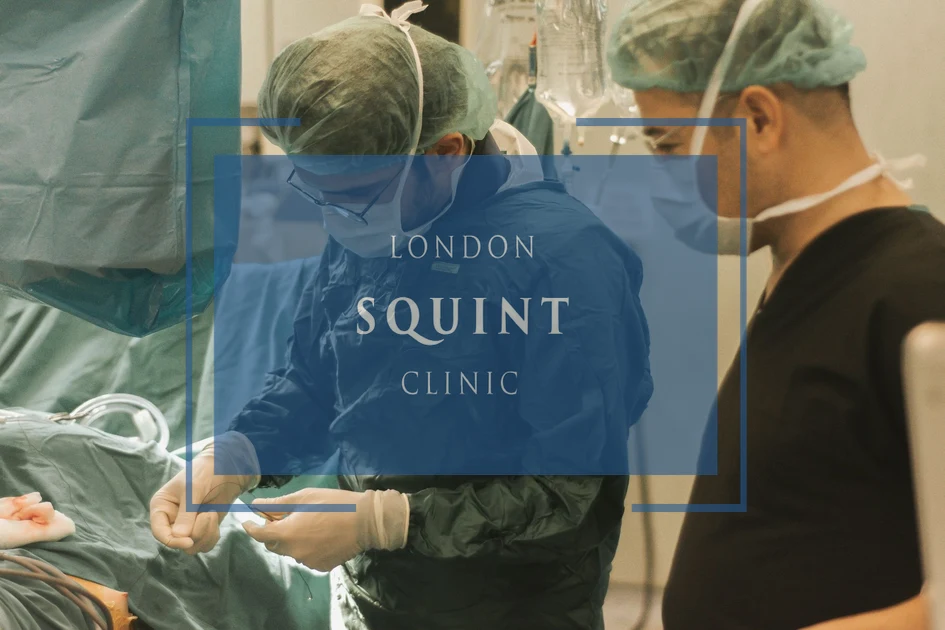


Hello, I’m Nadeem Ali
I’m one of the few eye surgeons in the world with 100% focus on Squint and Double Vision Surgery.
I have 24 years of eye surgery experience, and worked for 13 years as a Consultant at London’s renowned Moorfields Eye Hospital.
In 2023, I left the NHS to focus fully on treating patients from across the world at the London Squint Clinic. You can read more about me here.
There’s lots of information on the website about: squint surgery, double vision surgery and our pricing.
The most rewarding part of my job is hearing patients tell me how squint or double vision surgery has changed their lives. You can hear these stories here.
Mr Nadeem Ali
MA MB BChir MRCOphth FRCSEd(Ophth)