
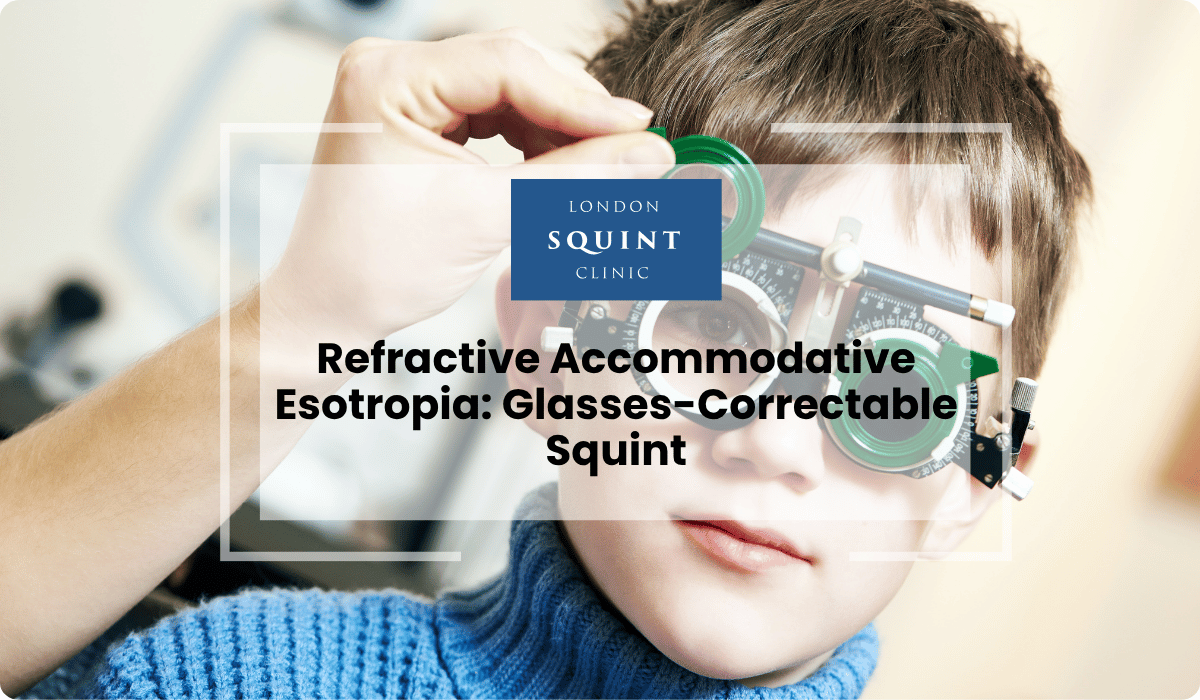
Refractive Accommodative Esotropia: Glasses-Correctable Squint
Why Choose Private Squint Surgery?
In the UK, squint surgery may be performed via the NHS, through insurance, or as self-pay. NHS treatment is free, but waiting times can be long and surgery is often performed by trainees under supervision. Many operations are carried out by surgeons who mainly specialise in children’s squint rather than adult complex cases.
With insurance, fees are standardised — meaning some leading specialists choose not to participate. Self-pay allows you to choose your surgeon directly and prioritise experience, specialisation, and access.
Many centres quote only a surgical fee. Hospital costs, anaesthetic fees and follow-ups are frequently additional. At London Squint Clinic, everything is included in one transparent package.
Our Complete Package – £10,000
- ✔ Advanced surgery by Mr Ali (one or both eyes)
- ✔ Adjustable sutures where clinically indicated
- ✔ Detailed orthoptic planning
- ✔ All hospital & anaesthetic fees included
- ✔ Post-operative medication
- ✔ Two video follow-ups
- ✔ Face-to-face review appointment
What Makes Us Different
- ✔ 100% focused on adult squint & double vision surgery
- ✔ >95% audited success rate
- ✔ Free re-treatment at 3 months if worse (extremely rare)
- ✔ 24/7 direct WhatsApp access to your surgeon during recovery
- ✔ Optional well-being session & pre-op reassurance call
Initial consultation: from £150
Surgery typically within 4 weeks. No referral required. Self-pay only.
Essential Insights for Parents of Children with Accommodative Esotropia
Early intervention is crucial: Refractive accommodative esotropia typically develops between ages 2-4 and should be addressed promptly to prevent amblyopia and support normal visual development.
Hyperopia causes eye crossing: Significant long-sightedness (+3.00 dioptres or greater) forces children to overaccommodate, triggering excessive convergence that results in eye crossing.
Glasses are the primary treatment: 60-75% of children achieve excellent alignment with properly fitted glasses that provide their full hyperopic prescription.
Consistent wear is essential: Most children show immediate recurrence of crossing when glasses are removed, making compliance with full-time wear critical for treatment success.
Long-term outlook varies: While some children may experience reduced hyperopia during adolescence, many will require glasses long-term to maintain proper eye alignment.
Table of Contents
- Understanding Refractive Accommodative Esotropia in Children
- How Hyperopia Leads to Eye Crossing in Young Patients
- Diagnosing Accommodative Esotropia: Signs Parents Should Know
- Can Glasses Completely Correct Childhood Squint?
- Selecting the Right Glasses for Children with Esotropia
- Long-Term Management: Will Children Always Need Glasses?
- When Additional Treatments Beyond Glasses Are Necessary
Understanding Refractive Accommodative Esotropia in Children
Refractive accommodative esotropia is one of the most common forms of childhood strabismus (squint), typically developing between the ages of 2 and 4 years. This condition is characterised by an inward turning of one or both eyes that occurs due to the child’s focusing efforts when they have uncorrected hyperopia (long-sightedness).
Unlike other forms of strabismus that may require surgical intervention, refractive accommodative esotropia has a unique relationship with the visual focusing system. When a child with significant hyperopia attempts to focus clearly on objects, particularly those at near distances, they must use excessive accommodative effort. This focusing mechanism is neurologically linked to convergence (the inward movement of the eyes), creating a situation where the eyes cross excessively during visual tasks.
What makes this condition particularly important to address promptly is its impact on visual development. Children with untreated accommodative esotropia often develop amblyopia (lazy eye) and may lose binocular vision (the ability of both eyes to work together). Early intervention during the critical period of visual development—typically the first 8-9 years of life—offers the best opportunity for normal visual development and proper eye alignment.
How Hyperopia Leads to Eye Crossing in Young Patients
Hyperopia (long-sightedness) creates a visual challenge that directly contributes to eye crossing in susceptible children. In hyperopia, light rays focus behind the retina rather than precisely on it, causing blurred vision, particularly for near objects. To compensate for this refractive error, children must engage their accommodative system—essentially flexing the internal lens of the eye—to bring images into focus.
The connection between hyperopia and esotropia lies in the neurological link between accommodation and convergence. When we focus on near objects, two processes naturally occur simultaneously: the lens accommodates (changes shape) to focus the image, and the eyes converge (turn inward) to maintain single vision. This accommodation-convergence relationship is fixed in young children.
In children with significant hyperopia (typically +3.00 dioptres or greater), even when looking at distant objects, they must accommodate substantially to see clearly. This excessive accommodation triggers a corresponding excessive convergence, causing the eyes to cross. The higher the hyperopic prescription, the greater the accommodative effort required, and consequently, the more pronounced the esotropia may become.
What makes this particularly challenging is that young children have remarkable accommodative abilities, often compensating for significant hyperopia without complaint. This means the first sign parents might notice isn’t visual difficulty but rather the visible inward turning of the eyes. This explains why refractive accommodative esotropia typically manifests between ages 2-4, when children engage in more visually demanding activities and the cumulative strain on the visual system becomes apparent.
Diagnosing Accommodative Esotropia: Signs Parents Should Know
Early detection of accommodative esotropia is crucial for successful treatment and optimal visual development. Parents are often the first to notice subtle changes in their child’s eye alignment or visual behaviour. Key signs that may indicate accommodative esotropia include:
- Intermittent eye turning: Initially, the inward turning may only occur during intense visual concentration or when the child is tired.
- Increased crossing when focusing on near objects: The esotropia may be more noticeable when the child is looking at books or screens.
- Squinting or closing one eye: Children may develop this habit to eliminate double vision caused by misaligned eyes.
- Head tilting or turning: This compensatory posture helps the child maintain single vision despite eye misalignment.
- Rubbing eyes frequently: This may indicate visual fatigue from the constant effort to focus.
Diagnosis requires a comprehensive paediatric eye examination by a specialist ophthalmologist. This assessment typically includes visual acuity testing (adapted for the child’s age), refraction to measure the precise hyperopic prescription (usually performed with cycloplegic drops that temporarily paralyse accommodation), and detailed evaluation of eye alignment and movement.
The diagnostic process also distinguishes between fully accommodative esotropia (where glasses completely correct the alignment) and partially accommodative esotropia (where some crossing persists even with optimal glasses correction). This distinction is crucial for determining whether additional treatments beyond glasses may eventually be necessary.
Parents should seek prompt evaluation if they notice any eye turning, even if it seems intermittent or minor. Early intervention with appropriate glasses offers the best chance for normal binocular visual development and may prevent the need for more invasive treatments later.
Can Glasses Completely Correct Childhood Squint?
The effectiveness of glasses in correcting accommodative esotropia depends on several factors, primarily whether the condition is fully or partially accommodative. In fully accommodative esotropia, providing the correct hyperopic prescription completely resolves the eye turning by reducing the accommodative effort needed for clear vision, thereby eliminating the linked excessive convergence.
Research indicates that approximately 60-75% of children with accommodative esotropia achieve excellent alignment with glasses alone. The likelihood of complete correction with glasses is highest when:
- Treatment begins early, ideally before age 5
- The hyperopic prescription is moderate (+3.00 to +5.00 dioptres)
- The child had good alignment before the esotropia developed
- There is minimal or no amblyopia present
- The child has good potential for binocular vision
In partially accommodative esotropia, glasses improve the alignment significantly but do not completely eliminate the crossing. These children have both an accommodative component and a non-accommodative component to their esotropia. While glasses address the accommodative element by correcting the hyperopia, the residual non-accommodative component may eventually require additional interventions.
It’s important to note that even when glasses successfully align the eyes, consistent wear is essential. Many children show recurrence of crossing within minutes of removing their glasses, as the underlying hyperopia and accommodation-convergence relationship remains unchanged. This is why compliance with full-time glasses wear is crucial for maintaining proper alignment and supporting normal visual development.
Selecting the Right Glasses for Children with Esotropia
Selecting appropriate glasses for a child with accommodative esotropia involves more than just filling the prescription. The effectiveness of treatment depends significantly on proper fit, comfort, and consistent wear. Here are key considerations when choosing glasses for children with this condition:
Prescription accuracy: The full hyperopic prescription determined during cycloplegic refraction must be dispensed without reduction. Unlike adults, who might be gradually adapted to strong hyperopic corrections, children with accommodative esotropia need their full prescription immediately to properly align their eyes.
Frame fit: Proper fit is crucial for both comfort and optical alignment. Frames should sit securely without sliding down the nose, as this would effectively reduce the optical power of the lenses. Features to look for include:
- Adjustable nose pads for secure positioning
- Temples that wrap around the ears (cable temples) for active children
- Spring hinges to withstand rough handling
- Lightweight, durable materials appropriate for active play
Lens considerations: High-index lenses can reduce thickness and weight for stronger prescriptions. Polycarbonate or Trivex materials offer impact resistance for active children. Anti-reflective coatings reduce glare and improve the cosmetic appearance of stronger lenses.
Bifocal or progressive options: Some children with accommodative esotropia benefit from bifocal or progressive lenses, particularly if they have a high AC/A ratio (accommodation convergence to accommodation). These specialised lenses provide additional focusing power for near work, further reducing the accommodative effort and associated convergence.
Regular adjustments and replacements are necessary as children grow and play. Establishing a positive attitude toward glasses wear from the beginning helps ensure compliance, which is essential for successful treatment of accommodative esotropia.
Long-Term Management: Will Children Always Need Glasses?
The long-term prognosis for children with refractive accommodative esotropia varies considerably. While some children will require glasses indefinitely, others may experience changes in their refractive status and accommodative esotropia over time. Understanding the typical progression helps parents set realistic expectations.
Most children with accommodative esotropia continue to need glasses throughout childhood. The hyperopia that underlies the condition typically persists, though its degree may change. Research indicates that approximately 20-30% of children may experience a reduction in their hyperopia during adolescence, potentially reducing their dependence on glasses.
Several factors influence the long-term outlook:
- Age at onset: Earlier onset generally indicates more significant hyperopia and greater likelihood of long-term glasses dependence.
- Degree of hyperopia: Children with higher hyperopic prescriptions (+5.00 dioptres or more) are more likely to remain dependent on glasses.
- Family history: Genetic factors influence refractive development; children with family members who “outgrew” hyperopia may have better chances of reduced dependence.
- Development of binocular vision: Children who develop robust binocular vision with treatment may maintain better alignment even with slight undercorrection as they mature.
Regular monitoring is essential throughout childhood and adolescence. Even if the hyperopia decreases, some individuals may continue to need optical correction to maintain proper alignment. Attempts to discontinue glasses should always be supervised by an ophthalmologist through a controlled weaning process, carefully monitoring for any recurrence of esotropia.
Parents should understand that the primary goal of treatment is not necessarily to eliminate glasses dependency but to ensure proper visual development during the critical period. Even if glasses are needed long-term, they provide the foundation for normal binocular vision, depth perception, and visual function.
When Additional Treatments Beyond Glasses Are Necessary
While glasses are the cornerstone of treatment for refractive accommodative esotropia, some children require additional interventions. Understanding when supplementary treatments become necessary helps parents navigate the treatment journey effectively.
Additional treatments may be considered in these scenarios:
- Partially accommodative esotropia: When a significant residual esotropia persists even with optimal glasses correction (typically more than 10 prism dioptres), surgical intervention may be recommended to align the eyes.
- Associated amblyopia: If the child has developed amblyopia (reduced vision in one eye), treatment with patching or atropine drops may be necessary alongside glasses correction.
- Poor compliance with glasses: When children consistently refuse to wear glasses despite appropriate frame selection and positive reinforcement, alternative approaches may be considered.
- High AC/A ratio: Children with excessive convergence at near despite good distance alignment with glasses may benefit from bifocals, progressive lenses, or occasionally, medications that affect accommodation.
- Deteriorating control: If a previously well-controlled esotropia begins to decompensate despite appropriate glasses, reassessment and additional interventions may be needed.
Surgical options typically involve carefully calculated weakening or strengthening of specific eye muscles to improve alignment. Surgery is generally considered only after glasses have been optimised and the residual deviation has been stable for a period of time.
Vision therapy exercises may be recommended in some cases to strengthen binocular vision skills, particularly for children who have achieved good alignment with glasses but still struggle with fusion and depth perception.
It’s important to note that even when additional treatments are necessary, glasses typically remain an essential component of the overall management plan. The goal is to provide the child with the best possible visual outcome, which often involves a combination of approaches tailored to their specific needs and response to treatment.
Frequently Asked Questions
At what age does accommodative esotropia typically develop?
Accommodative esotropia typically develops between the ages of 2 and 4 years. This timing coincides with when children engage in more visually demanding activities and the cumulative strain on their visual system becomes apparent. The condition rarely presents before 12 months of age and is less common to develop after age 7.
How can I tell if my child’s eye crossing is accommodative esotropia?
Signs that may indicate accommodative esotropia include: intermittent inward eye turning that worsens during visual concentration or fatigue, increased crossing when looking at near objects, squinting or closing one eye, head tilting to compensate for vision problems, and frequent eye rubbing. Only a comprehensive eye examination by a pediatric ophthalmologist can confirm the diagnosis.
How quickly will my child’s eyes straighten after getting glasses?
In fully accommodative esotropia, improvement in eye alignment is often noticeable within days or even hours of wearing the correct glasses prescription. Complete alignment typically occurs within 1-2 weeks of consistent glasses wear. If no improvement is seen after 4-6 weeks of full-time glasses wear, the condition may be partially accommodative or have other contributing factors.
Can my child wear contact lenses instead of glasses for accommodative esotropia?
Contact lenses are generally not recommended as the primary treatment for young children with accommodative esotropia. Glasses are preferred because they’re easier to monitor for consistent wear, can be quickly removed to check alignment, and pose fewer hygiene challenges. Contact lenses may be considered for older children and teenagers once their condition has been stable with glasses for several years.
Will vision therapy or eye exercises cure accommodative esotropia?
Vision therapy alone cannot cure refractive accommodative esotropia. The underlying hyperopia requires optical correction with glasses. However, vision therapy may be beneficial as a complementary treatment to help develop binocular vision skills once proper alignment has been achieved with glasses, particularly for children who struggle with fusion and depth perception despite good alignment.
Does accommodative esotropia affect my child’s learning abilities?
Untreated accommodative esotropia can impact learning by causing visual fatigue, reduced concentration during near work, and potential development of amblyopia (reduced vision). Children may avoid reading and close work due to discomfort. However, with proper glasses correction and treatment, most children can participate fully in all learning activities without visual limitations.
Can accommodative esotropia return after surgical correction?
Yes, accommodative esotropia can recur after surgery if the underlying hyperopia is not properly corrected with glasses. Surgery addresses the mechanical alignment of the eyes but doesn’t change the accommodation-convergence relationship or the refractive error. This is why most children who undergo surgery for partially accommodative esotropia still need to wear their glasses consistently after the procedure to maintain optimal alignment.
Related Posts
Find out if you are suitable for Double Vision Treatment
Find out if you could benefit from this life changing surgery by contacting us today
Our most popular procedures


Hello, I’m Nadeem Ali
I’m one of the few eye surgeons in the world with 100% focus on Squint and Double Vision Surgery.
I have 24 years of eye surgery experience, and worked for 13 years as a Consultant at London’s renowned Moorfields Eye Hospital.
In 2023, I left the NHS to focus fully on treating patients from across the world at the London Squint Clinic. You can read more about me here.
There’s lots of information on the website about: squint surgery, double vision surgery and our pricing.
The most rewarding part of my job is hearing patients tell me how squint or double vision surgery has changed their lives. You can hear these stories here.
Mr Nadeem Ali
MA MB BChir MRCOphth FRCSEd(Ophth)