
Non-Surgical Squint Treatment Options for Children: Complete Guide
Why Choose Private Squint Surgery?
In the UK, squint surgery may be performed via the NHS, through insurance, or as self-pay. NHS treatment is free, but waiting times can be long and surgery is often performed by trainees under supervision. Many operations are carried out by surgeons who mainly specialise in children’s squint rather than adult complex cases.
With insurance, fees are standardised — meaning some leading specialists choose not to participate. Self-pay allows you to choose your surgeon directly and prioritise experience, specialisation, and access.
Many centres quote only a surgical fee. Hospital costs, anaesthetic fees and follow-ups are frequently additional. At London Squint Clinic, everything is included in one transparent package.
Our Complete Package – £10,000
- ✔ Advanced surgery by Mr Ali (one or both eyes)
- ✔ Adjustable sutures where clinically indicated
- ✔ Detailed orthoptic planning
- ✔ All hospital & anaesthetic fees included
- ✔ Post-operative medication
- ✔ Two video follow-ups
- ✔ Face-to-face review appointment
What Makes Us Different
- ✔ 100% focused on adult squint & double vision surgery
- ✔ >95% audited success rate
- ✔ Free re-treatment at 3 months if worse (extremely rare)
- ✔ 24/7 direct WhatsApp access to your surgeon during recovery
- ✔ Optional well-being session & pre-op reassurance call
Initial consultation: from £150
Surgery typically within 4 weeks. No referral required. Self-pay only.
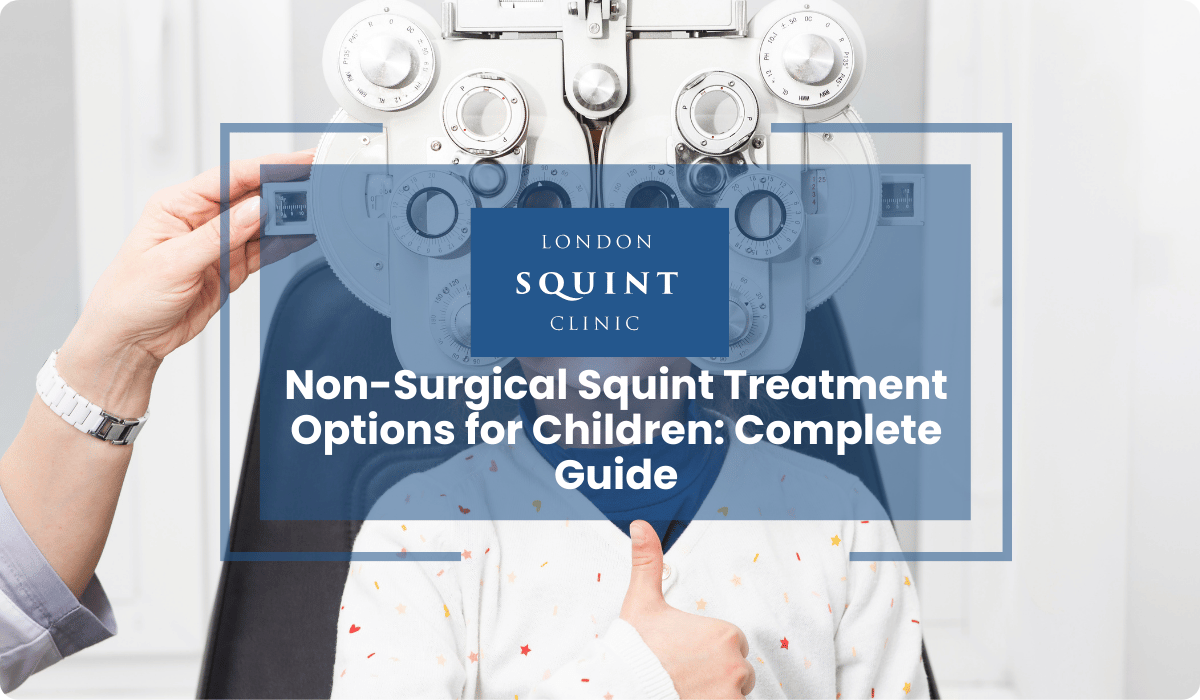
Non-Surgical Squint Treatment Options for Children
- Non-surgical squint treatment options offer a conservative approach to managing strabismus in children, aiming to improve eye alignment, strengthen eye muscles, and encourage binocular vision development without invasive procedures.
- Eye patching therapy, vision therapy exercises, prism glasses, orthoptic exercises, and amblyopia treatment are among the most common non-surgical interventions for childhood squint.
- A combination of non-surgical therapies may be recommended for optimal results, depending on the individual child’s needs, the type and severity of their squint, and their response to treatment.
- While non-surgical treatments can be effective for managing many cases of childhood squint, surgical intervention may be necessary for severe, constant misalignments or when conservative therapies do not provide adequate improvement.
Here is the blog post content with the specified requirements:
Table of Contents
- Understanding Non-Surgical Squint Treatment for Kids
- Eye Patching Therapy: How It Works and What to Expect
- Vision Therapy Exercises for Strabismus Management
- Prism Glasses: A Non-Invasive Approach to Squint Correction
- Orthoptic Exercises: Strengthening Eye Muscles and Coordination
- Amblyopia Treatment: Improving Vision in the Weaker Eye
- Combining Non-Surgical Squint Therapies for Optimal Results
- When Is Surgery Necessary for Childhood Strabismus?
Understanding Non-Surgical Squint Treatment for Kids
Non-surgical squint treatment options offer a conservative approach to managing strabismus in children. These therapies aim to improve eye alignment, strengthen eye muscles, and encourage binocular vision development without the need for invasive procedures. While not all cases of childhood squint can be fully corrected through non-surgical means, these treatments often play a crucial role in the overall management plan, either as a standalone approach or in combination with surgical interventions. Understanding the various non-surgical options available can help parents make informed decisions about their child’s strabismus treatment journey.
Eye Patching Therapy: How It Works and What to Expect
Eye patching therapy, also known as occlusion therapy, is a common non-surgical treatment for amblyopia (lazy eye) associated with squint. By covering the stronger eye with a patch, the weaker eye is forced to work harder, stimulating visual development and strengthening the eye-brain connection. Patching durations vary based on the child’s age and the severity of amblyopia, ranging from a few hours per day to full-time wear. While some children adapt quickly to wearing a patch, others may experience initial resistance or self-consciousness. Consistent encouragement, positive reinforcement, and incorporating patching into daily routines can help improve compliance and treatment outcomes.
Vision Therapy Exercises for Strabismus Management
Vision therapy exercises are designed to improve eye coordination, binocular vision, and visual processing skills in children with strabismus. These exercises, prescribed and monitored by a pediatric ophthalmologist or optometrist, target specific visual deficits and aim to retrain the eyes to work together effectively. Common vision therapy techniques for squint management include pencil push-ups, stereograms, and computerized vergence training. Regular practice and progression of exercises are essential for successful outcomes. Vision therapy can be particularly beneficial for conditions such as convergence insufficiency, divergence excess, and accommodative esotropia, where eye muscle control and coordination are the primary concerns.
Prism Glasses: A Non-Invasive Approach to Squint Correction
Prism glasses offer a non-invasive option for managing certain types of squint in children. These specialised lenses contain precisely positioned prisms that alter the light entering the eye, effectively shifting the image and compensating for misalignment. Prism glasses can be particularly useful for small-angle squints, intermittent exotropia, or as a temporary measure while awaiting surgery. The prism strength and placement are determined by a pediatric ophthalmologist based on the child’s specific needs. While prism glasses do not cure the underlying cause of squint, they can help alleviate symptoms such as double vision, eye strain, and abnormal head postures, improving overall visual function and quality of life.
Orthoptic Exercises: Strengthening Eye Muscles and Coordination
Orthoptic exercises are a type of vision therapy specifically designed to strengthen eye muscles, improve eye coordination, and promote binocular vision in children with squint. These exercises, often guided by an orthoptist or pediatric ophthalmologist, involve a series of eye movements and focusing tasks that gradually challenge and train the visual system. Common orthoptic exercises include barrel convergence, jump convergence, and fusion exercises using specialized equipment such as prisms, mirrors, and stereoscopes. Regular practice and progression are key to achieving optimal results. Orthoptic exercises can be particularly beneficial for children with intermittent squint, small-angle deviations, or as a complementary treatment alongside other non-surgical or surgical interventions.
Amblyopia Treatment: Improving Vision in the Weaker Eye
Amblyopia, or lazy eye, is a common condition associated with childhood squint where one eye has reduced vision due to abnormal visual development. Non-surgical treatment for amblyopia typically involves a combination of eye patching, atropine eye drops, and vision stimulation therapy to encourage the use of the weaker eye and improve its visual acuity. The treatment duration and intensity depend on the child’s age, the severity of amblyopia, and their response to therapy. Close monitoring by a pediatric ophthalmologist is essential to assess progress and adjust the treatment plan as needed. Early detection and intervention are crucial for the successful management of amblyopia, as the visual system is most responsive to treatment during the critical period of development in early childhood.
Combining Non-Surgical Squint Therapies for Optimal Results
In many cases, a combination of non-surgical squint therapies may be recommended for optimal results. For example, a child with strabismic amblyopia may benefit from a treatment plan that includes eye patching, vision therapy exercises, and prism glasses. The specific combination of therapies will depend on the individual child’s needs, the type and severity of their squint, and their response to treatment. A pediatric ophthalmologist or orthoptist will carefully assess the child’s condition and develop a personalised treatment plan that maximises the potential for improvement. Regular follow-up appointments are essential to monitor progress, adjust therapies as needed, and ensure the best possible outcomes for the child’s visual development and overall quality of life.
When Is Surgery Necessary for Childhood Strabismus?
While non-surgical treatments can be effective for managing many cases of childhood squint, there are situations where surgical intervention may be necessary. Strabismus surgery is typically recommended when the eye misalignment is severe, constant, or does not respond adequately to conservative therapies. Other indications for surgery may include the presence of amblyopia that is not improving with non-surgical treatment, significant cosmetic concerns, or the development of secondary issues such as abnormal head postures or binocular vision problems. The decision to proceed with surgery is made by a pediatric ophthalmologist in consultation with the child’s parents, taking into account the specific characteristics of the squint, the child’s age and overall health, and the potential benefits and risks of the procedure. In some cases, a combination of surgical and non-surgical treatments may be recommended for optimal results.
Frequently Asked Questions
What is the best age to start non-surgical squint treatment for children?
The best age to start non-surgical squint treatment for children is as early as possible, ideally before the age of 7. Early intervention is crucial because the visual system is most responsive to treatment during the critical period of development in early childhood. Starting therapy at a young age can help improve the chances of successful outcomes and prevent the development of amblyopia (lazy eye) and other vision problems associated with strabismus.
How long does non-surgical squint treatment typically last?
The duration of non-surgical squint treatment varies depending on the type and severity of the strabismus, the child’s age, and their response to therapy. Some children may require a few months of treatment, while others may need ongoing therapy for several years. Eye patching for amblyopia may last from a few weeks to several months, while vision therapy exercises and orthoptic treatment may be recommended for a longer period to achieve optimal results. Regular follow-up with a pediatric ophthalmologist is essential to monitor progress and adjust the treatment plan as needed.
Can non-surgical treatments cure squint completely?
Non-surgical treatments can significantly improve eye alignment and binocular vision in many cases of childhood squint, but they may not always result in a complete cure. The effectiveness of non-surgical therapies depends on factors such as the type and severity of the strabismus, the child’s age, and their adherence to the treatment plan. In some cases, a combination of non-surgical and surgical interventions may be necessary to achieve the best possible outcomes. However, even if a complete cure is not attained, non-surgical treatments can still provide meaningful improvements in visual function and quality of life for children with strabismus.
Are there any side effects of non-surgical squint treatments?
Non-surgical squint treatments are generally safe and well-tolerated, with minimal side effects. Eye patching may cause temporary skin irritation or allergic reactions in some children, which can usually be managed by using hypoallergenic adhesive or alternative patching methods. Vision therapy exercises and orthoptic treatment may cause some initial discomfort or eye strain, but these symptoms typically subside as the child’s visual system adapts to the therapy. Prism glasses may cause mild distortions or peripheral vision changes, but these effects are usually temporary and resolve with continued wear. Any persistent or concerning side effects should be promptly reported to the child’s eye care provider.
How often should children have follow-up appointments during non-surgical squint treatment?
The frequency of follow-up appointments during non-surgical squint treatment depends on the specific therapy and the child’s individual needs. In general, more frequent visits may be necessary during the initial stages of treatment to closely monitor the child’s response and make any necessary adjustments. For example, children undergoing eye patching for amblyopia may require weekly or biweekly follow-ups to assess visual acuity and ensure proper patch wear. As the child progresses with treatment, the interval between appointments may be extended to monthly or quarterly visits. Regular communication with the pediatric ophthalmologist or orthoptist is essential to ensure the treatment plan remains on track and to address any concerns or questions that may arise.
Related Posts
Find out if you are suitable for Double Vision Treatment
Find out if you could benefit from this life changing surgery by contacting us today
Our most popular procedures


Hello, I’m Nadeem Ali
I’m one of the few eye surgeons in the world with 100% focus on Squint and Double Vision Surgery.
I have 24 years of eye surgery experience, and worked for 13 years as a Consultant at London’s renowned Moorfields Eye Hospital.
In 2023, I left the NHS to focus fully on treating patients from across the world at the London Squint Clinic. You can read more about me here.
There’s lots of information on the website about: squint surgery, double vision surgery and our pricing.
The most rewarding part of my job is hearing patients tell me how squint or double vision surgery has changed their lives. You can hear these stories here.
Mr Nadeem Ali
MA MB BChir MRCOphth FRCSEd(Ophth)