
Mechanical Squint: Eye Socket Restrictions and Scarring

Why Choose Private Squint Surgery?
In the UK, squint surgery may be performed via the NHS, through insurance, or as self-pay. NHS treatment is free, but waiting times can be long and surgery is often performed by trainees under supervision. Many operations are carried out by surgeons who mainly specialise in children’s squint rather than adult complex cases.
With insurance, fees are standardised — meaning some leading specialists choose not to participate. Self-pay allows you to choose your surgeon directly and prioritise experience, specialisation, and access.
Many centres quote only a surgical fee. Hospital costs, anaesthetic fees and follow-ups are frequently additional. At London Squint Clinic, everything is included in one transparent package.
Our Complete Package – £10,000
- ✔ Advanced surgery by Mr Ali (one or both eyes)
- ✔ Adjustable sutures where clinically indicated
- ✔ Detailed orthoptic planning
- ✔ All hospital & anaesthetic fees included
- ✔ Post-operative medication
- ✔ Two video follow-ups
- ✔ Face-to-face review appointment
What Makes Us Different
- ✔ 100% focused on adult squint & double vision surgery
- ✔ >95% audited success rate
- ✔ Free re-treatment at 3 months if worse (extremely rare)
- ✔ 24/7 direct WhatsApp access to your surgeon during recovery
- ✔ Optional well-being session & pre-op reassurance call
Initial consultation: from £150
Surgery typically within 4 weeks. No referral required. Self-pay only.
- Mechanical squint is characterized by physical restrictions in the eye socket that prevent normal eye movement, unlike other forms of strabismus that involve neurological or muscle function issues.
- Orbital scarring creates adhesions and restrictive bands that impede the smooth gliding of extraocular muscles, causing direction-specific limitations in eye movement.
- Common causes include orbital trauma, thyroid eye disease, previous eye surgery, orbital inflammation, congenital anomalies, and space-occupying lesions.
- Diagnosis relies on forced duction testing, incomitant deviation patterns, and advanced imaging to differentiate mechanical squint from other strabismus types.
- Treatment options range from non-surgical approaches (prism therapy, orthoptic exercises) to surgical interventions (adhesiolysis, muscle recession, adjustable suture techniques).
- Surgical correction requires specialized techniques to release restrictive elements while rebalancing ocular forces, often necessitating a personalized, multidisciplinary approach.
Table of Contents
- Understanding Mechanical Squint: Causes and Symptoms
- How Orbital Scarring Restricts Normal Eye Movement
- Common Causes of Eye Socket Restrictions and Scarring
- Diagnosing Mechanical Squint vs. Other Strabismus Types
- What Causes Mechanical Diplopia in Affected Patients?
- Treatment Options for Mechanical Squint and Orbital Restrictions
- Surgical Approaches to Correct Eye Socket Scarring
- Living with Mechanical Squint: Management and Outlook
Understanding Mechanical Squint: Causes and Symptoms
Mechanical squint represents a distinct category of strabismus characterised by physical restrictions that prevent normal eye movement. Unlike other forms of squint that primarily involve neurological or muscle function issues, mechanical squint occurs when structural abnormalities within the eye socket (orbit) physically impede the eye’s ability to move freely.
The hallmark of mechanical squint is the presence of a physical barrier or restriction that limits ocular motility. This restriction typically manifests as an inability to move the eye in specific directions, creating an asymmetrical appearance and often resulting in double vision (diplopia). Patients frequently report a sensation of “pulling” or “tightness” when attempting to look in certain directions.
Common symptoms of mechanical squint include:
- Limited eye movement in one or more directions
- Double vision that worsens when looking in particular directions
- Abnormal head positioning to compensate for restricted eye movement
- Discomfort or pain when attempting to move the affected eye
- Visible misalignment of the eyes, particularly when looking in specific directions
Unlike concomitant strabismus where the angle of deviation remains constant in all directions of gaze, mechanical squint typically produces an incomitant deviation—meaning the degree of misalignment varies depending on which direction the patient is looking. This characteristic pattern helps specialists identify the mechanical nature of the condition during examination.
How Orbital Scarring Restricts Normal Eye Movement
Orbital scarring plays a central role in the development of mechanical squint by creating physical barriers that impede the normal gliding movements of the extraocular muscles. The orbit—a confined bony cavity housing the eye and its supporting structures—normally contains smooth fascial planes that allow the eye to rotate freely in all directions. When scarring occurs within this delicate environment, these smooth surfaces become adhered to one another, creating restrictive bands or adhesions.
The extraocular muscles responsible for eye movement must glide smoothly through the orbital tissues to function properly. Orbital scarring disrupts this mechanism in several ways:
- Muscle entrapment: Scar tissue can directly entrap extraocular muscles, physically tethering them to orbital walls or other structures
- Fascial adhesions: Scarring between fascial planes restricts the normal sliding movements necessary for full ocular rotation
- Orbital fibrosis: Widespread fibrotic changes can stiffen the entire orbital contents, limiting overall mobility
- Mechanical tethering: Scar bands can create a “leash effect,” allowing movement in one direction but restricting the opposite
The restrictive effect of orbital scarring is often most pronounced in positions of gaze that stretch the scarred tissues. For example, if scarring affects the inferior rectus muscle region, looking upward becomes particularly difficult as this movement places maximum tension on the restricted area. This pattern creates the characteristic direction-specific limitations that help distinguish mechanical squint from other forms of strabismus.
Over time, chronic orbital scarring can lead to secondary changes in the extraocular muscles themselves, including contracture of the antagonist muscles, further complicating the clinical picture and treatment approach.
Common Causes of Eye Socket Restrictions and Scarring
Eye socket restrictions and scarring that lead to mechanical squint can develop from various conditions affecting the orbital structures. Understanding these underlying causes is essential for proper diagnosis and treatment planning.
Trauma and Fractures: Orbital trauma, particularly blow-out fractures, represents one of the most common causes of mechanical squint. When orbital walls fracture, soft tissues can become entrapped within the fracture site, restricting eye movement. Even after fracture healing, residual scarring often persists, creating permanent tethering effects.
Thyroid Eye Disease: This autoimmune condition causes inflammation and fibrosis of the extraocular muscles and orbital tissues. The inflammatory phase eventually leads to fibrotic changes, particularly affecting the inferior and medial rectus muscles. The resulting restrictive strabismus typically limits upward and outward gaze.
Previous Orbital or Eye Surgery: Surgical interventions in and around the orbit can inadvertently create adhesions between tissues that normally slide past one another. Strabismus surgery itself, particularly repeated procedures, can lead to mechanical restrictions due to scarring around muscle insertion sites.
Orbital Inflammation: Conditions like orbital cellulitis, idiopathic orbital inflammatory syndrome (orbital pseudotumour), and sarcoidosis can trigger inflammatory responses that eventually lead to fibrosis and scarring within the orbit.
Congenital Anomalies: Some individuals are born with structural abnormalities that create mechanical restrictions, such as congenital fibrosis syndromes or craniosynostosis with shallow orbits.
Tumours and Space-Occupying Lesions: Both benign and malignant growths within the orbit can directly restrict eye movement by physical displacement or by triggering inflammatory responses that lead to secondary scarring.
The common thread among these diverse causes is their ability to disrupt the normal architecture of the orbit, creating physical barriers to the smooth, coordinated movements required for proper eye alignment. Identifying the specific cause is crucial for determining the most appropriate treatment approach for each patient with mechanical squint.
Diagnosing Mechanical Squint vs. Other Strabismus Types
Accurately diagnosing mechanical squint requires distinguishing it from other forms of strabismus through careful clinical assessment and specialised testing. The diagnostic process typically begins with a comprehensive history to identify potential causes of orbital scarring or restriction, followed by a detailed examination of ocular motility patterns.
Key diagnostic features that help identify mechanical squint include:
- Forced duction testing: This critical diagnostic procedure involves physically attempting to rotate the eye while the patient is under local anaesthesia. In mechanical squint, the examiner feels resistance when trying to move the eye in the direction of restriction—a finding not present in neurogenic or myogenic forms of strabismus.
- Incomitant deviation pattern: Mechanical restrictions typically cause greater misalignment in specific directions of gaze, particularly those that stretch the scarred tissues.
- Limited ductions: Observation reveals reduced ability to move the affected eye in specific directions, often with normal movement in the opposite direction.
- Imaging studies: CT or MRI scans can visualise orbital scarring, muscle entrapment, or structural abnormalities contributing to mechanical restrictions.
Differential diagnosis must consider other forms of strabismus, including:
- Paralytic strabismus: Caused by cranial nerve palsies, this form shows limited movement but without the physical resistance found on forced duction testing.
- Concomitant strabismus: Shows equal deviation in all directions of gaze, unlike the direction-specific limitations of mechanical squint.
- Myogenic strabismus: Primary muscle disorders may limit movement but typically lack the tethering effect seen in mechanical restrictions.
At London Squint Clinic, our specialists employ advanced diagnostic techniques including high-resolution orbital imaging and precise measurements of ocular motility to differentiate mechanical squint from other forms of strabismus. This detailed assessment forms the foundation for developing targeted treatment plans that address the specific restrictive elements causing the condition. Our comprehensive evaluation process ensures that each patient receives a precise diagnosis, which is essential for effective management of mechanical squint.
What Causes Mechanical Diplopia in Affected Patients?
Mechanical diplopia—double vision resulting from mechanical squint—occurs through a distinct physiological mechanism directly related to orbital restrictions and scarring. Understanding this process helps explain why diplopia manifests in specific ways in patients with mechanical strabismus.
The fundamental cause of mechanical diplopia is the physical inability of the affected eye to achieve proper alignment with its fellow eye due to restrictive forces. When both eyes cannot align on the same visual target, the brain receives two different images that cannot be fused, resulting in diplopia. Several specific mechanisms contribute to this phenomenon:
- Direction-specific restrictions: Mechanical diplopia typically worsens when looking in the direction of greatest restriction. For example, a patient with inferior rectus muscle entrapment will experience more severe double vision when attempting to look upward.
- Incomitant deviation: The varying angle of misalignment in different gaze positions makes it particularly challenging for the brain to adapt to the diplopia, unlike some concomitant deviations where adaptation may occur over time.
- Secondary muscle changes: Long-standing mechanical restrictions often lead to contracture of the antagonist muscles, further exacerbating misalignment and diplopia.
- Torsional components: Orbital scarring frequently creates complex three-dimensional misalignments including torsional (rotational) components, which produce particularly disorienting forms of diplopia that are difficult to compensate for.
The pattern of diplopia provides valuable diagnostic clues about the location and nature of the mechanical restriction. For instance, horizontal diplopia that worsens in side gaze suggests medial or lateral rectus involvement, while vertical separation of images indicates restrictions affecting the vertical rectus or oblique muscles.
Importantly, mechanical diplopia often has a sudden onset following trauma or surgery, or may develop gradually in conditions like thyroid eye disease. The progressive nature of the underlying scarring process means that diplopia may worsen over time without appropriate intervention, highlighting the importance of timely assessment and treatment for affected patients.
Treatment Options for Mechanical Squint and Orbital Restrictions
Managing mechanical squint requires a tailored approach that addresses the specific restrictive elements causing the condition. Treatment options range from conservative measures to surgical interventions, with the choice depending on the severity, cause, and duration of the orbital restrictions.
Non-surgical Management:
- Prism therapy: Specially designed prismatic lenses can help compensate for misalignment by redirecting light, potentially alleviating diplopia in mild cases or when surgery is contraindicated.
- Orthoptic exercises: While less effective for purely mechanical restrictions than for other forms of strabismus, specific eye exercises may help maintain muscle function and prevent secondary contractures.
- Occlusion therapy: Temporarily blocking vision in one eye using patches or filters can provide symptomatic relief from diplopia while awaiting definitive treatment.
- Anti-inflammatory treatments: In cases where active inflammation contributes to restriction (as in thyroid eye disease), corticosteroids or immunomodulatory therapy may help prevent progression of scarring.
Minimally Invasive Approaches:
- Botulinum toxin injections: While not addressing the primary restriction, targeted injections into antagonist muscles can temporarily reduce the pulling force against restricted muscles, potentially improving alignment in selected cases.
- Steroid injections: Direct injection of corticosteroids into areas of active scarring may help reduce fibrosis in early stages of restrictive disease.
Surgical Interventions:
- Adhesiolysis: Surgical release of restrictive bands and adhesions to restore normal tissue planes and muscle movement.
- Muscle recession: Repositioning the antagonist muscles to balance forces against restricted muscles.
- Adjustable suture techniques: Allowing fine-tuning of muscle position post-operatively to achieve optimal alignment.
- Orbital decompression: In cases of thyroid eye disease with significant proptosis and restriction, creating more space within the orbit can improve eye movement.
The treatment approach must be individualised based on comprehensive assessment of the specific mechanical restrictions present. At London Squint Clinic, we develop personalised treatment plans that consider both functional and aesthetic outcomes, with the goal of maximising ocular alignment and minimising diplopia while addressing the underlying restrictive pathology.
Surgical Approaches to Correct Eye Socket Scarring
Surgical correction of eye socket scarring represents the definitive treatment for many cases of mechanical squint. These specialised procedures aim to release restrictive elements while rebalancing the forces acting on the globe to restore normal alignment and movement. Several sophisticated surgical techniques have been developed to address the complex three-dimensional restrictions that characterise mechanical strabismus.
Scar Tissue Release and Adhesiolysis: The cornerstone of surgical management involves meticulous dissection and release of restrictive bands and adhesions. This delicate procedure requires careful identification of scarred tissues while preserving normal anatomical structures. In cases of muscle entrapment (as in orbital fractures), the entrapped tissue must be gently freed from bone or other structures to restore mobility.
Muscle Recession with Adjustable Sutures: When mechanical restrictions have led to secondary muscle contractures, the affected muscles often require recession (repositioning) to rebalance ocular forces. Adjustable suture techniques allow fine-tuning of muscle position in the early post-operative period, which is particularly valuable in mechanical cases where outcomes can be less predictable than in other forms of strabismus.
Spacer Grafts and Barriers: In cases with extensive scarring or recurrent adhesions, surgeons may place biological or synthetic spacer materials between tissues to prevent re-adhesion. These may include autologous tissue grafts, amniotic membrane, or specialised implants designed to maintain separation between previously scarred surfaces.
Combined Orbital Reconstruction: When mechanical squint results from orbital wall fractures or deformities, comprehensive correction may require orbital wall reconstruction in conjunction with strabismus surgery. This integrated approach addresses both the bony architecture and soft tissue restrictions simultaneously.
Staged Surgical Approach: Complex cases often benefit from a planned, multi-stage surgical approach. The initial procedure focuses on releasing the primary restrictions, while subsequent surgeries address residual misalignment once tissues have healed and the full effect of the primary intervention can be assessed.
Surgical management of mechanical squ
Frequently Asked Questions
What is mechanical squint and how does it differ from other types of strabismus?
Mechanical squint is a form of strabismus caused by physical restrictions in the eye socket that prevent normal eye movement. Unlike other types of strabismus that involve neurological or muscle function issues, mechanical squint is characterized by structural abnormalities or scarring that physically impede eye movement. The key difference is that mechanical squint shows varying degrees of misalignment depending on gaze direction (incomitant deviation) and demonstrates physical resistance when the eye is manually moved during examination.
What are the most common causes of mechanical squint?
The most common causes of mechanical squint include orbital trauma and fractures (especially blow-out fractures), thyroid eye disease, previous orbital or eye surgery, orbital inflammation (such as orbital cellulitis or pseudotumor), congenital anomalies, and tumors or space-occupying lesions in the orbit. These conditions create scarring or physical barriers that restrict normal eye movement, leading to misalignment and often double vision.
How is mechanical squint diagnosed?
Diagnosing mechanical squint involves several key assessments: comprehensive history taking, examination of ocular motility patterns, forced duction testing (which reveals physical resistance to eye movement), measurement of deviation in different gaze positions, and imaging studies such as CT or MRI scans to visualize orbital structures. The hallmark diagnostic feature is the presence of physical resistance during forced duction testing, which distinguishes mechanical squint from neurological or muscular causes of strabismus.
Can mechanical squint be treated without surgery?
While surgery is often necessary for definitive treatment of mechanical squint, several non-surgical options can help manage symptoms: prism therapy can redirect light to compensate for misalignment, orthoptic exercises may help maintain muscle function, occlusion therapy can provide temporary relief from double vision, and anti-inflammatory treatments may help in cases with active inflammation. However, these approaches typically don’t address the underlying restrictive scarring and may be more suitable as temporary measures or for mild cases.
What surgical techniques are used to treat mechanical squint?
Surgical treatment of mechanical squint may include: adhesiolysis (releasing restrictive bands and scar tissue), muscle recession with adjustable sutures to rebalance forces acting on the eye, placement of spacer grafts to prevent re-adhesion of tissues, orbital decompression (particularly in thyroid eye disease), and sometimes combined orbital reconstruction when structural abnormalities are present. Complex cases often require a staged surgical approach with multiple procedures to achieve optimal results.
What is the recovery process like after surgery for mechanical squint?
Recovery after mechanical squint surgery typically involves an initial healing period of 1-2 weeks with restricted activity, followed by gradual improvement over several months. Patients may experience temporary worsening of double vision immediately after surgery before improvement occurs. Follow-up appointments are essential to monitor alignment and may include adjustments if adjustable sutures were used. Complete recovery and stabilization of eye position can take 3-6 months, with some patients requiring vision therapy to help adapt to their new alignment.
What is the long-term outlook for patients with mechanical squint?
The long-term outlook for mechanical squint varies depending on the underlying cause, severity of scarring, and timing of treatment. Many patients experience significant improvement in alignment and reduction of double vision following appropriate surgical intervention. However, some degree of residual restriction may persist in severe cases. The best outcomes typically occur when treatment is initiated before secondary muscle changes develop. Regular follow-up is important as recurrent scarring can occur in some cases, potentially requiring additional interventions.
Related Posts

Find out if you are suitable for Double Vision Treatment
Find out if you could benefit from this life changing surgery by contacting us today
Our most popular procedures

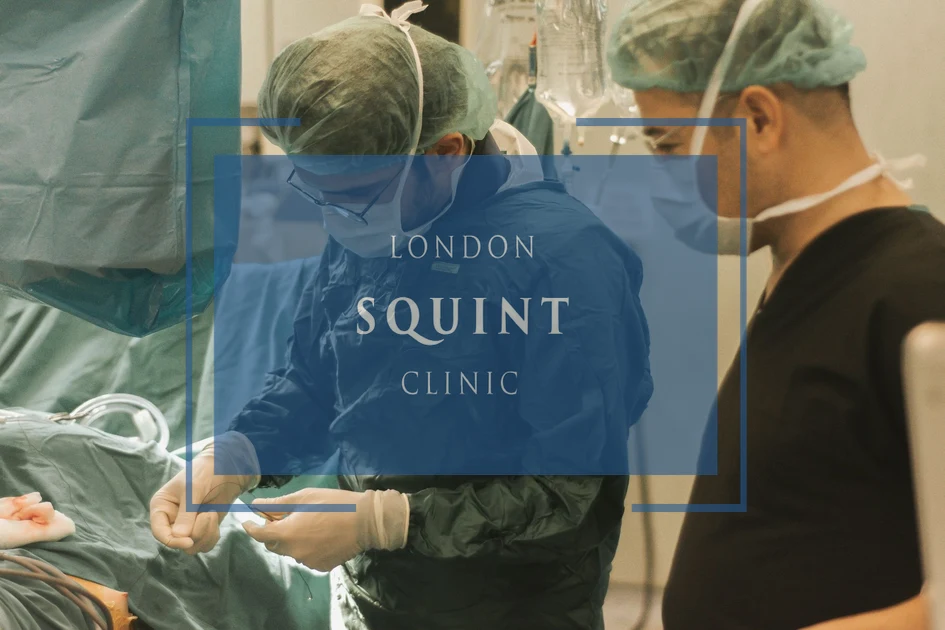



Hello, I’m Nadeem Ali
I’m one of the few eye surgeons in the world with 100% focus on Squint and Double Vision Surgery.
I have 24 years of eye surgery experience, and worked for 13 years as a Consultant at London’s renowned Moorfields Eye Hospital.
In 2023, I left the NHS to focus fully on treating patients from across the world at the London Squint Clinic. You can read more about me here.
There’s lots of information on the website about: squint surgery, double vision surgery and our pricing.
The most rewarding part of my job is hearing patients tell me how squint or double vision surgery has changed their lives. You can hear these stories here.
Mr Nadeem Ali
MA MB BChir MRCOphth FRCSEd(Ophth)