
Risks and Side Effects Associated with Anaesthesia in Eye Muscle Surgery

Why Choose Private Squint Surgery?
In the UK, squint surgery may be performed through the NHS, through insurance or as self-pay. NHS treatment is free, but waiting times can be long.
Self-pay allows you to choose your surgeon directly and prioritise experience, specialisation and access.
London Squint Clinic offers two fixed-price surgical packages. Our pricing page lists exactly what each one includes.
Our Packages: Complete Care £9,750 · Signature Care £12,000
- ✔ Surgery by Mr Ali, one or both eyes as clinically required
- ✔ Adjustable sutures when clinically indicated
- ✔ Detailed pre-operative measurements & surgical planning
- ✔ Anaesthetist fees
- ✔ Post-operative eye drops
- ✔ 2 scheduled video follow-ups
- ✔ Face-to-face review if clinically required
Signature Care Also Includes
- ✔ Direct 24/7 WhatsApp access to Mr Ali during recovery
- ✔ Pre-op reassurance call with anaesthetist if desired
- ✔ Additional face-to-face review if desired
- ✔ Ongoing eye advice from Mr Ali after discharge
Initial consultation: £150 (video or in person)
Surgery can usually be offered within 4 weeks. No referral required. Self-pay only.
Anaesthesia Risks Eye Muscle Surgery: Managing Side Effects
Understanding the anaesthesia risks eye muscle surgery entails is a key part of patient preparation. For most adults, general anaesthesia for strabismus correction is low risk. This guide explains common side effects, such as post-operative nausea and vomiting (PONV), and the specific techniques used to manage them. It also covers the importance of the anaesthetist consultation for assessing individual health and mitigating rare complications like the oculocardiac reflex. Modern anaesthetic care ensures patient safety and comfort, allowing for precise surgical outcomes and a smoother recovery period after your procedure.
At London Squint Clinic, the anaesthetic protocol is specifically tailored for adult strabismus surgery. Care is delivered by a consultant anaesthetist working alongside your surgeon, Mr Nadeem Ali, to ensure a safe and well-managed experience from start to finish, with a focus on minimising common side effects.
To explore your options, contact us to schedule your consultation. You can also reach us via: Enquire about squint surgery, Squint Surgery in London
Understanding Anaesthesia Risks in Eye Muscle Surgery
Adults undergoing squint correction often have concerns about ophthalmic anaesthesia. The primary anaesthesia risks eye muscle surgery patients ask about relate to side effects like nausea and the safety of general anaesthesia. Modern anaesthesia, managed by a specialist team, has an excellent safety profile.
The approach to anaesthesia for adult squint surgery ensures you are comfortable, still, and safe, allowing your surgeon to perform precise adjustments to the eye muscles. Understanding potential side effects and preventative measures helps you prepare for surgery.
What is the most common side effect of anaesthesia for eye muscle surgery?
The most common side effect is post-operative nausea and vomiting (PONV). Eye muscle surgery has a higher incidence of PONV than some other procedures. Specialist anaesthetists anticipate this and use a multi-modal approach, administering anti-sickness medications before, during, and after surgery to significantly minimise its occurrence.
Is anaesthesia for squint surgery high risk?
For most healthy adults, general anaesthesia for squint surgery is low risk. The procedure is external to the eyeball and relatively brief. In a dedicated surgical setting with an experienced consultant surgeon and anaesthetist, risks are meticulously managed.
Common Side Effects of General Anaesthesia for Ophthalmic Procedures
Any general anaesthetic can have temporary side effects, which are usually mild and resolve within a day or two. Your care team prevents and manages these effects for a smooth recovery.
Post-Operative Nausea and Vomiting (PONV) Management
PONV is a known side effect, particularly after strabismus surgery. Your anaesthetist will assess your individual risk based on factors like a previous history of PONV or motion sickness. They then proactively administer a combination of anti-emetic (anti-sickness) medications, such as 5-HT3 antagonists (e.g., ondansetron) and steroids (e.g., dexamethasone), to prevent symptoms.
Other Transient Side Effects to Expect
A sore throat is common, caused by the laryngeal mask airway (LMA), a soft tube placed in the back of the throat to help you breathe. It is less invasive than a traditional breathing tube, and the soreness typically fades within 24-48 hours. Other common effects include mild dizziness, drowsiness, and muscle aches, which clear as the anaesthetic agents leave your system.
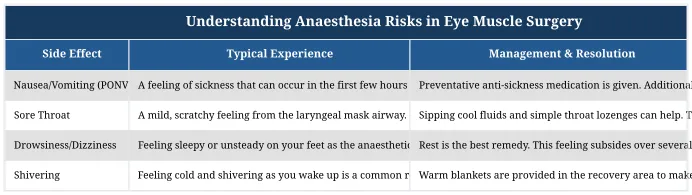
View data as table
| Side Effect | Typical Experience | Management & Resolution |
|---|---|---|
| Nausea/Vomiting (PONV) | A feeling of sickness that can occur in the first few hours after waking. | Preventative anti-sickness medication is given. Additional doses can be administered if needed. Usually resolves within 24 hours. |
| Sore Throat | A mild, scratchy feeling from the laryngeal mask airway. | Sipping cool fluids and simple throat lozenges can help. Typically resolves within 1-2 days. |
| Drowsiness/Dizziness | Feeling sleepy or unsteady on your feet as the anaesthetic wears off. | Rest is the best remedy. This feeling subsides over several hours. You will need an escort home. |
| Shivering | Feeling cold and shivering as you wake up is a common response. | Warm blankets are provided in the recovery area to make you comfortable. This passes quickly. |
Specific Risks and Rare Complications in Eye Muscle Surgery
Beyond general side effects, ophthalmic procedures have specific, rare risks. An expert team prepares for and manages these potential strabismus surgery complications. The anaesthesia risks in eye muscle surgery are kept low by diligent monitoring and proactive management.
Understanding the Oculocardiac Reflex
The oculocardiac reflex is an involuntary response causing a temporary slowing of the heart rate from pressure on the eyeball or traction on the eye muscles. Anaesthetists are trained to anticipate this physiological event (mediated by the trigeminal-vagal nerve pathway). They monitor your heart rate continuously and can administer medication to correct it if the reflex occurs. It is a manageable event, not a lasting complication.
Minimizing Aspiration Risk and Allergic Reactions
Aspiration (stomach contents entering the lungs) is a risk with any general anaesthetic, which is why fasting before surgery is required. Following these instructions is critical for safety. Allergic reactions (anaphylaxis) to anaesthetic drugs are extremely rare. Anaesthetists are trained per guidelines from bodies like the Royal College of Anaesthetists to recognise and treat such emergencies immediately. The operating theatre is equipped with all necessary life-support equipment and medications.
Your Pre-Operative Anaesthetist Consultation: A Key to Safety
A thorough pre-operative anaesthetist consultation is key to a safe surgical experience. This detailed assessment allows for a bespoke anaesthetic plan tailored to you, and is a key part of the comprehensive treatment process for adult squint surgery.
Why Your Medical History and Medications Matter
Full disclosure of your medical history is vital. Pre-existing conditions affecting your heart, lungs (like asthma), or other systems require careful consideration. You must list all medications, including over-the-counter drugs, vitamins, and herbal supplements, as some can interact with anaesthetic agents. This information allows the anaesthetist to choose the safest drugs and techniques.
Personalized Anaesthetic Planning for Adult Squint Surgery
Based on your consultation, the anaesthetist creates a personalised plan. This includes selecting anaesthetic agents, planning pain management, and implementing a strategy to minimise side effects like PONV. This tailored approach considers your medical history and the expected duration of the surgery, and is fundamental to patient safety.
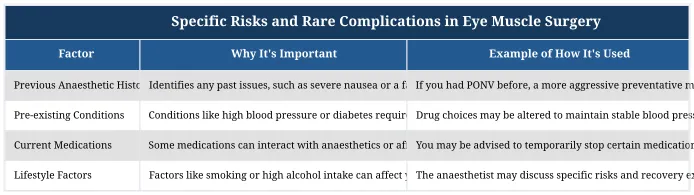
View data as table
| Factor | Why It’s Important | Example of How It’s Used |
|---|---|---|
| Previous Anaesthetic History | Identifies any past issues, such as severe nausea or a family history of reactions. | If you had PONV before, a more aggressive preventative medication strategy will be used. |
| Pre-existing Conditions | Conditions like high blood pressure or diabetes require specific management during surgery. | Drug choices may be altered to maintain stable blood pressure or blood sugar levels. |
| Current Medications | Some medications can interact with anaesthetics or affect blood clotting. | You may be advised to temporarily stop certain medications (e.g., some blood thinners) before surgery. |
| Lifestyle Factors | Factors like smoking or high alcohol intake can affect your response to anaesthesia and recovery. | The anaesthetist may discuss specific risks and recovery expectations related to these factors. |
Ensuring Patient Safety: The London Squint Clinic Approach
At the London Squint Clinic, patient safety is the highest priority. Our consultant-led model means every aspect of your care, including anaesthesia, is managed by experienced specialists. This integrates surgical and anaesthetic expertise for the best outcome.
The Role of Specialist Consultant Anaesthetists
We work exclusively with consultant anaesthetists experienced in ophthalmic surgery. Their understanding of eye muscle procedure requirements, including managing the oculocardiac reflex and minimising PONV, contributes to a safer, more comfortable patient experience. Their expertise is crucial for managing adults, who may have more complex medical histories.
Advanced Monitoring and Post-Operative Care
During surgery, you are monitored continuously with equipment that tracks your heart rate, blood pressure, oxygen levels, and breathing. This continues in the recovery room, where specialist nurses care for you as you wake up. This structured approach ensures potential issues are identified and managed promptly for a smooth recovery.
Experience Specialist Care for Your Adult Squint Surgery
While any medical procedure has risks, the anaesthesia risks in eye muscle surgery are managed effectively through specialist expertise, personalised planning, and meticulous care. Choosing a clinic where both the surgeon and anaesthetist are experienced in adult strabismus correction is the most important step towards ensuring your safety and comfort. Discuss any concerns openly during your consultation.
To learn more about our consultant-led approach to adult squint surgery, please contact us.
Enquire about squint surgery or find out more about Squint Surgery in London.
Frequently Asked Questions
What is the most common side effect of anaesthesia for eye muscle surgery?
The most common side effect is post-operative nausea and vomiting (PONV). Eye muscle surgery has a higher incidence of PONV compared to some other procedures, with reported rates ranging from 30-80% in some studies if not proactively managed. Our specialist consultant anaesthetists use modern techniques and anti-sickness medications, such as 5-HT3 antagonists and dexamethasone, to significantly reduce this risk for our patients.
Are the anaesthesia risks for eye muscle surgery significant for healthy adults?
For healthy individuals, the risks associated with modern general anaesthesia are very low, with serious complications being exceptionally rare. A thorough pre-operative assessment by a consultant anaesthetist is conducted to identify and manage any individual risk factors, ensuring a very safe procedure. This comprehensive evaluation helps mitigate potential anaesthesia risks eye muscle surgery might present.
How is the oculocardiac reflex managed during squint surgery?
The oculocardiac reflex, a rare complication that can slow the heart rate when eye muscles are handled, is a vagally mediated reflex involving the trigeminal nerve. Our experienced anaesthetists are highly skilled at preventing and immediately managing this by ensuring adequate anaesthesia depth, and if necessary, administering intravenous anticholinergics like atropine. Continuous electrocardiographic monitoring is essential for prompt recognition and intervention.
How long does it typically take to recover from the effects of general anaesthesia after eye muscle surgery?
Most patients are awake in the recovery room immediately after surgery but may feel groggy for a few hours. While the body takes up to a week to completely eliminate anaesthetic medicines, most people notice minimal effects after about 24 hours. It is crucial to refrain from driving or making important decisions for at least 24 hours post-surgery.
What pre-operative steps can I take to reduce anaesthesia risks before eye muscle surgery?
To reduce anaesthesia risks, it is essential to follow fasting guidelines, typically avoiding solid food for at least six hours and clear fluids for two hours before induction of anaesthesia. You should also disclose your complete medical history and all medications to your anaesthetist during your pre-operative consultation. Avoiding alcohol for 24 hours prior to surgery is also recommended.
Will I experience a sore throat after general anaesthesia for eye muscle surgery?
A sore throat can sometimes occur due to the breathing tube or laryngeal mask airway (LMA) used during general anaesthesia, with reported incidences for LMA ranging from 5.8% to 34%. This discomfort is usually mild and typically resolves within a day or two. We use specific devices like laryngeal mask airways whenever possible and manage cuff pressures to minimise this discomfort.
Related Posts
Find out if you are suitable for Double Vision Treatment
Find out if you could benefit from this life changing surgery by contacting us today
Our most popular procedures


Hello, I’m Nadeem Ali
I’m one of the few eye surgeons in the world with 100% focus on Squint and Double Vision Surgery.
I have 24 years of eye surgery experience, and worked for 13 years as a Consultant at London’s renowned Moorfields Eye Hospital.
In 2023, I left the NHS to focus fully on treating patients from across the world at the London Squint Clinic. You can read more about me here.
There’s lots of information on the website about: squint surgery, double vision surgery and our pricing.
The most rewarding part of my job is hearing patients tell me how squint or double vision surgery has changed their lives. You can hear these stories here.
Mr Nadeem Ali
MA MB BChir MRCOphth FRCSEd(Ophth)