
Recovery After Diplopia Surgery: A Week-by-Week Timeline
Why Choose Private Squint Surgery?
In the UK, squint surgery may be performed via the NHS, through insurance, or as self-pay. NHS treatment is free, but waiting times can be long and surgery is often performed by trainees under supervision. Many operations are carried out by surgeons who mainly specialise in children’s squint rather than adult complex cases.
With insurance, fees are standardised — meaning some leading specialists choose not to participate. Self-pay allows you to choose your surgeon directly and prioritise experience, specialisation, and access.
Many centres quote only a surgical fee. Hospital costs, anaesthetic fees and follow-ups are frequently additional. At London Squint Clinic, everything is included in one transparent package.
Our Complete Package – £10,000
- ✔ Advanced surgery by Mr Ali (one or both eyes)
- ✔ Adjustable sutures where clinically indicated
- ✔ Detailed orthoptic planning
- ✔ All hospital & anaesthetic fees included
- ✔ Post-operative medication
- ✔ Two video follow-ups
- ✔ Face-to-face review appointment
What Makes Us Different
- ✔ 100% focused on adult squint & double vision surgery
- ✔ >95% audited success rate
- ✔ Free re-treatment at 3 months if worse (extremely rare)
- ✔ 24/7 direct WhatsApp access to your surgeon during recovery
- ✔ Optional well-being session & pre-op reassurance call
Initial consultation: from £150
Surgery typically within 4 weeks. No referral required. Self-pay only.
Diplopia Surgery Recovery Timeline: Healing and Adaptation
The diplopia surgery recovery timeline involves two distinct processes: the physical healing of the eye and the brain’s neurological adaptation to the new alignment. This guide details key stages, from managing initial eye redness and a gritty sensation in week one to the gradual visual stabilization that occurs over the first month. Understanding this dual process of eye muscle surgery healing and visual adaptation helps set clear expectations for a return to comfortable, single vision. The recovery timeline addresses common symptoms and activity restrictions week by week.
At London Squint Clinic, Mr Nadeem Ali focuses exclusively on adult squint and double vision surgery. This specialized expertise provides a deep understanding of the post-operative care and visual adjustment period specific to adults undergoing corrective procedures for diplopia.
To explore your options, contact us to schedule your consultation. You can also reach us via: Enquire about double vision surgery, Time to say goodbye to double vision
Understanding Your Diplopia Surgery Recovery Timeline
Recovery from surgery to correct double vision is a two-part process: the physical healing of the eye and the neurological adaptation of the brain. While the eye heals relatively quickly, your brain requires more time to adjust to the new alignment of your eyes. Understanding this dual timeline helps manage expectations. For a comprehensive overview, see Your Complete Guide to Recovery.
The initial phase of the diplopia surgery recovery timeline focuses on managing comfort and allowing the eye muscles to heal. Most patients experience a significant improvement in their double vision almost immediately, but achieving stable, single vision is gradual and unfolds over several weeks.
What to Expect in the First Week After Double Vision Surgery
The first seven days are when the most noticeable physical healing occurs. Your eye will likely appear red, similar to a severe case of conjunctivitis. This redness is caused by bruising on the white of the eye where the muscles were repositioned.
You may also experience a gritty sensation, as if there is sand in your eye, from the dissolvable stitches. Mild discomfort or an aching feeling is common and typically managed with over-the-counter painkillers. Your surgeon will provide lubricating and antibiotic eye drops to aid comfort and prevent infection. While your vision may fluctuate, the disabling double vision is often resolved from day one.
The Initial Healing Phase: Weeks 1-4 Post-Surgery
During the first month, the focus shifts to healing and gradually resuming daily life. The initial redness and swelling will subside, and your eye will feel more comfortable. Following your surgical aftercare instructions is essential for optimal strabismus surgery healing.
Managing Discomfort and Post-Operative Eye Care
Consistent use of your prescribed eye drops is essential. These typically include an antibiotic to prevent infection and a steroid to reduce inflammation. Lubricating drops can be used as needed to alleviate the gritty sensation from dissolving stitches. For more detail, our day-by-day guide to healing provides additional information.
To protect your eye, sleep on your back or on the side opposite the operated eye for the first one to two weeks. Avoid rubbing your eye, as this can dislodge stitches or irritate healing tissues. Painkillers like paracetamol or ibuprofen are usually sufficient to manage residual aching.
Activity Restrictions and When to Resume Normal Life
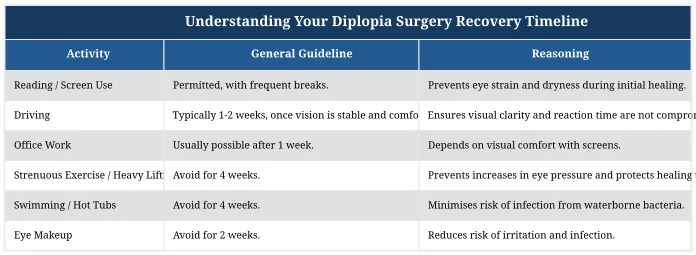
Your return to normal activities should be gradual. While light activities like watching television are fine, take frequent breaks to avoid eye strain. Most patients can return to office-based work and driving within one to two weeks, depending on individual comfort and visual stability. Strenuous exercise, swimming, and contact sports should be avoided for at least a month to prevent injury and infection. The table below provides a general guide.
View data as table
| Activity | General Guideline | Reasoning |
|---|---|---|
| Reading / Screen Use | Permitted, with frequent breaks. | Prevents eye strain and dryness during initial healing. |
| Driving | Typically 1-2 weeks, once vision is stable and comfortable. | Ensures visual clarity and reaction time are not compromised. |
| Office Work | Usually possible after 1 week. | Depends on visual comfort with screens. |
| Strenuous Exercise / Heavy Lifting | Avoid for 4 weeks. | Prevents increases in eye pressure and protects healing tissues. |
| Swimming / Hot Tubs | Avoid for 4 weeks. | Minimises risk of infection from waterborne bacteria. |
| Eye Makeup | Avoid for 2 weeks. | Reduces risk of irritation and infection. |
Visual Adaptation and Stabilization: Month 1 Onwards
Beyond physical healing, the most critical part of eye muscle surgery recovery is visual adaptation. The surgery realigns your eyes, but your brain must learn to interpret the new visual information. This process is not instantaneous. It is a period of neuroplasticity, where your brain forges new connections to process a single, clear image.
Navigating Fluctuating Vision and Brain Adaptation
It is common for your vision to feel “unsettled” or to fluctuate during the first few months. You might notice your depth perception feels different or your eyes feel tired at the end of the day. This is your brain fusing the images from both eyes into one. Some patients experience moments of mild, fleeting double vision, particularly when tired or looking to the extreme edges of their gaze. This typically resolves as the brain adjusts.
This visual adaptation is a form of neuroplasticity, a concept documented by institutions like the National Eye Institute.
When Will My Vision Be Normal After Diplopia Surgery?
While the surgical correction of eye alignment is immediate, the final, stable visual result can take several months. Most adaptation occurs within the first three months, during which the clarity and stability of your single vision will gradually improve. The final outcome is assessed at the three-month post-operative check-up, by which point most healing and adaptation has taken place. The diplopia surgery recovery timeline is unique to each individual, influenced by factors like surgery complexity and the duration of double vision before the procedure.
Common Recovery Symptoms & When to Contact Your Specialist
Most post-operative symptoms are mild and transient. It is important to recognise signs that may indicate a complication requiring attention from your surgical team. The following guide helps distinguish between normal healing and potential concerns.
Expected vs. Concerning Symptoms: A Quick Guide
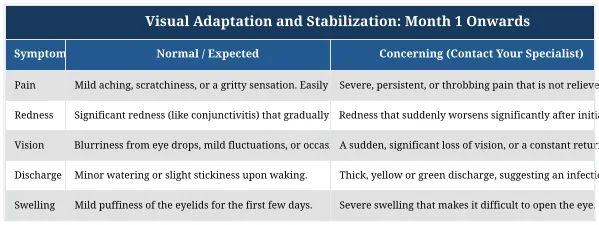
The table below outlines common symptoms. While mild discomfort is expected, severe pain is not. You can learn more in our article discussing pain after adult squint surgery.
View data as table
| Symptom | Normal / Expected | Concerning (Contact Your Specialist) |
|---|---|---|
| Pain | Mild aching, scratchiness, or a gritty sensation. Easily managed with simple painkillers. | Severe, persistent, or throbbing pain that is not relieved by standard painkillers. |
| Redness | Significant redness (like conjunctivitis) that gradually fades over several weeks. | Redness that suddenly worsens significantly after initial improvement. |
| Vision | Blurriness from eye drops, mild fluctuations, or occasional fleeting double vision. | A sudden, significant loss of vision, or a constant return of double vision that is worse than before surgery. |
| Discharge | Minor watering or slight stickiness upon waking. | Thick, yellow or green discharge, suggesting an infection. |
| Swelling | Mild puffiness of the eyelids for the first few days. | Severe swelling that makes it difficult to open the eye. |
Expert Guidance for a Smooth Diplopia Surgery Recovery
The quality of surgical aftercare is as important as the surgery itself. A specialist-led approach ensures your recovery is monitored by your surgeon, who best understands your case. This continuity of care is fundamental to the long-term outcome.
The London Squint Clinic Difference in Post-Operative Care
At London Squint Clinic, care is led by Mr Nadeem Ali, a consultant with over two decades of experience, including 13 years at Moorfields Eye Hospital. This model ensures every stage is overseen by a specialist with expertise in adult diplopia. Patients have direct 24/7 WhatsApp access to Mr Ali during recovery for any concerns.
The clinic’s re-operation policy provides a safety net. To learn more about adult double vision surgery and our patient-focused approach, explore our services.
Long-Term Outlook and Maintaining Your New Vision
For most adults undergoing surgery for diplopia, the results are stable and long-lasting, providing a permanent solution. Follow-up appointments are crucial for monitoring the final alignment and ensuring the visual system has adapted correctly. These appointments, typically at one week and three months post-surgery, confirm the procedure’s success.
Maintaining general eye health is also important. Regular eye examinations monitor the overall health of your eyes. For general guidance, resources such as The Royal College of Ophthalmologists provide public information. The goal of surgery is to restore clear, single, comfortable vision, enabling a return to activities like driving, reading, and working without limitation.
Ready to Explore Life-Changing Single Vision?
If prism glasses are no longer a sufficient solution for diplopia, specialist surgery may be the definitive answer.
It’s Time to say goodbye to double vision. To begin, Enquire about double vision surgery and schedule a consultation with Mr Nadeem Ali.
Conclusion
Recovery after double vision surgery is a structured process with phases of physical healing and visual adaptation. The first week involves managing redness and discomfort, while the following months are for the brain to adjust to the new eye alignment. A successful outcome depends on the surgery and specialist-led support throughout the process.
Choosing a surgeon with expertise in adult diplopia ensures your recovery is managed effectively. If you are considering surgery, the next step is a detailed consultation to understand how this procedure can be tailored to your needs. Contact us. It’s Time to say goodbye to double vision. You can also Enquire about double vision surgery directly through our site.
Frequently Asked Questions
What happens in the first week of the diplopia surgery recovery timeline?
The initial week post-surgery is focused on significant physical healing. Patients typically experience redness, a gritty sensation, and mild discomfort, which are managed with prescribed eye drops and simple painkillers. While vision may fluctuate, many patients report an immediate improvement in their double vision, and a first post-operative check is usually scheduled within this period.
How long does it typically take for the eye to appear normal after double vision surgery?
The most intense redness around the surgical site generally subsides within the first 2-3 weeks. The eye will continue to whiten and heal over the subsequent 2-3 months. For most patients, the eye should achieve a completely normal cosmetic appearance by the 3-month mark.
When can I expect my vision to become stable after diplopia surgery?
While an immediate improvement in double vision is common, it can take approximately 4-6 weeks for your vision to fully stabilize. This period allows your brain to neurologically adapt to the new alignment of your eyes, which is a crucial part of achieving consistent single vision.
What are the key milestones during the diplopia surgery recovery timeline?
Key milestones include the initial post-operative check within the first week, with many patients able to return to driving and work within 1-2 weeks. Resuming more strenuous exercise is typically advised around 2-4 weeks post-surgery. A final post-operative assessment is usually conducted around 3 months to confirm the successful outcome and stability of vision.
Are there specific activities to avoid during the initial recovery period after double vision surgery?
During the initial recovery, it is generally advised to avoid activities that could strain the eyes or introduce infection. This includes refraining from heavy lifting, swimming, and rubbing your eyes for several weeks. Mr. Ali will provide detailed post-operative instructions tailored to your specific case.
Does this recovery timeline apply universally to all types of adult double vision surgery?
This week-by-week timeline serves as a general guide for standard adult diplopia surgery. However, more complex cases, such as revision surgeries or those involving specific underlying conditions, might have a slightly different recovery trajectory. Mr. Nadeem Ali will discuss your individual recovery expectations in detail during your consultation.
Related Posts


Find out if you are suitable for Double Vision Treatment
Find out if you could benefit from this life changing surgery by contacting us today
Our most popular procedures




Hello, I’m Nadeem Ali
I’m one of the few eye surgeons in the world with 100% focus on Squint and Double Vision Surgery.
I have 24 years of eye surgery experience, and worked for 13 years as a Consultant at London’s renowned Moorfields Eye Hospital.
In 2023, I left the NHS to focus fully on treating patients from across the world at the London Squint Clinic. You can read more about me here.
There’s lots of information on the website about: squint surgery, double vision surgery and our pricing.
The most rewarding part of my job is hearing patients tell me how squint or double vision surgery has changed their lives. You can hear these stories here.
Mr Nadeem Ali
MA MB BChir MRCOphth FRCSEd(Ophth)