
Pseudosquint in Babies: When Eyes Look Crossed but Aren’t
Why Choose Private Squint Surgery?
In the UK, squint surgery may be performed via the NHS, through insurance, or as self-pay. NHS treatment is free, but waiting times can be long and surgery is often performed by trainees under supervision. Many operations are carried out by surgeons who mainly specialise in children’s squint rather than adult complex cases.
With insurance, fees are standardised — meaning some leading specialists choose not to participate. Self-pay allows you to choose your surgeon directly and prioritise experience, specialisation, and access.
Many centres quote only a surgical fee. Hospital costs, anaesthetic fees and follow-ups are frequently additional. At London Squint Clinic, everything is included in one transparent package.
Our Complete Package – £10,000
- ✔ Advanced surgery by Mr Ali (one or both eyes)
- ✔ Adjustable sutures where clinically indicated
- ✔ Detailed orthoptic planning
- ✔ All hospital & anaesthetic fees included
- ✔ Post-operative medication
- ✔ Two video follow-ups
- ✔ Face-to-face review appointment
What Makes Us Different
- ✔ 100% focused on adult squint & double vision surgery
- ✔ >95% audited success rate
- ✔ Free re-treatment at 3 months if worse (extremely rare)
- ✔ 24/7 direct WhatsApp access to your surgeon during recovery
- ✔ Optional well-being session & pre-op reassurance call
Initial consultation: from £150
Surgery typically within 4 weeks. No referral required. Self-pay only.
Pseudosquint in Babies
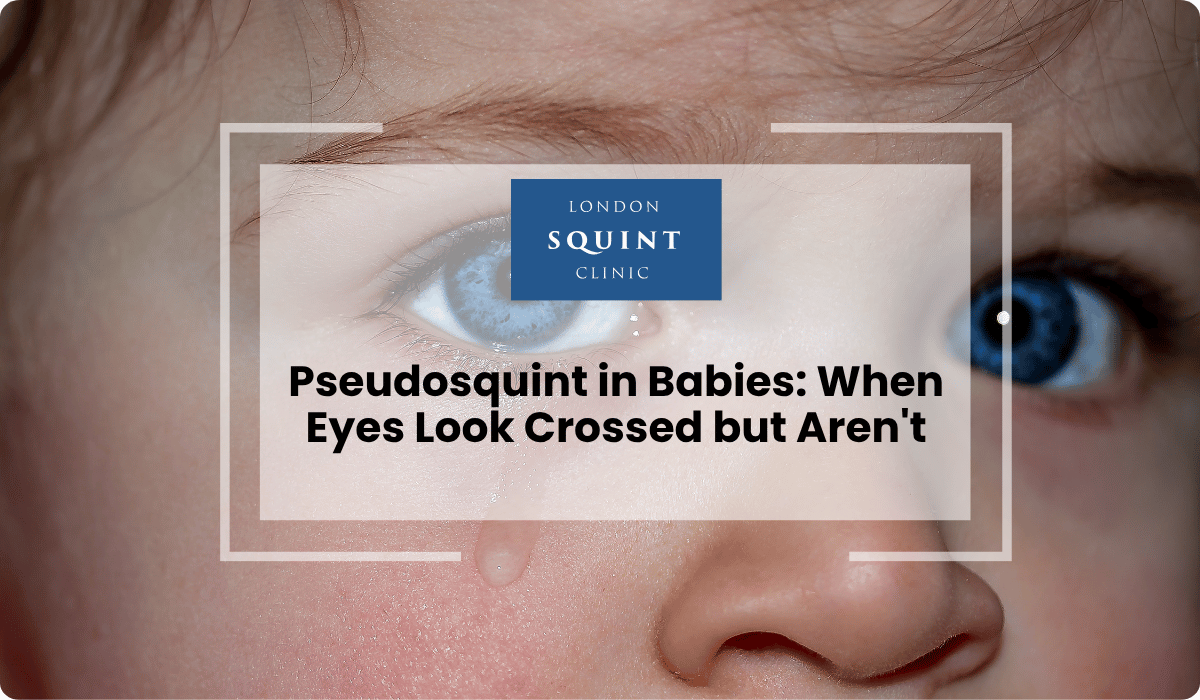
- Pseudosquint is a common, harmless condition where babies appear to have crossed eyes due to facial features, not actual eye misalignment.
- Wide nasal bridges and epicanthal folds (extra skin in the inner eye corners) are the main facial features causing the false appearance of crossed eyes.
- Unlike true strabismus, pseudosquint shows consistent light reflexes in both eyes and doesn’t change with different gaze directions.
- Pseudosquint naturally resolves as a child’s face develops, typically improving between 12-18 months and resolving completely by age 4-5 years.
- Seek professional assessment if you notice inconsistent eye alignment, asymmetrical light reflexes, or if the appearance worsens after 4 months of age.
- Regular monitoring of visual development milestones helps ensure your child’s vision is progressing normally despite the pseudosquint appearance.
Table of Contents
- Understanding Pseudosquint: What Parents Need to Know
- Why Do Some Babies Appear to Have Crossed Eyes?
- Pseudosquint vs. True Strabismus: Spotting the Difference
- Common Facial Features That Cause Pseudosquint
- When Does Pseudosquint Typically Resolve in Children?
- When to Seek Professional Eye Assessment for Your Baby
- Monitoring Your Child’s Visual Development Milestones
Understanding Pseudosquint: What Parents Need to Know
Pseudosquint in babies is a common condition that often causes unnecessary worry for parents. Unlike true strabismus (an actual misalignment of the eyes), pseudosquint is merely the appearance of crossed eyes when in fact the eyes are perfectly aligned. This optical illusion occurs in many infants and toddlers, particularly those with certain facial characteristics.
The term ‘pseudo’ means false, indicating that this is not a true squint condition requiring medical intervention. Pseudosquint babies have normal binocular vision and eye coordination, despite the misleading appearance. Understanding this distinction is crucial for parents who might otherwise be concerned about their child’s visual development.
Approximately 20-30% of infants may appear to have crossed eyes at some point during their early development, with the majority being cases of pseudosquint rather than true strabismus. This false squint appearance is a normal variation in facial development and typically resolves naturally as the child grows and their facial structures mature.
While pseudosquint itself doesn’t require treatment, it’s still important for parents to be aware of the condition and to understand when professional assessment might be necessary to rule out true eye alignment issues.
Why Do Some Babies Appear to Have Crossed Eyes?
The appearance of crossed eyes in babies without actual eye misalignment stems primarily from their unique facial anatomy. Infants are born with relatively flat nasal bridges and excess skin around their eyes, creating optical illusions that suggest eye misalignment when viewed from certain angles.
Several anatomical factors contribute to this false squint appearance:
- Wide nasal bridge: Babies naturally have wider, flatter nasal bridges compared to adults. This facial characteristic can create the illusion that the eyes are turning inward (esotropia) when they are actually straight.
- Epicanthal folds: These are extra skin folds in the inner corner of the eye that partially cover the inner white portion (sclera) of the eye. When present, these folds can make the eyes appear to turn inward.
- Prominent facial fat pads: Babies have rounded cheeks and facial features with additional fat deposits that can affect how light reflects off their eyes and how we perceive their eye alignment.
Additionally, babies are still developing control of their eye muscles during the first few months of life. Occasional genuine misalignment can occur as they learn to coordinate their eye movements, but this typically stabilises by 3-4 months of age. This normal developmental process, combined with their unique facial structure, contributes to why so many babies appear to have crossed eyes when their vision is actually developing normally.
Pseudosquint vs. True Strabismus: Spotting the Difference
Distinguishing between pseudosquint and true strabismus (genuine eye misalignment) is crucial for appropriate management. While both conditions may appear similar to untrained observers, there are several key differences that parents and healthcare providers can look for.
In pseudosquint:
- The light reflection (corneal light reflex) appears in the same position in both eyes when a torch is shined at the eyes
- The apparent misalignment remains consistent regardless of which direction the child is looking
- The appearance of crossing is often more noticeable when the child is tired or looking at distant objects
- The illusion of misalignment disappears when you look at the child from different angles
- There is no actual movement of the eyes when the child shifts their gaze
In contrast, true strabismus presents with:
- Asymmetrical corneal light reflexes when a light is shined at the eyes
- Visible movement of one eye when the other is covered (cover-uncover test)
- Misalignment that may vary with direction of gaze or level of attention
- Potential head tilting or turning to compensate for double vision
- Possible complaints of visual disturbances in older children
A simple home test parents can try is the corneal light reflex test. In a dimly lit room, shine a small torch directly at your baby’s eyes from about 40cm away. In normal alignment or pseudosquint, the reflection of light will appear in the same position in both eyes. In true strabismus, the reflection will appear in different positions. However, professional assessment is always recommended if there’s any doubt, as early intervention for genuine eye alignment issues is essential for optimal visual development.
Common Facial Features That Cause Pseudosquint
Certain facial characteristics are strongly associated with pseudosquint in babies and young children. Understanding these features can help parents recognise when crossed-appearing eyes are likely just a result of normal facial anatomy rather than a true vision problem.
The most significant facial features contributing to pseudosquint include:
Epicanthal folds: These skin folds extend from the upper eyelid to the inner corner of the eye, partially covering the inner white portion of the eye (medial sclera). Epicanthal folds children often appear to have inward-turning eyes because these folds obscure part of the eye, creating an optical illusion. These folds are particularly common in babies of Asian descent but can be present in children of all ethnicities.
Wide nasal bridge babies frequently present with pseudosquint. When the bridge of the nose is broad and flat, it creates more space between the eyes while simultaneously hiding part of the white sclera near the nose. This combination makes the eyes appear to turn inward when viewed from the front, even though they’re perfectly aligned.
Prominent epicanthal folds combined with a wide nasal bridge create the most pronounced false squint appearance. This combination is particularly common in infants and often leads to parental concern about eye alignment.
Other contributing facial features include:
- Flat or underdeveloped cheekbones
- Excess skin around the eyes
- Asymmetrical facial features
- Deep-set eyes with prominent brow ridges
These facial characteristics typically change as children grow, with the nasal bridge becoming more prominent and epicanthal folds becoming less pronounced, which is why pseudosquint tends to resolve naturally with age.
When Does Pseudosquint Typically Resolve in Children?
Pseudosquint is a temporary condition that naturally resolves as a child’s face grows and develops. The timeline for resolution varies between children, but there are general patterns parents can expect.
For most children, pseudosquint begins to noticeably improve between 12-18 months of age. This coincides with significant facial growth and development that occurs during this period. As the nasal bridge rises and becomes more defined, the optical illusion of crossed eyes gradually diminishes.
By age 2-3 years, the majority of children will show significant improvement in the appearance of pseudosquint. The face continues to elongate, the nasal bridge develops further prominence, and epicanthal folds become less pronounced. These natural changes in facial structure progressively reduce the false squint appearance.
Complete resolution typically occurs by age 4-5 years for most children, though mild pseudosquint may persist longer in some cases, particularly in children with certain facial characteristics or ethnic backgrounds where wider nasal bridges and pronounced epicanthal folds are common features.
It’s important to note that the resolution timeline can vary significantly based on:
- Genetic factors influencing facial development
- The severity of the initial pseudosquint appearance
- Individual patterns of facial growth
- Ethnic background and associated facial characteristics
Parents should remember that pseudosquint resolving at different rates is normal, and a gradual improvement over time is the expected pattern. If the appearance doesn’t change or worsens as the child grows, this might warrant professional assessment to rule out true strabismus developing.
When to Seek Professional Eye Assessment for Your Baby
While pseudosquint is harmless and resolves naturally, it’s important for parents to know when professional evaluation is warranted to rule out true eye alignment problems. Certain signs and symptoms should prompt a consultation with a pediatric ophthalmologist.
Consider seeking professional assessment if:
- Inconsistent eye alignment: If one eye appears to drift or turn in a different direction sometimes but not others, this suggests true strabismus rather than pseudosquint.
- Persistent misalignment after 4 months: Newborns may have temporarily misaligned eyes as they develop eye muscle control, but this should stabilise by 3-4 months of age.
- Asymmetrical light reflexes: When shining a light toward your baby’s eyes, the reflection should appear in the same position in both eyes. Asymmetrical reflexes warrant professional evaluation.
- Eye turning that worsens when tired or ill: True strabismus often becomes more noticeable when a child is fatigued or unwell.
- Family history of eye problems: If there’s a strong family history of strabismus or other eye conditions, earlier and more frequent assessments are advisable.
- Abnormal head positioning: If your child consistently tilts or turns their head to look at objects, this may indicate they’re compensating for vision problems.
- Concerns about visual tracking: If your baby doesn’t seem to follow moving objects or faces appropriately for their age.
All children should have their eyes checked as part of routine developmental assessments, but those with any of these signs should be evaluated sooner. The UK National Screening Committee recommends vision screening for all children at age 4-5 years, but earlier assessment is appropriate if there are concerns.
Remember that early intervention for true eye alignment problems is crucial for preventing amblyopia (lazy eye) and ensuring proper visual development. When in doubt, it’s always better to seek professional advice for peace of mind and to ensure optimal visual outcomes.
Monitoring Your Child’s Visual Development Milestones
Understanding normal visual development milestones can help parents distinguish between expected progress and potential concerns. While monitoring for pseudosquint resolution, it’s equally important to track overall visual development.
Key visual development milestones to observe include:
Birth to 1 month: Newborns can see, but their vision is blurry. They typically focus on objects 8-12 inches away and may have brief periods of misaligned eyes as they develop muscle control. They should begin to focus on and follow faces, particularly their parents’.
2-3 months: Babies should begin tracking moving objects and recognising familiar faces. Eye coordination should be improving, with fewer instances of genuine misalignment. They should begin to reach for objects, showing visual-motor coordination.
4-6 months: Colour vision and depth perception are developing. Babies should show consistent eye alignment except in cases of pseudosquint. They should be able to transfer their gaze between objects and show interest in images and patterns.
7-12 months: Visual acuity continues to improve. Babies should recognise familiar people from across the room and show interest in pictures. They should be able to spot very small objects and may enjoy playing peek-a-boo, demonstrating understanding of object permanence.
1-2 years: Toddlers develop more refined depth perception and hand-eye coordination. They should recognise familiar objects in books and show interest in exploring their visual environment. Pseudosquint may begin to diminish as facial features develop.
2-5 years: Visual acuity approaches adult levels by age 5. Children should demonstrate good eye-hand coordination, visual recognition skills, and the ability to focus on detailed activities for increasing periods. Pseudosquint typically resolves during this period as facial features mature.
If your child is meeting these visual milestones appropriately, this provides reassurance that their visual system is likely developing normally, even if pseudosquint is present. However, any significant delays in reaching these milestones, particularly if combined with concerns about eye alignment, warrant professional assessment.
Frequently Asked Questions
What is pseudosquint in babies?
Pseudosquint is a condition where a baby’s eyes appear to be crossed or misaligned when they actually aren’t. This optical illusion is caused by certain facial features like a wide nasal bridge and epicanthal folds (extra skin in the inner corners of the eyes). Unlike true strabismus, pseudosquint doesn’t affect vision or require medical treatment, and it typically resolves naturally as the child’s face grows and develops.
How can I tell if my baby has pseudosquint or true strabismus?
You can distinguish pseudosquint from true strabismus by observing that in pseudosquint: light reflections appear in the same position in both eyes when a torch is shined at them; the apparent misalignment remains consistent regardless of gaze direction; and the illusion disappears when viewing from different angles. In contrast, true strabismus shows asymmetrical light reflexes, visible eye movement when one eye is covered, and misalignment that varies with gaze direction.
At what age does pseudosquint typically resolve?
Pseudosquint typically begins to improve between 12-18 months of age as a child’s facial features develop. Most children show significant improvement by age 2-3 years, with complete resolution usually occurring by age 4-5 years. The timeline varies based on genetic factors, severity of the initial appearance, individual patterns of facial growth, and ethnic background.
Do all babies with epicanthal folds have pseudosquint?
Not all babies with epicanthal folds develop noticeable pseudosquint, but these facial features significantly increase the likelihood of the appearance of crossed eyes. The combination of epicanthal folds with a wide nasal bridge creates the most pronounced false squint appearance. The condition is particularly common in babies of Asian descent but can occur in children of all ethnicities with these facial characteristics.
When should I seek medical attention for my baby’s apparent crossed eyes?
Seek professional assessment if you notice: inconsistent eye alignment where one eye drifts sometimes but not others; persistent misalignment after 4 months of age; asymmetrical light reflexes when shining a light toward the eyes; eye turning that worsens when your child is tired or ill; abnormal head positioning to look at objects; or concerns about visual tracking development. Early intervention is crucial if true strabismus is present.
Can pseudosquint turn into true strabismus?
Pseudosquint doesn’t develop into true strabismus, as they are entirely different conditions. Pseudosquint is an optical illusion caused by facial features, while strabismus is an actual misalignment of the eyes. However, it’s possible for a child to have both conditions simultaneously, which is why professional assessment is important if there’s any doubt about eye alignment, especially if the appearance changes or worsens over time.
Does pseudosquint affect my child’s vision development?
Pseudosquint does not affect vision development because it’s only an appearance issue, not an actual eye misalignment. Children with pseudosquint have normal binocular vision and eye coordination. They should meet all visual development milestones appropriately, including following moving objects, recognizing faces, and developing hand-eye coordination. If your child is meeting these milestones, their visual system is likely developing normally despite the appearance of crossed eyes.
Related Posts
Find out if you are suitable for Double Vision Treatment
Find out if you could benefit from this life changing surgery by contacting us today
Our most popular procedures


Hello, I’m Nadeem Ali
I’m one of the few eye surgeons in the world with 100% focus on Squint and Double Vision Surgery.
I have 24 years of eye surgery experience, and worked for 13 years as a Consultant at London’s renowned Moorfields Eye Hospital.
In 2023, I left the NHS to focus fully on treating patients from across the world at the London Squint Clinic. You can read more about me here.
There’s lots of information on the website about: squint surgery, double vision surgery and our pricing.
The most rewarding part of my job is hearing patients tell me how squint or double vision surgery has changed their lives. You can hear these stories here.
Mr Nadeem Ali
MA MB BChir MRCOphth FRCSEd(Ophth)